
Cat owners often discover their beloved pets have suffered serious poisoning from seemingly harmless essential oil diffusers they thought were safe.
Tea tree, eucalyptus, citrus, peppermint, cinnamon, clove, wintergreen, pine, ylang ylang, and pennyroyal are toxic to cats. Cats lack liver enzymes to metabolize these oils, causing dangerous buildup that leads to organ damage, seizures, or death even from diffusion exposure.
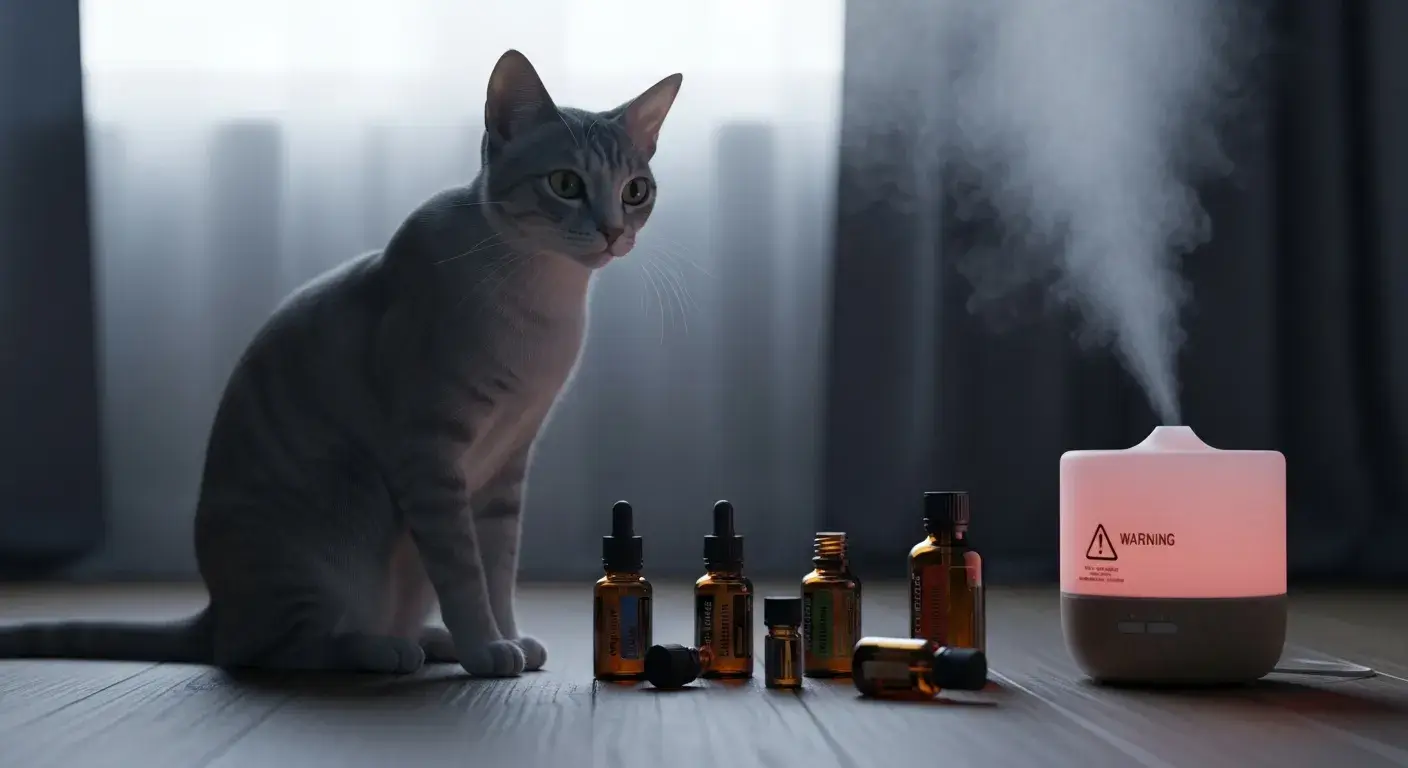
After fifteen years supplying essential oils at PhytoEx, I’ve witnessed the heartbreaking reality of pet poisoning cases that could have been prevented. The aromatherapy boom has created an invisible threat in millions of homes where cats live alongside diffusers, topical applications, and cleaning products containing these concentrated plant extracts. This guide will help you identify dangerous oils, recognize poisoning symptoms, and protect your feline family members from harm.
Why Are Essential Oils Harmful to Cats?
Most pet owners don’t realize their cats process chemicals completely differently than humans or even dogs.
Cats lack glucuronyl transferase and other liver enzymes needed to metabolize phenols and terpenes found in essential oils. These compounds accumulate in their bloodstream and organs, causing toxicity even from small exposures through skin contact, ingestion, or inhalation.
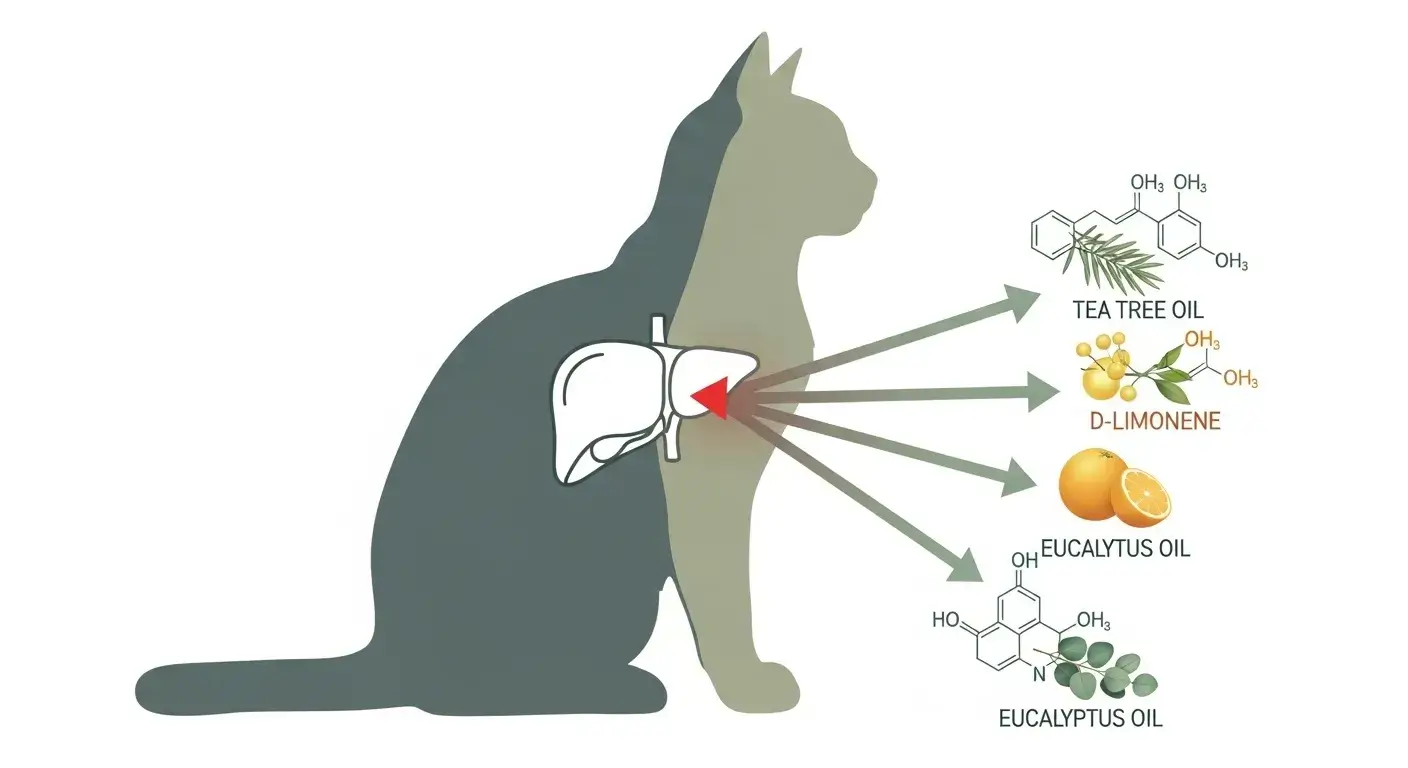
The science behind feline essential oil toxicity reveals a critical biological difference that makes cats uniquely vulnerable. Their liver simply cannot break down the same compounds that humans metabolize easily.
Understanding Feline Liver Metabolism
Cats evolved as obligate carnivores with specialized liver function. They lack specific UDP-glucuronosyltransferase enzymes1 that other mammals use to process plant secondary metabolites. When essential oil compounds enter a cat’s system, they cannot be efficiently broken down and eliminated.
These unmetabolized compounds accumulate in fatty tissues and organs. The liver becomes overwhelmed trying to process substances it cannot handle. Blood levels of toxic compounds rise rapidly, leading to systemic organ damage.
Even tiny amounts pose risks because cats absorb oils quickly through their skin and respiratory system. Their grooming behavior compounds the problem – oils that settle on their fur get ingested during normal cleaning routines.
| Toxic Compound | Found In | Effect on Cats | Metabolism Issue |
|---|---|---|---|
| Phenols | Tea tree, oregano | Liver damage, seizures | Cannot glucuronidate |
| Monoterpenes | Eucalyptus, pine | Respiratory distress | Slow oxidation |
| D-limonene | Citrus oils | Vomiting, depression | Poor conjugation |
| Menthol | Peppermint, wintergreen | Hypothermia, ataxia | Inadequate detoxification |
Which Essential Oils Are Most Toxic to Cats?
Some oils consistently appear in emergency veterinary reports as the most dangerous threats to feline health.
Tea tree oil causes the most cat poisoning cases, followed by eucalyptus, citrus oils, and peppermint. The ASPCA documented over 106 tea tree oil exposures in cats over ten years, with many requiring intensive treatment for liver failure and neurological symptoms.
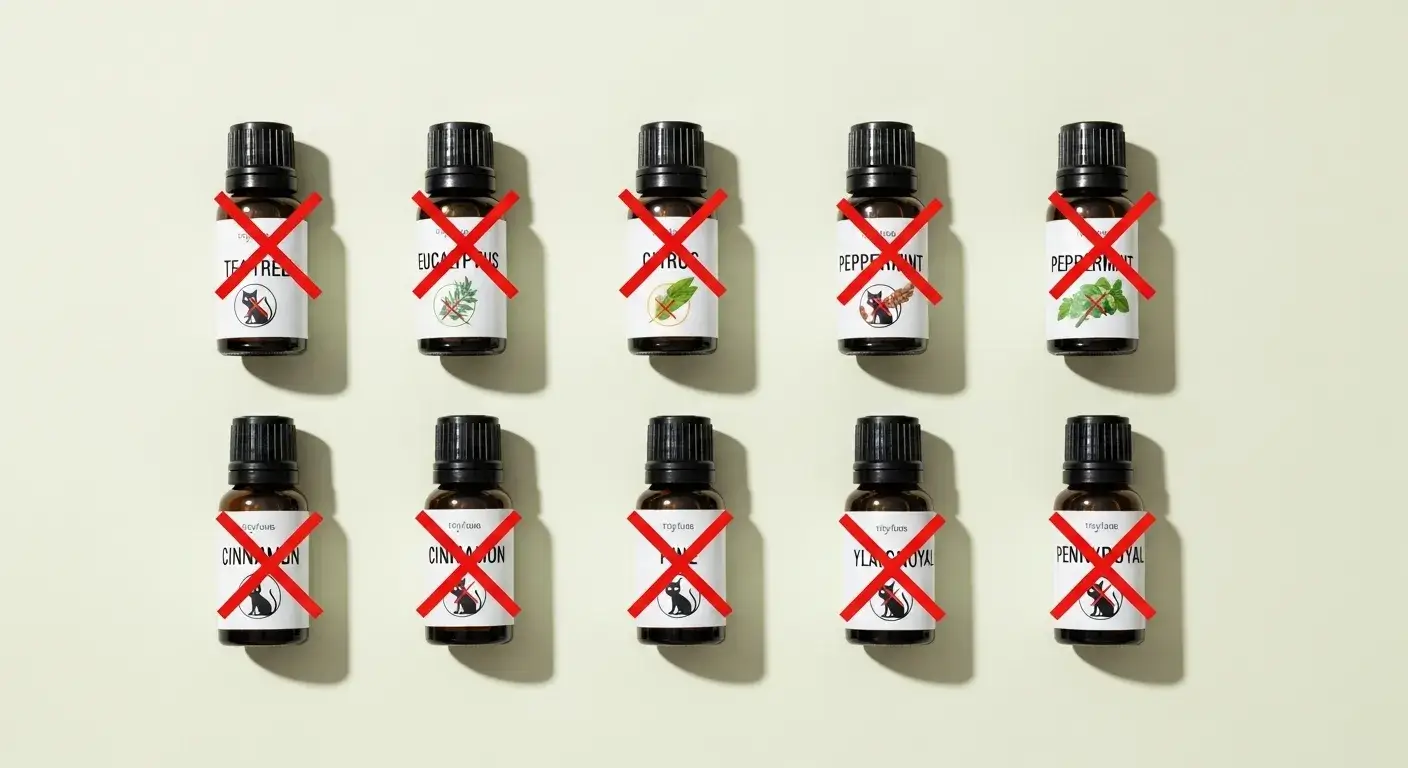
Through our work with veterinary toxicology consultants, I’ve compiled data on the oils that pose the greatest threats to cats based on poisoning frequency and severity.
High-Risk Essential Oils
Tea tree oil leads poisoning statistics because many people use it for perceived antimicrobial benefits. Cats exposed to even small amounts develop tremors, weakness, and liver enzyme elevation within hours. Undiluted tea tree oil has caused fatalities in multiple documented cases.
Eucalyptus essential oil ranks second due to its popularity in respiratory blends and cleaning products. Cats show rapid onset of breathing difficulties, tremors, and sometimes seizures. The oil’s compounds directly irritate lung tissue while simultaneously overwhelming the liver’s capacity to clear toxins.
Citrus oils containing d-limonene2 cause predictable gastrointestinal upset and nervous system depression. These oils absorb readily through skin contact and cause burns when applied topically. Many commercial cleaners contain citrus oils at concentrations dangerous to cats.
Moderate Risk Oils
Peppermint and wintergreen oils contain high menthol concentrations that affect cats’ ability to regulate body temperature. Exposed cats often develop hypothermia and coordination problems. Cinnamon and clove oils cause chemical burns on contact and irregular heart rhythms with larger exposures.
Pine oils and ylang ylang create respiratory irritation and gradual toxin accumulation. These oils may not cause immediate dramatic symptoms but build up over time with repeated low-level exposure from diffusers or cleaning products.
| Oil Category | Risk Level | Common Sources | Typical Symptoms |
|---|---|---|---|
| Tea tree | Very High | Antiseptic products | Tremors, liver failure |
| Eucalyptus | Very High | Respiratory blends | Breathing difficulty |
| Citrus | High | Cleaners, diffusers | Vomiting, burns |
| Peppermint | Moderate | Holiday scents | Hypothermia, wobbling |
| Pine | Moderate | Air fresheners | Chronic toxicity |
What Are the Symptoms of Essential Oil Poisoning in Cats?
Essential oil poisoning symptoms can appear within minutes or develop over several hours depending on exposure route and oil type.
Early signs include excessive drooling, vomiting, lethargy, and difficulty walking. Severe cases progress to tremors, seizures, difficulty breathing, and collapse. Cats may paw at their face, have low body temperature, or show skin irritation at contact sites.
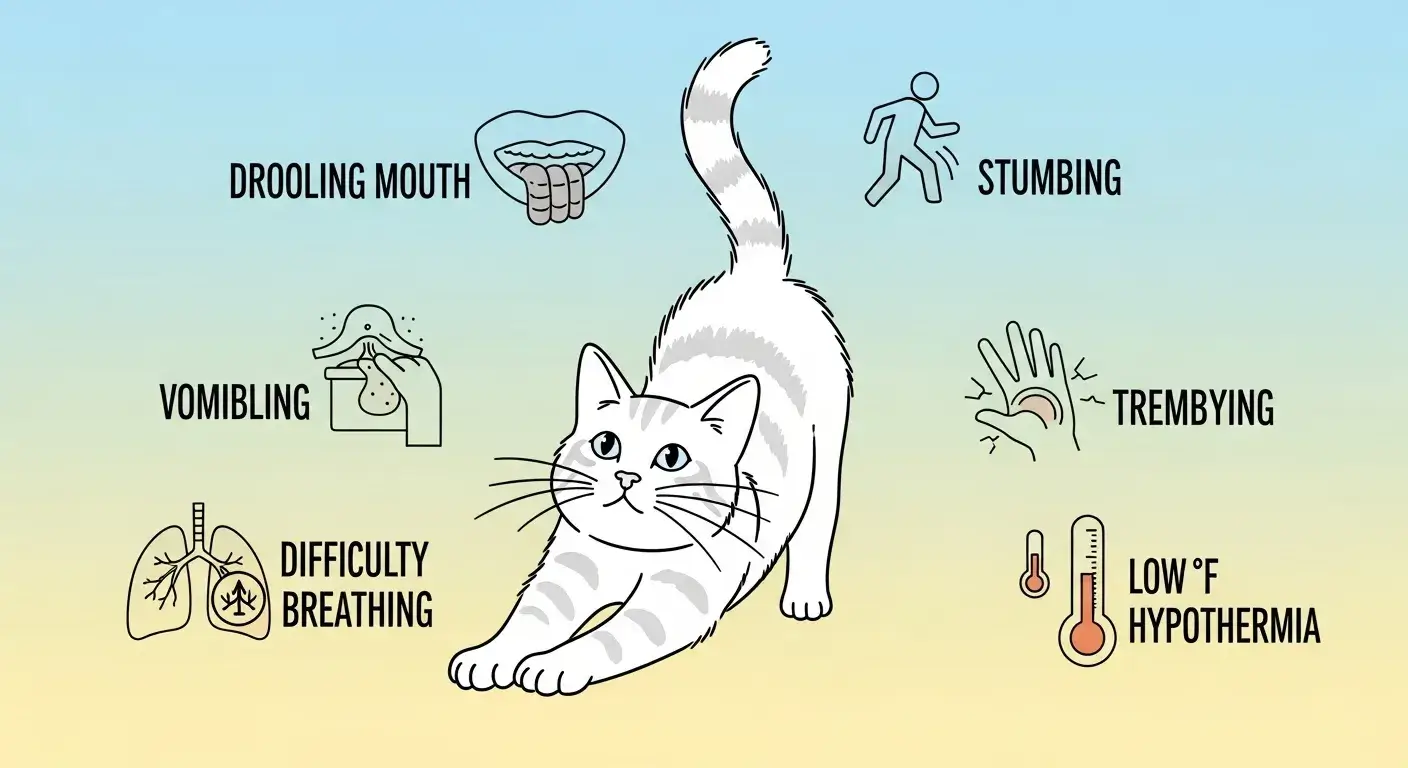
Recognizing poisoning symptoms quickly can mean the difference between successful treatment and tragic outcomes. Different oils cause characteristic symptom patterns that help identify the toxic agent.
Immediate Physical Signs
Drooling often appears first as cats taste residual oils on their fur during grooming. The bitter, burning sensation causes excessive salivation and pawing at the mouth. Vomiting typically follows within 30 minutes to 2 hours as the gastrointestinal system reacts to the toxic compounds.
Neurological symptoms develop as oils affect the central nervous system. Cats appear unsteady or "drunk" with poor coordination called ataxia3. They may stumble, fall over, or have difficulty jumping onto familiar surfaces. Progressive weakness affects their ability to stand or walk normally.
Respiratory signs indicate serious toxicity requiring immediate veterinary intervention. Cats may breathe rapidly, cough persistently, or show visible distress. Some oils cause chemical pneumonia4 if inhaled droplets reach the lungs.
Progressive Symptoms
Temperature regulation becomes impaired as toxins affect the hypothalamus. Cats develop hypothermia, especially with menthol-containing oils. Their body temperature drops below normal ranges, making them seek warm places or appear lethargic and unresponsive.
Skin contact creates local irritation, redness, and sometimes chemical burns. Cats may excessively groom affected areas, worsening toxin absorption. Areas with thin skin like ears, nose, and paw pads show the most obvious irritation.
Severe poisoning progresses to tremors, muscle fasciculations, and potentially seizures. These neurological signs indicate significant toxin levels affecting brain function and require emergency treatment to prevent permanent damage or death.
When to Seek Emergency Care
Any combination of these symptoms after known or suspected essential oil exposure requires immediate veterinary attention. Don’t wait for symptoms to worsen – early intervention dramatically improves outcomes. Contact your veterinarian or pet poison control hotline immediately.
How Can Essential Oils Affect Cats Through Diffusion or Contact?
Many cat owners mistakenly believe diffusion creates safe, diluted exposure levels that won’t harm their pets.
Diffusers release microscopic oil droplets that land on cat fur, are inhaled into lungs, and absorb through skin. Active ultrasonic diffusers create higher concentrations than passive reed diffusers, but both pose risks in enclosed spaces where cats cannot escape.
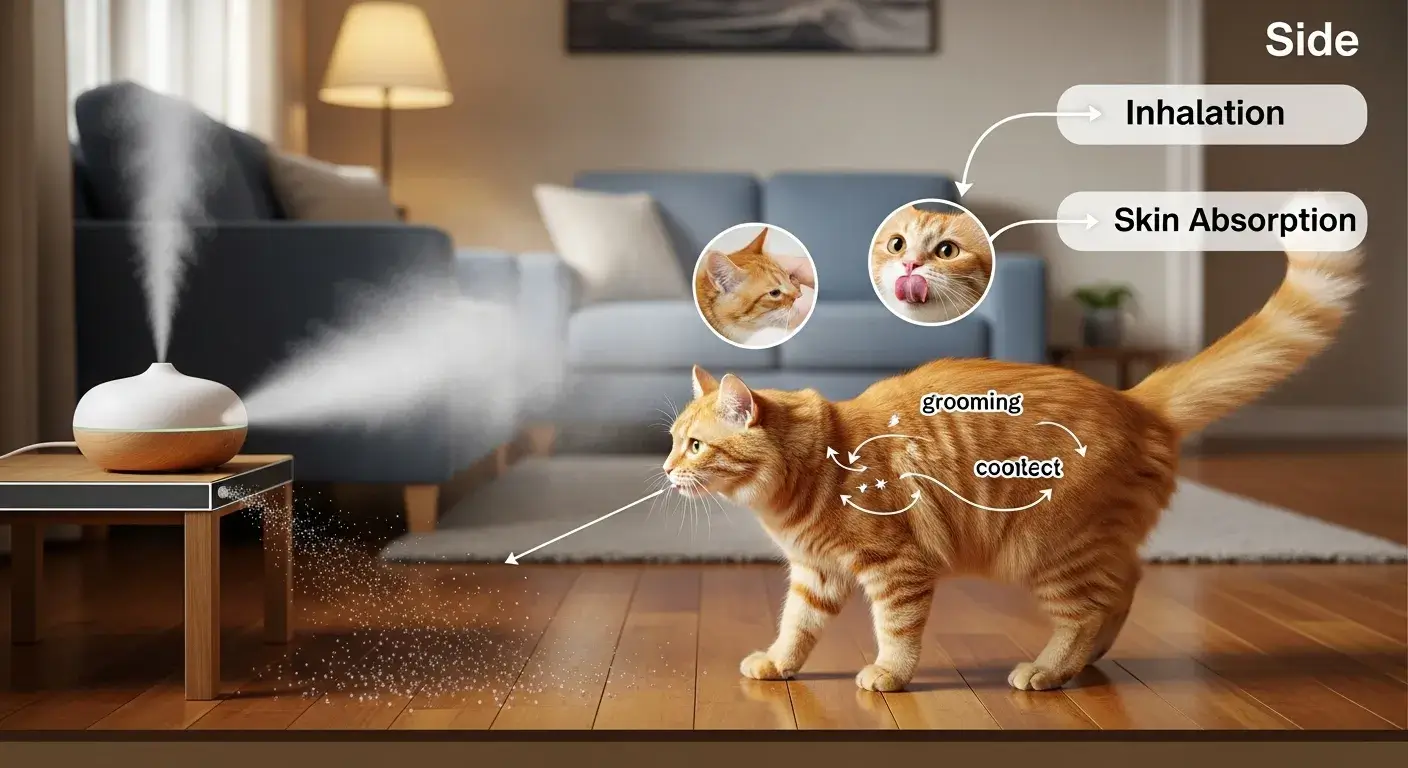
Understanding how cats encounter essential oils helps explain why even "gentle" diffusion can cause serious problems. Cats live closer to floor level where heavier oil particles settle and cannot communicate their discomfort until symptoms develop.
Diffusion Exposure Mechanisms
Ultrasonic and nebulizing diffusers create fine mists containing concentrated oil particles. These droplets remain airborne for extended periods before settling on surfaces throughout the room. Cats walking through these areas collect particles on their fur, which they later ingest during normal grooming.
The essential oils manufacturing process creates highly concentrated products designed for human use, not pet safety. When these concentrated compounds are released through diffusion, they maintain their potency and toxicity regardless of the delivery method.
Respiratory exposure occurs as cats breathe diffused oils directly into their lungs. The large surface area of lung tissue allows rapid absorption into the bloodstream. Oil particles can also cause direct irritation to sensitive respiratory membranes.
Passive diffusers using reeds or heat may seem safer but still release significant quantities of volatile organic compounds5. Room size, ventilation, and duration of use all affect concentration levels cats experience.
Contact Exposure Routes
Direct skin contact from spills, topical applications, or settling diffuser particles allows rapid absorption through cat skin. Their relatively thin skin and high surface-area-to-body-weight ratio makes cats more susceptible than larger animals to dermal absorption.
Accidental ingestion happens when cats walk through spilled oils or groom fur contaminated with diffuser residue. Even microscopic amounts on paws can cause toxicity when cats clean themselves. Oil-soaked cotton balls, potpourri, or craft materials create ingestion hazards if cats investigate or play with them.
Secondary transfer occurs when humans apply oils topically then pet or handle cats before washing their hands. This invisible transfer route often goes unnoticed until symptoms appear.
| Exposure Route | Risk Level | Common Scenarios | Prevention Strategy |
|---|---|---|---|
| Active diffusion | High | Ultrasonic, nebulizing | Ventilate, limit time |
| Passive diffusion | Moderate | Reed, heat diffusers | Provide escape routes |
| Direct contact | Very High | Spills, topical use | Immediate cleanup |
| Secondary transfer | Moderate | Human application | Hand washing |
Are There Any Safe Alternatives to Essential Oils for Cat Owners?
Cat owners seeking natural aromatherapy benefits need pet-safe alternatives that won’t compromise their feline family members’ health.
No essential oils are truly safe for cats, but alternatives include synthetic pheromone diffusers, hydrosols (plant waters), catnip-based products, and unscented air purifiers. These provide environmental enrichment and pleasant scents without toxic risks to feline liver function.
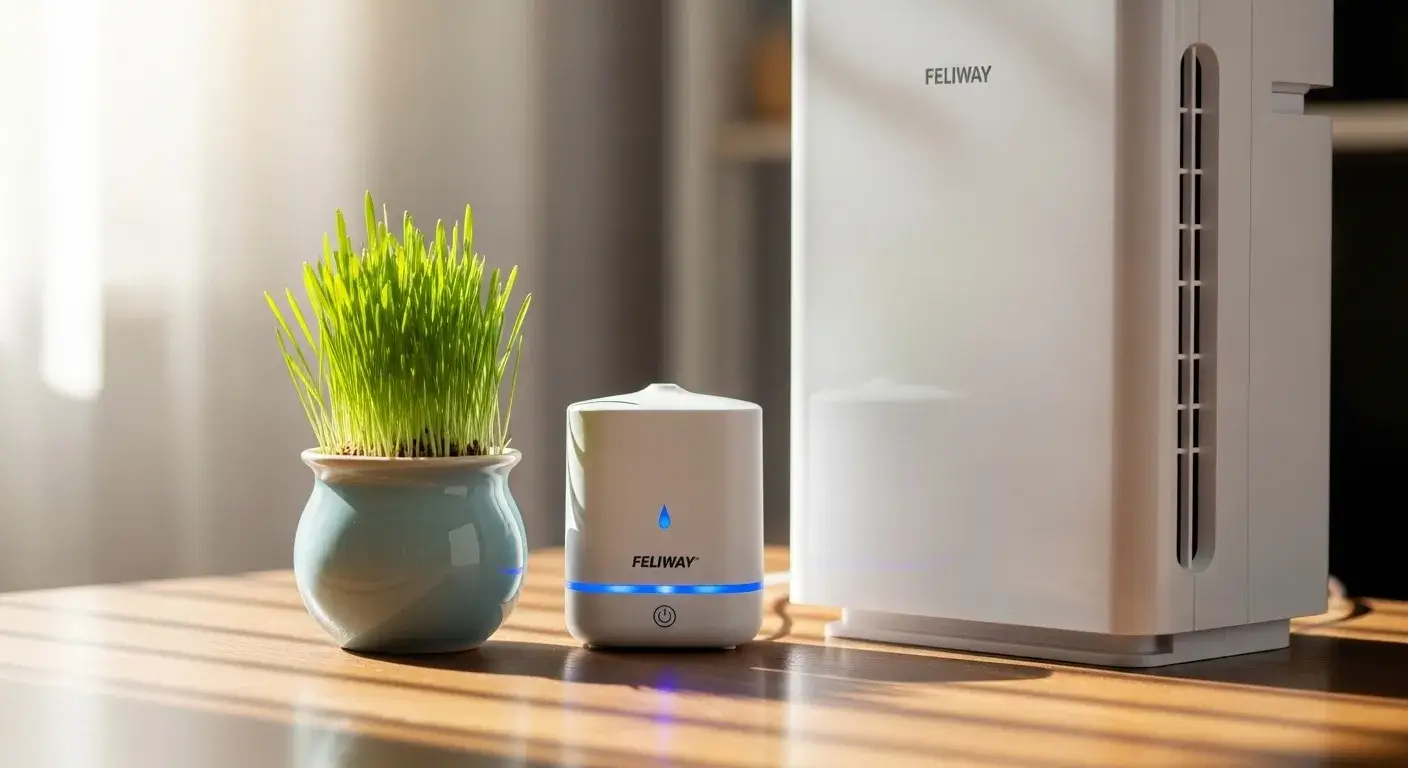
After consulting with veterinary toxicologists and aromatherapy experts, I’ve identified several alternatives that satisfy human preferences for natural scents while protecting cat health.
Synthetic Pheromone Products
Feliway and similar pheromone diffusers6 use synthetic versions of natural cat facial pheromones to create calming effects. These products specifically target feline behavior without introducing foreign plant compounds that cats cannot metabolize. They provide stress relief for cats while offering peace of mind for owners.
These diffusers work through species-specific chemical communication rather than human olfactory preferences. Cats respond positively to familiar pheromone signatures while humans typically notice no scent at all.
Plant-Based Alternatives
Hydrosols represent distilled plant waters with minimal essential oil content. These gentle preparations provide subtle scents without concentrated toxic compounds. Chamomile or rose hydrosols can be used sparingly in well-ventilated areas as compromise solutions.
Unlike traditional essential oils, hydrosols contain water-soluble plant compounds at much lower concentrations. For those interested in the production differences, understanding how carrier oils differ from hydrosols can help explain why dilution methods matter for pet safety.
Catnip, silvervine, and valerian offer natural aromatherapy specifically appealing to cats. These plants contain compounds cats can process safely while providing environmental enrichment. Dried herbs in sachets create mild pleasant scents without concentrated extraction dangers.
Fresh plants like cat grass, spider plants, or pet-safe houseplants7 provide natural aromatics cats can safely investigate. These living alternatives improve air quality while satisfying both human and feline preferences for natural elements.
Technology Solutions
Air purifiers with HEPA filters remove allergens and odors without adding potentially harmful substances. Some models include light ionization features that naturally freshen air through electrical processes rather than chemical additives.
Unscented candles made from soy or beeswax provide ambiance without toxic fragrance compounds. The warm light creates relaxing atmosphere while avoiding respiratory irritants that affect sensitive cat airways.
What Should You Do If Your Cat Is Exposed to Essential Oils?
Quick action during suspected essential oil exposure can prevent serious complications and save your cat’s life.
Immediately remove your cat from the exposure area, rinse affected skin with dish soap and warm water, and contact your veterinarian or pet poison control hotline. Never induce vomiting and provide oil packaging information to help guide appropriate treatment protocols.
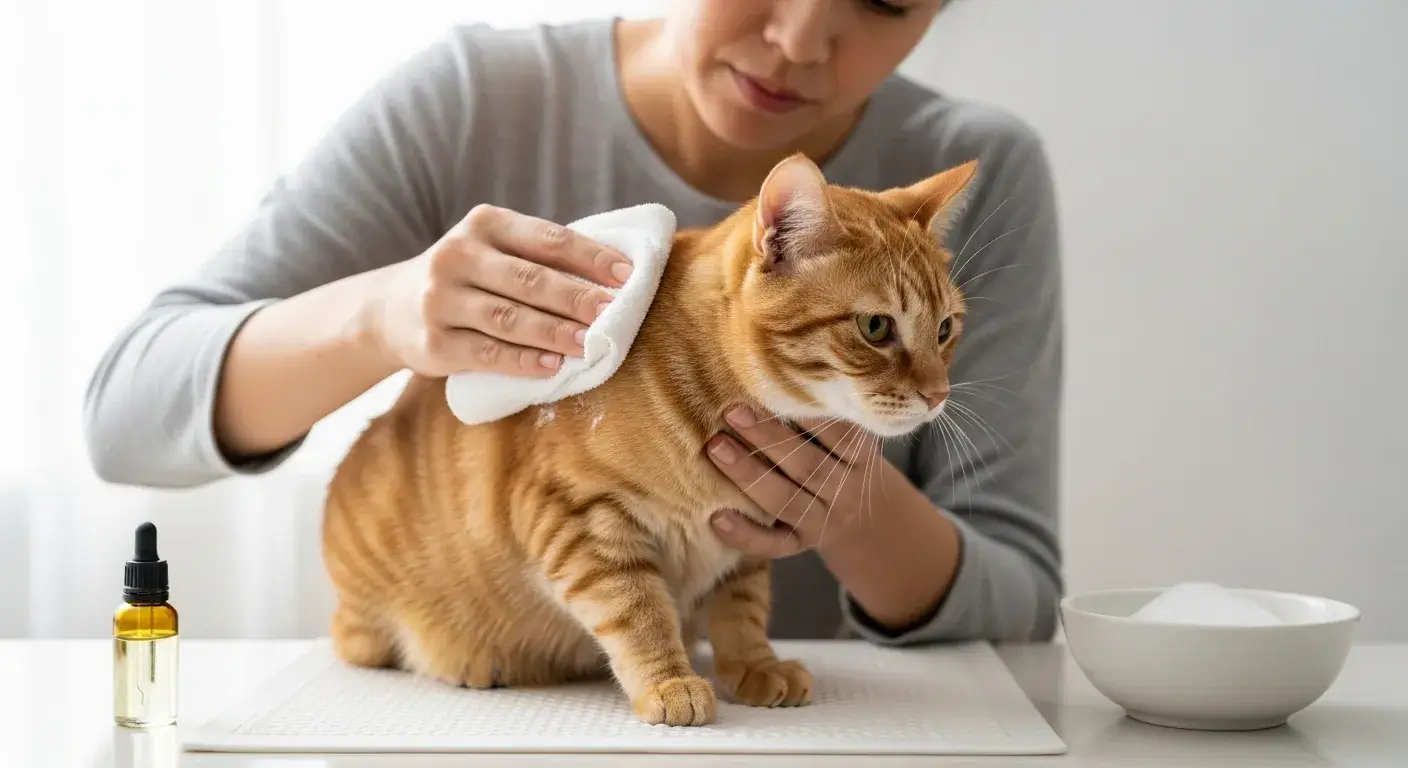
Having an emergency action plan before problems occur helps you respond effectively when every minute counts. Keep emergency contact numbers easily accessible and know basic first aid steps.
Immediate Response Steps
Move your cat to fresh air immediately if exposure occurred through diffusion or inhalation. Open windows and doors to improve ventilation while removing the oil source. Turn off diffusers and remove contaminated materials from the area.
For skin contact, flush affected areas with lukewarm water and mild dish soap like Dawn. Avoid harsh scrubbing that could worsen absorption. Rinse thoroughly to remove all soap residue. Do not use oils, butter, or other home remedies that might worsen the situation.
Never induce vomiting unless specifically instructed by veterinary professionals. Essential oils can cause additional damage to the esophagus and throat if brought back up. Some oils also pose aspiration pneumonia risks if vomited material enters the lungs.
Professional Emergency Support
Contact your veterinarian immediately or call pet poison control hotlines for guidance. The ASPCA Animal Poison Control Center8 (888-426-4435) and Pet Poison Helpline9 (855-764-7661) provide 24-hour expert consultation. These services charge fees but provide invaluable professional guidance.
Provide specific information about the oil involved, concentration percentage, exposure amount, time since exposure, and current symptoms. Take photos of product labels or packaging to help identify exact ingredients and concentrations.
Veterinary Treatment Options
Professional treatment may include intravenous fluid therapy to support kidney function and enhance toxin elimination. Activated charcoal might be administered if ingestion occurred recently, though its effectiveness varies with specific oil types.
Blood work monitors liver enzymes, kidney function, and electrolyte balance to guide treatment decisions. Severe cases require hospitalization for continuous monitoring and supportive care until toxin levels decrease.
Conclusion
Essential oils pose serious risks to cats that every responsible pet owner must understand and prevent through informed choices.
-
Scientific explanation of liver enzyme deficiencies that make cats vulnerable to toxins ↩
-
Chemical compound information and toxicity data for citrus essential oils ↩
-
Veterinary definition and symptoms of coordination loss in poisoned cats ↩
-
Medical explanation of lung inflammation caused by inhaled toxic substances ↩
-
EPA information on airborne chemical compounds and indoor air quality effects ↩
-
Product information and scientific evidence for cat pheromone calming products ↩
-
Comprehensive list of plants safe for cats and toxic plants to avoid ↩
-
Official ASPCA poison control emergency contact and guidance resources ↩
-
Professional pet poison helpline emergency consultation and treatment advice ↩