
Not sure if “therapeutic grade” really means anything? This guide clears the confusion to help you choose high-quality essential oils that are safe and effective.
“Therapeutic grade” is not a regulated term. It is widely used by brands to suggest purity, but true quality must be verified by third-party testing1 and certifications2.

Many brands say their oils are “therapeutic grade,” but what does that actually mean?
I used to trust this label blindly—until I learned there’s no official rule behind it. Here’s what you need to know to avoid being misled.
Is “therapeutic grade” an officially regulated or standardized classification?
This term sounds scientific, but is it real?
There is no government or industry body that certifies or regulates the term “therapeutic grade.” It is a marketing term3 created by companies.

What’s really behind the label?
The label might suggest high purity, but it doesn’t guarantee it. Brands use it to promote trust, but anyone can claim it without proof.
That’s why you need to go deeper—look for GC-MS tests4, ISO certification, and real transparency.
| Claim | Reality |
|---|---|
| “100% therapeutic grade” | No official standard or certification required |
| “Third-party tested” | Good sign—ask to see the GC-MS report |
| “Steam distilled” | Standard method, but not proof of purity |
| “Organic” | Only meaningful if certified by a recognized agency5 |
How do therapeutic grade oils differ from cosmetic or food grade?
All oils are not created equal.
Therapeutic grade oils are claimed to be purer than cosmetic grade, but only food grade6 is truly regulated for safety.
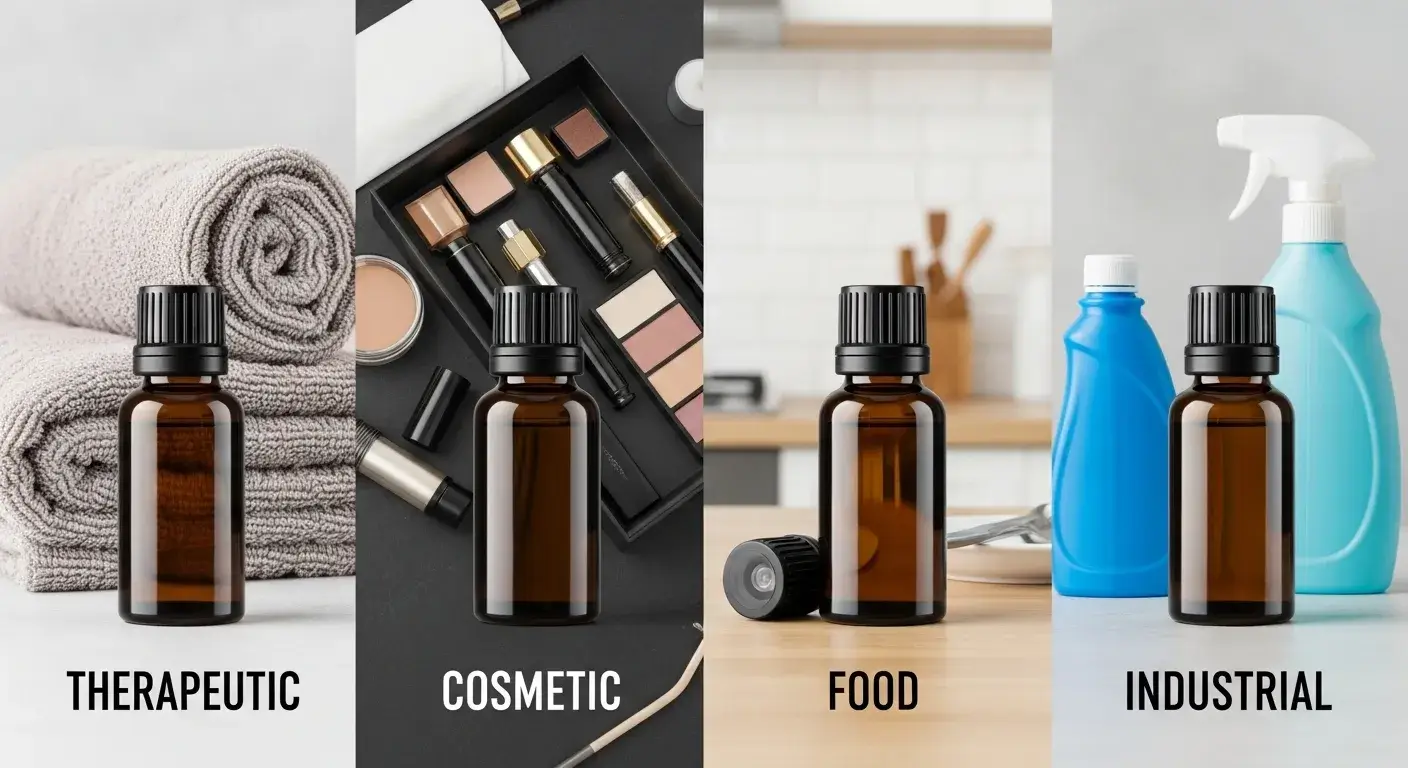
Understand the differences before using on skin or inhaling
Essential oils are categorized differently based on their use and content. Here’s a simple breakdown:
| Grade | Intended Use | Risk Level | Regulated? |
|---|---|---|---|
| Therapeutic | Aromatherapy, massage | Medium | No |
| Cosmetic | Skin care, perfumes | Medium | Sometimes |
| Food | Ingestion, flavoring | Low | Yes (FDA/EU) |
| Industrial | Cleaning, solvents | High | Yes |
Using a non-verified oil labeled “therapeutic grade” may still mean exposure to synthetic fillers, especially if it’s cheap or lacks documents.
What certifications indicate real therapeutic quality?
There’s no official grade—but there are trusted signals.
The best way to verify essential oil quality is through third-party GC-MS testing and recognized certifications like ISO 90017 or FDA standards8.
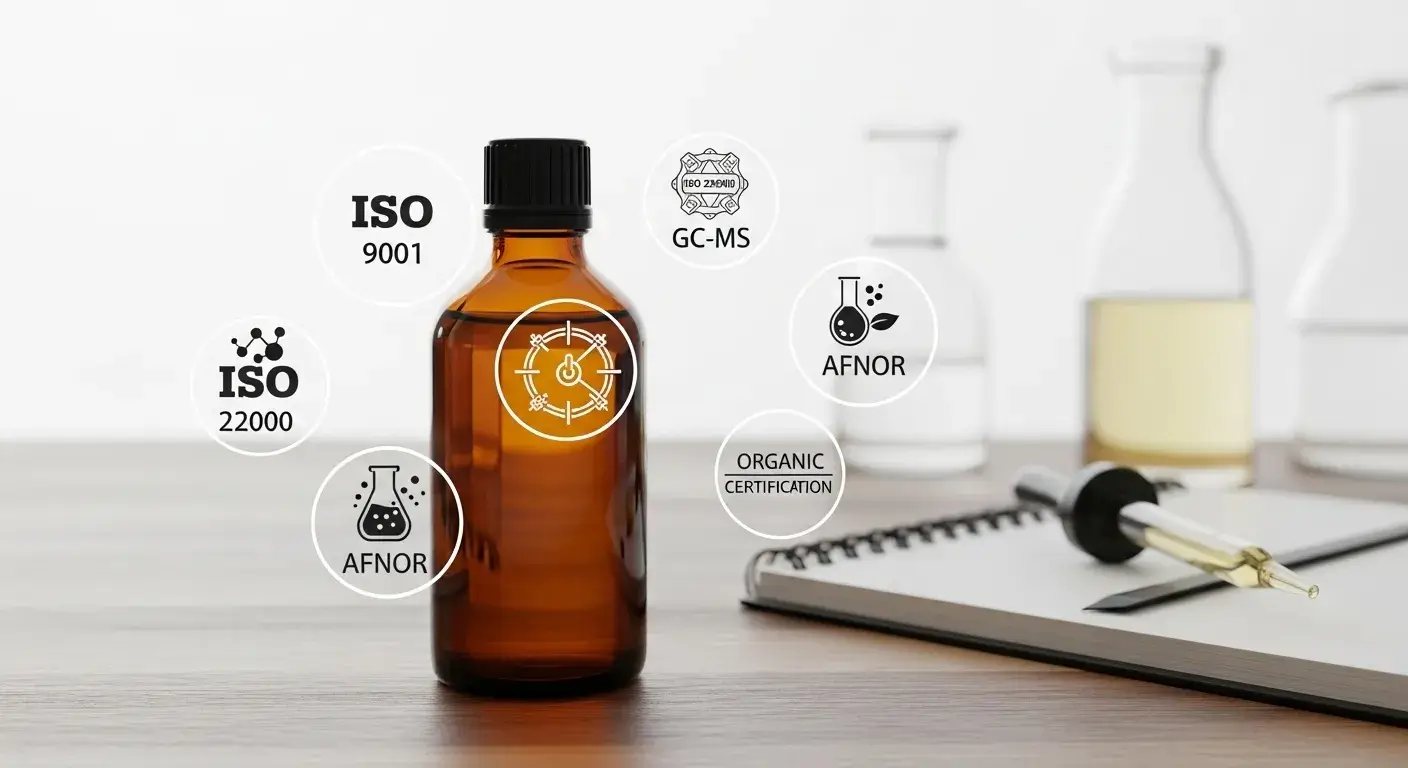
What I look for when I buy oils
I always ask suppliers for:
- GC-MS reports showing chemical breakdown
- Batch numbers and traceability
- ISO 9001 / ISO 9235 compliance
- Organic or eco-cert labels
Good suppliers are happy to show this. If they avoid the question, it’s a red flag.
What are typical uses for therapeutic grade oils?
Not all essential oils are safe for everything.
High-quality essential oils are used in aromatherapy9, massage, skincare, and wellness when properly diluted and tested.
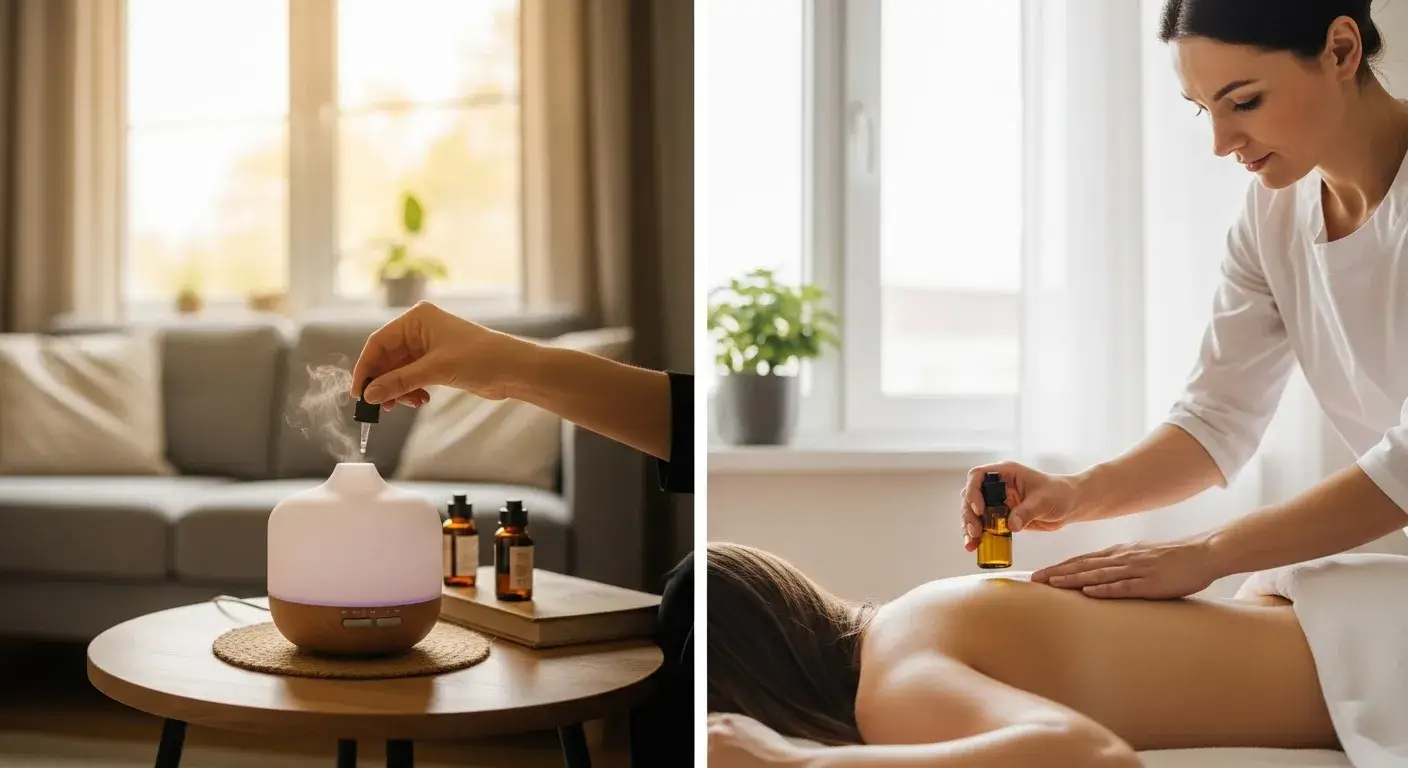
Why purity matters for each application
Depending on how you use essential oils, the quality standard becomes more important:
- Aromatherapy: Volatile chemicals affect mood and stress
- Topical use: Skin contact can cause irritation without purity
- Massage: Needs proper dilution and carrier oil
- Inhalation: Should be clean and free of contaminants
If you’re using essential oils directly on the body or diffusing them for health, don’t compromise on quality.
How to verify if an oil is truly “therapeutic”?
Trust, but verify.
Ask for GC-MS reports, check if the company is ISO certified10, and confirm no synthetic additives11 are used.
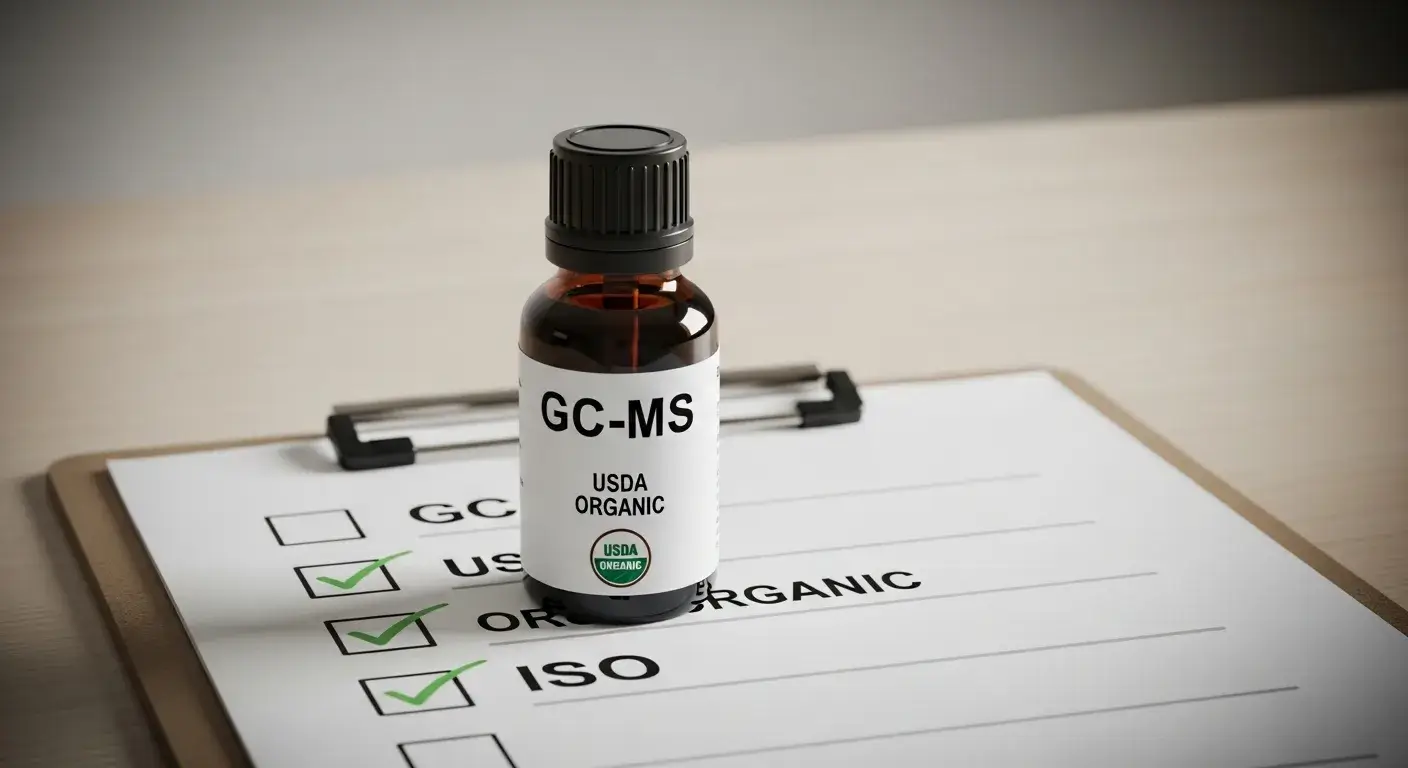
Here’s my basic checklist:
- Ask for a GC-MS report and COA.
- Look for ISO 9235 or organic certification.
- Check if they disclose country of origin and plant part.
- Avoid oils with vague labels or no batch tracking.
- Don’t assume “therapeutic grade” means safety.
Even good brands can cut corners. I’ve learned to always look under the label.
Conclusion
“Therapeutic grade” is just a label. Purity is proven through testing, not marketing.
FAQ
Q: Is therapeutic grade a real certification?
A: No. It is a marketing term without legal or regulatory backing.
Q: Can I ingest therapeutic grade oils?
A: Only if the oil is labeled food grade and complies with FDA or EU food safety standards.
Q: What’s the best way to tell if an oil is pure?
A: Look for third-party GC-MS testing and transparency in sourcing.
Q: Why are some therapeutic grade oils so cheap?
A: They may be diluted or synthetic. Always request documents to verify.
Q: Are fragrance oils the same as essential oils?
A: No. Fragrance oils are synthetic and not meant for therapeutic use.
Footnotes:
-
Find out how third-party testing proves purity and authenticity of essential oils ↩
-
See which certifications actually validate essential oil quality ↩
-
Learn why “therapeutic grade” is unregulated and often misused ↩
-
Understand what a GC-MS test reveals about essential oil composition ↩
-
Discover how certified organic standards ensure farming and processing purity ↩
-
Compare food grade essential oil standards with therapeutic claims ↩
-
Explore what ISO 9001 certification means for essential oil authenticity ↩
-
Learn about FDA standards for essential oil composition and safety ↩
-
Understand how essential oils are used in clinical aromatherapy ↩
-
Verify if your supplier meets international ISO quality standards ↩
-
Identify common synthetic additives and how to avoid them in oils ↩