
Skincare brands face pressure from two directions. Consumers love pleasant scents but fear allergens. The global fragrance market reaches $62.11 billion in 2025, yet 30% of online skincare sales are now fragrance-free products.
"Fragrance" or "parfum" on skincare labels refers to a blend of natural and/or synthetic aromatic compounds used to add scent or mask product odors. A single fragrance can contain 50-3,000 individual chemicals. The EU requires disclosure of 26 known allergens. The US allows "trade secret" protection for fragrance formulations1.
Below, I explain what fragrance means for B2B formulators, regulatory requirements, safety considerations, and market trends shaping skincare development.
What Exactly Does ‘Fragrance’ Mean on Skincare Labels?
Label terminology confuses consumers and formulators alike. Understanding what "fragrance" legally means helps B2B developers make compliant products.
"Fragrance" or "parfum" is a regulatory term for any combination of aromatic compounds that impart scent. This includes natural essential oils, synthetic aroma chemicals, and blends of both. US FDA allows undisclosed formulations as "trade secrets."2 EU Cosmetics Regulation requires listing 26 specific allergens if present above threshold levels.
Regulatory Definitions
I’ll explain how different markets define fragrance:
United States (FDA):
- "Fragrance" can represent any scenting ingredient or combination
- No pre-market approval required3
- Manufacturers may protect formulations as trade secrets
- Must be "safe" but definition is manufacturer responsibility
European Union (EC 1223/2009):
- "Parfum" or "Aroma" required on ingredient lists
- 26 allergens must be individually listed if above thresholds
- Leave-on products: 0.001% threshold4
- Rinse-off products: 0.01% threshold
Other Markets:
- Canada: Follows EU-like disclosure requirements
- China: Requires fragrance ingredient disclosure for new registrations
- Japan: Voluntary disclosure, moving toward stricter rules
What "Fragrance" Actually Contains
A single fragrance in skincare may include:
| Component Type | Examples | Purpose |
|---|---|---|
| Natural extracts | Rose absolute, lavender oil | Character, marketing appeal |
| Natural isolates | Linalool from lavender, geraniol from rose | Consistent natural notes |
| Synthetic aroma chemicals | Iso E Super, hedione | Consistency, cost, performance |
| Solvents | Dipropylene glycol, benzyl benzoate | Dilution, stability |
| Fixatives | Synthetic musks, benzyl salicylate | Longevity |
B2B Documentation Requirements
For B2B fragrance suppliers, proper documentation is essential:
Required for compliance:
- Complete composition list (confidential to customer)
- IFRA compliance certificate5
- Allergen declaration
- MSDS/SDS6
- Stability data
- Microbiological testing
"The term ‘fragrance’ is a legal protection, not a scientific classification. B2B suppliers must provide full disclosure to brand partners while respecting intellectual property boundaries." — Regulatory principle
How Do Natural and Synthetic Fragrances Differ in Skincare?
The natural vs. synthetic debate shapes marketing claims and consumer perception. Understanding real differences helps B2B developers position products correctly.
Natural fragrances come from plant or animal sources through extraction (distillation, expression, extraction). Synthetic fragrances are created through chemical synthesis. Both can cause skin reactions7. Natural fragrances vary by batch; synthetics offer consistency. Neither category is inherently "safer"—safety depends on specific compounds and concentrations.
Comparison Table
I compiled technical differences for B2B formulators:
| Factor | Natural Fragrance | Synthetic Fragrance |
|---|---|---|
| Source | Plants, some animals | Chemical synthesis |
| Consistency | Batch variation | Identical every time |
| Cost | Generally higher | Generally lower |
| Sustainability | Variable (depends on sourcing) | Factory-controlled |
| Allergen potential | Present (natural allergens) | Present (synthetic allergens) |
| Regulatory status | Must list allergens | Must list allergens |
| Consumer perception | "Clean," "safe" (not always accurate) | Mixed to negative |
| Scent complexity | Hundreds of compounds | Controlled complexity |
The Allergen Reality
Both natural and synthetic fragrances contain allergens. The EU’s 26 declared allergens include:
Natural-origin allergens:
- Limonene (citrus oils)
- Linalool (lavender, coriander)
- Geraniol (rose, geranium)
- Citronellol (rose, citronella)
- Eugenol (clove, cinnamon)
- Coumarin (tonka bean)
Synthetic-origin allergens:
- Hydroxycitronellal
- Lyral (being phased out)
- HICC
- Various synthetic musks
B2B Positioning Considerations
For fragrance suppliers serving skincare brands:
Natural positioning:
- Premium price point support
- "Clean beauty" marketing compatibility
- Requires allergen transparency
- Higher QC investment for consistency
Synthetic positioning:
- Cost efficiency
- Reproducibility
- Same allergen disclosure requirements
- Perceived negatively by some consumers
Hybrid approach (most common):
- Natural character notes
- Synthetic enhancers and fixatives
- Balance of cost, performance, and marketing claims
Why Do Skincare Brands Add Fragrance to Products?
Understanding brand motivations helps B2B suppliers serve their needs. Fragrance serves multiple purposes beyond pleasant smell.
Brands add fragrance to skincare for five main reasons: masking unpleasant raw material odors, creating brand identity through signature scents, enhancing perceived efficacy (fresh scents suggest cleanliness), driving emotional connection with consumers, and supporting premium positioning. Fragrance has no direct skincare benefit.
The Business Case for Fragrance
I’ll explain why fragrance investment makes commercial sense:
Odor Masking:
Many effective skincare actives smell unpleasant. Niacinamide, certain peptides, and fermented ingredients need masking. Without fragrance, consumers reject otherwise excellent products.
Brand Identity:
Signature scents create recognition. Consumers associate specific scents with brands. This builds loyalty and differentiates in crowded markets.
Perceived Efficacy:
Studies show consumers rate fragranced products as "more effective" even when active ingredients are identical. Fresh, clean scents suggest the product is "working."
Emotional Connection:
Scent triggers memory and emotion more directly than other senses. Pleasant fragrance creates positive associations with the skincare routine.
Premium Positioning:
Higher-end products are expected to smell sophisticated. Luxury positioning requires fragrance investment.
Market Data
The fragrance-skincare connection drives significant business:
| Metric | Value | Implication |
|---|---|---|
| Global fragrance market | $62.11B (2025) | Large opportunity |
| Beauty industry projection | $590B by 2030 | Skincare major segment |
| Fragrance-free demand | 30% online sales | Significant counter-trend |
| Clean beauty CAGR | 7.2% | Growing transparency demand |
B2B Opportunity Analysis
For fragrance suppliers, skincare represents both opportunity and challenge:
Growing opportunities:
- Masking solutions for active ingredients
- Light, skin-friendly scent profiles
- Natural-positioning formulations
- Functional fragrance (aromatherapy claims)
Challenging dynamics:
- Fragrance-free movement
- Allergen sensitivity concerns
- Transparency demands
- Regulatory tightening
Is Fragrance Safe for All Skin Types or Does It Cause Irritation?
Safety questions dominate consumer concerns. B2B developers need balanced understanding of risks and proper communication strategies.
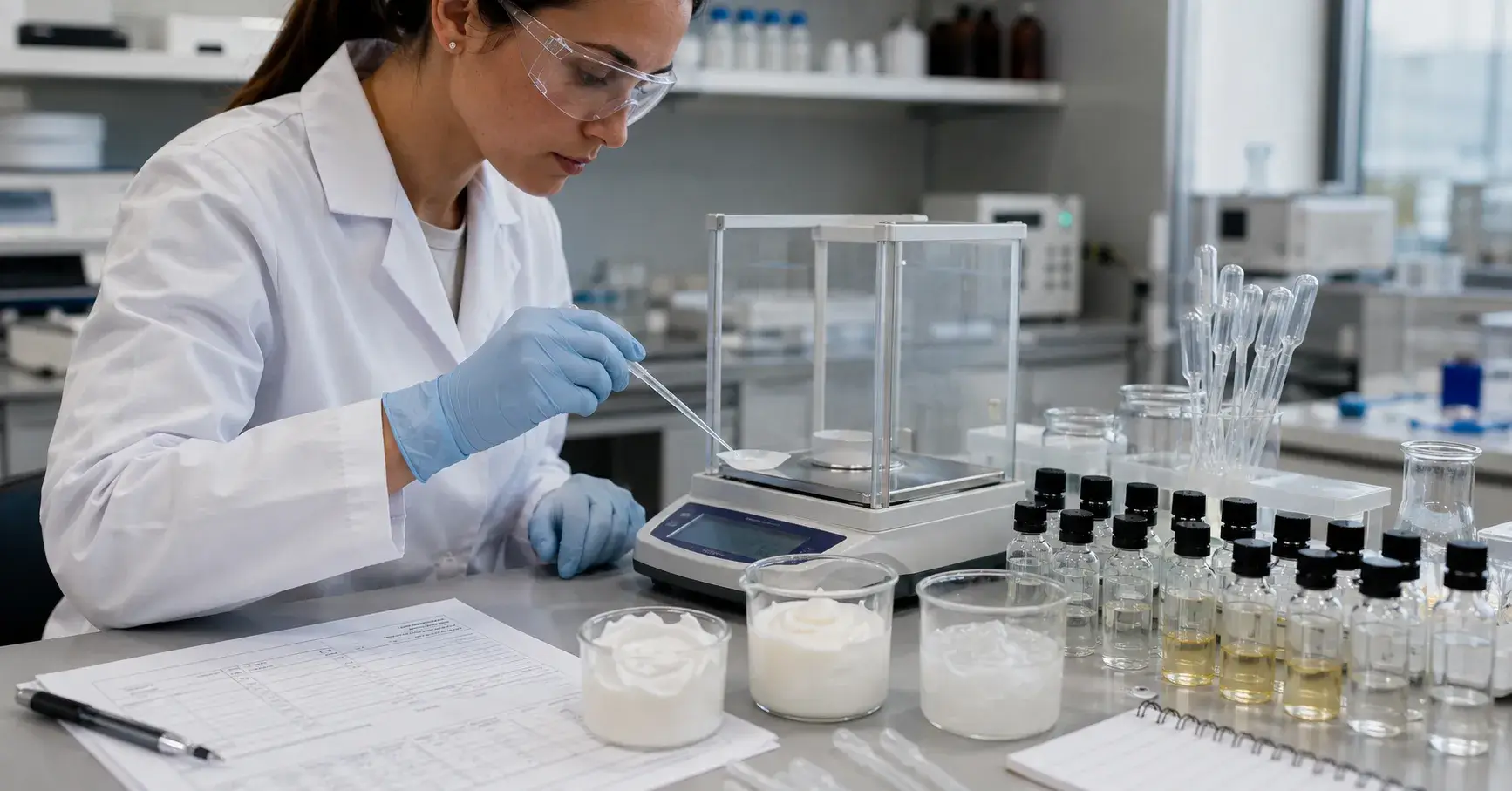
Fragrance is safe for most people but is a top cause of cosmetic contact dermatitis. Studies indicate 1-2% of the general population has fragrance allergies8. People with eczema, rosacea, or sensitive skin face higher risk. Reactions include redness, itching, burning, and rash. Dose, exposure time, and individual sensitivity determine outcomes.
Understanding Fragrance Sensitivity
I’ll clarify the types of reactions:
Irritant Contact Dermatitis:
- Immediate reaction to skin contact
- Dose-dependent (more = worse)
- Not immune-mediated
- Resolves when exposure stops
- Can affect anyone with sufficient exposure
Allergic Contact Dermatitis:
- Immune system reaction
- Requires prior sensitization
- Can react to tiny amounts
- May worsen with repeated exposure
- Requires avoidance of allergen
Prevalence Data
How common are fragrance reactions?
| Population | Reaction Rate | Notes |
|---|---|---|
| General population | 1-2% | True allergic reaction |
| Dermatology patients | 8-15% | Higher sensitivity population |
| Eczema patients | 20-30% | Compromised barrier function |
| Annual US medical visits | 5.7 million | Fragrance-related reactions |
Risk Factors
Certain populations need fragrance-free options:
Higher risk groups:
- Eczema/atopic dermatitis patients
- Rosacea patients
- Psoriasis patients
- Post-procedure skin (lasers, peels)
- Babies and young children
- Elderly (thinner skin barrier)
B2B Formulation Guidance
For suppliers developing skincare fragrances:
Best practices:
- Use IFRA-compliant concentrations9
- Minimize known sensitizers where possible
- Provide complete allergen documentation
- Offer low-allergen alternatives
- Support stability at recommended levels
- Include patch test recommendations
What Are Common Allergens Hidden in Fragrance Ingredients?
Transparency about allergens helps B2B clients meet regulatory requirements and build consumer trust. Knowing the specific compounds matters.
Common fragrance allergens include linalool (found in lavender, citrus), limonene (citrus oils), geraniol (rose, geranium), citronellol (rose), eugenol (clove), and coumarin (tonka bean). The EU requires disclosure of 26 specific allergens. Synthetic allergens include hydroxycitronellal and various musks. All must be declared above threshold levels.

The EU 26 Allergens
I’ll list all 26 regulated substances:
Group 1: Most Common in Natural Oils
- Limonene
- Linalool
- Citronellol
- Geraniol
- Citral
- Eugenol
- Coumarin
- Farnesol
Group 2: Found in Naturals and Synthetics
- Benzyl alcohol
- Benzyl benzoate
- Benzyl cinnamate
- Benzyl salicylate
- Cinnamyl alcohol
- Cinnamal
- Isoeugenol
Group 3: Primarily Synthetic
- Hydroxycitronellal
- Alpha-isomethyl ionone
- Butylphenyl methylpropional (Lilial—now restricted)
- Hydroxyisohexyl 3-cyclohexene carboxaldehyde (HICC—being phased out)
- Amyl cinnamal
- Amylcinnamyl alcohol
- Anise alcohol
- Hexyl cinnamal
- Methyl 2-octynoate
- Evernia prunastri (oakmoss)
- Evernia furfuracea (treemoss)
Threshold Requirements
Disclosure is required above these levels:
| Product Type | Threshold | Rationale |
|---|---|---|
| Leave-on products | 0.001% (10 ppm) | Longer skin contact |
| Rinse-off products | 0.01% (100 ppm) | Brief exposure |
B2B Documentation Best Practices
For fragrance suppliers:
Essential documents:
- Allergen declaration for each fragrance
- IFRA certificate
- Compliance statement by region
- Recommended use levels
- Stability data with allergen tracking
How Is Fragrance Use in Skincare Evolving in 2025?
Market trends shape B2B opportunities. Understanding where fragrance in skincare is heading helps suppliers prepare.
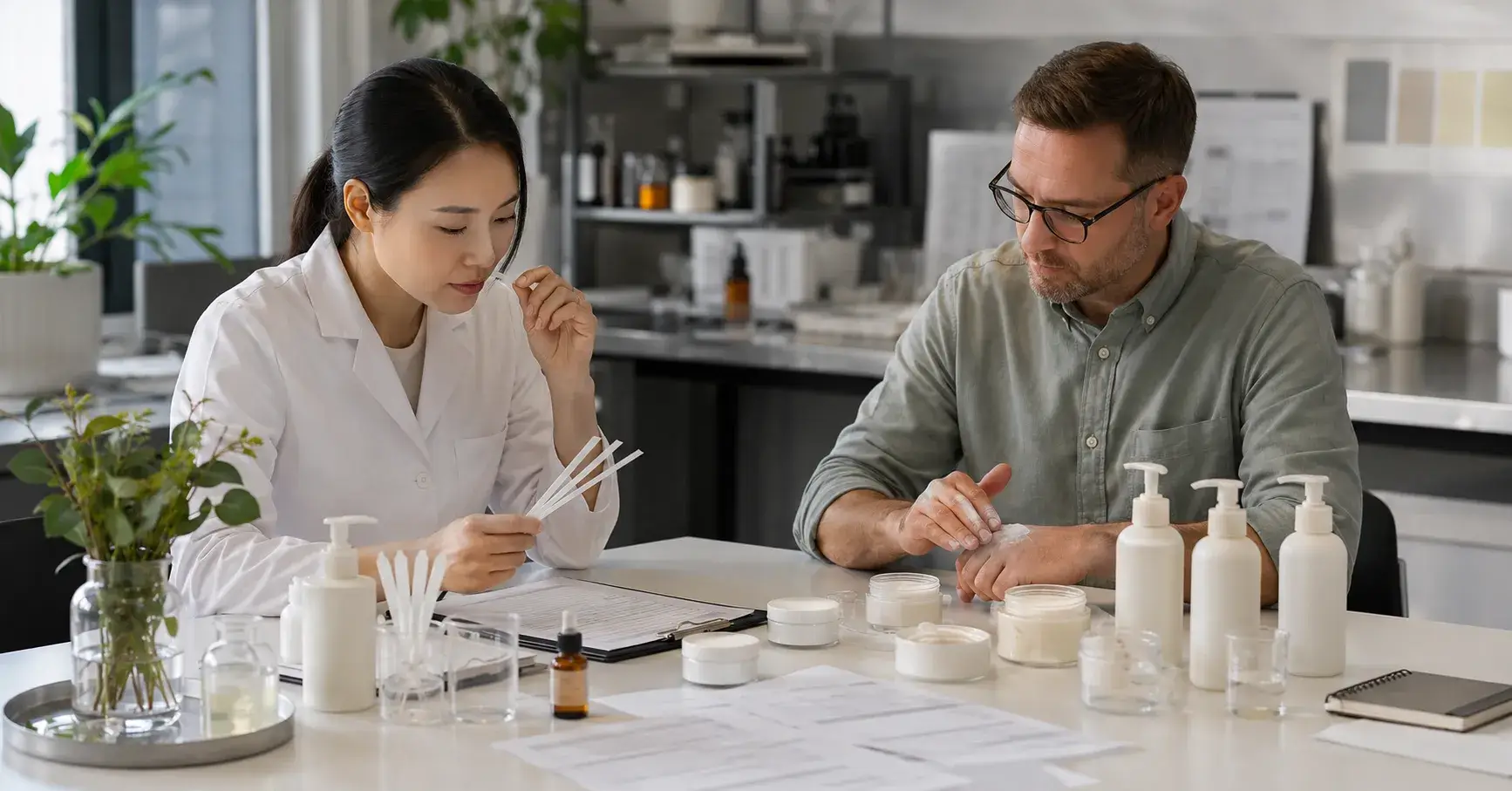
2025 trends include growing demand for fragrance-free products (30% of online sales), increased ingredient transparency, microbiome-friendly formulations, functional aromatherapy claims, and hybrid products combining skincare with sensory experiences. The clean beauty movement drives 7.2% CAGR growth in transparent formulations.
Key Market Trends
I’ll analyze major movements:
Transparency Movement:
- Full ingredient disclosure becoming standard
- "Clean" certifications requiring allergen limits
- Consumer apps scanning products for sensitizers
- Brands responding with simpler formulations
Fragrance-Free Growth:
- 30% of online skincare sales now fragrance-free
- Major brands launching fragrance-free lines
- Dermatologist recommendations driving demand
- Medical skincare positioning
Functional Fragrance:
- Aromatherapy benefit claims
- Stress-reduction scents
- Sleep-enhancing formulations
- Mood-boosting claims (requires substantiation)10
B2B Opportunity Map
| Trend | B2B Opportunity | Required Capability |
|---|---|---|
| Transparency | Full-disclosure fragrances | Complete documentation |
| Fragrance-free | Masking technology | Technical odor neutralization |
| Clean beauty | Low-allergen naturals | Certified sustainable sourcing |
| Functional | Aromatherapy blends | Benefit substantiation |
| Microbiome-friendly | Gentle formulations | Safety testing data |
Strategic Recommendations
For B2B suppliers navigating this market:
Short-term priorities:
- Complete allergen documentation for all products
- Develop low-allergen fragrance alternatives
- Offer fragrance-free masking solutions
- Build IFRA compliance capabilities
Long-term investments:
- Natural-identical synthesis capabilities
- Microbiome compatibility testing
- Functional fragrance research
- Sustainability certification programs
"The skincare fragrance market is bifurcating: premium sensory experiences versus complete fragrance elimination. B2B suppliers must serve both directions." — Market analysis
Conclusion
"Fragrance" in skincare means natural or synthetic scent compounds requiring allergen disclosure. B2B success requires transparency, documentation, and serving both scented and fragrance-free market segments.
-
Review FDA’s explanation of how natural and synthetic fragrance mixtures may be declared collectively and treated as confidential formulas. ↩
-
Consult FDA’s criteria and application process for protecting qualifying cosmetic ingredients as trade secrets. ↩
-
Verify FDA’s current explanation of cosmetic premarket approval and manufacturers’ responsibility for ingredient and product safety. ↩
-
Review the current EU amendment covering individual fragrance-allergen labeling and the thresholds for leave-on and rinse-off cosmetics. ↩
-
Consult IFRA’s official description of Certificates of Conformity, their intended use, and their limitations. ↩
-
Review OSHA’s required Safety Data Sheet sections for communicating chemical hazards, handling measures, and supplier information. ↩
-
Explore FDA guidance on cosmetic allergens, fragrance sensitivities, ingredient declarations, and fragrance-free product selection. ↩
-
Compare the prevalence estimate from a population-based fragrance-allergy study conducted across five European countries. ↩
-
Consult IFRA’s official risk-management standards for restrictions, prohibitions, and specifications affecting fragrance materials. ↩
-
Review FDA’s examples of fragrance-related therapeutic claims that can cause a cosmetic to be regulated as a drug. ↩