
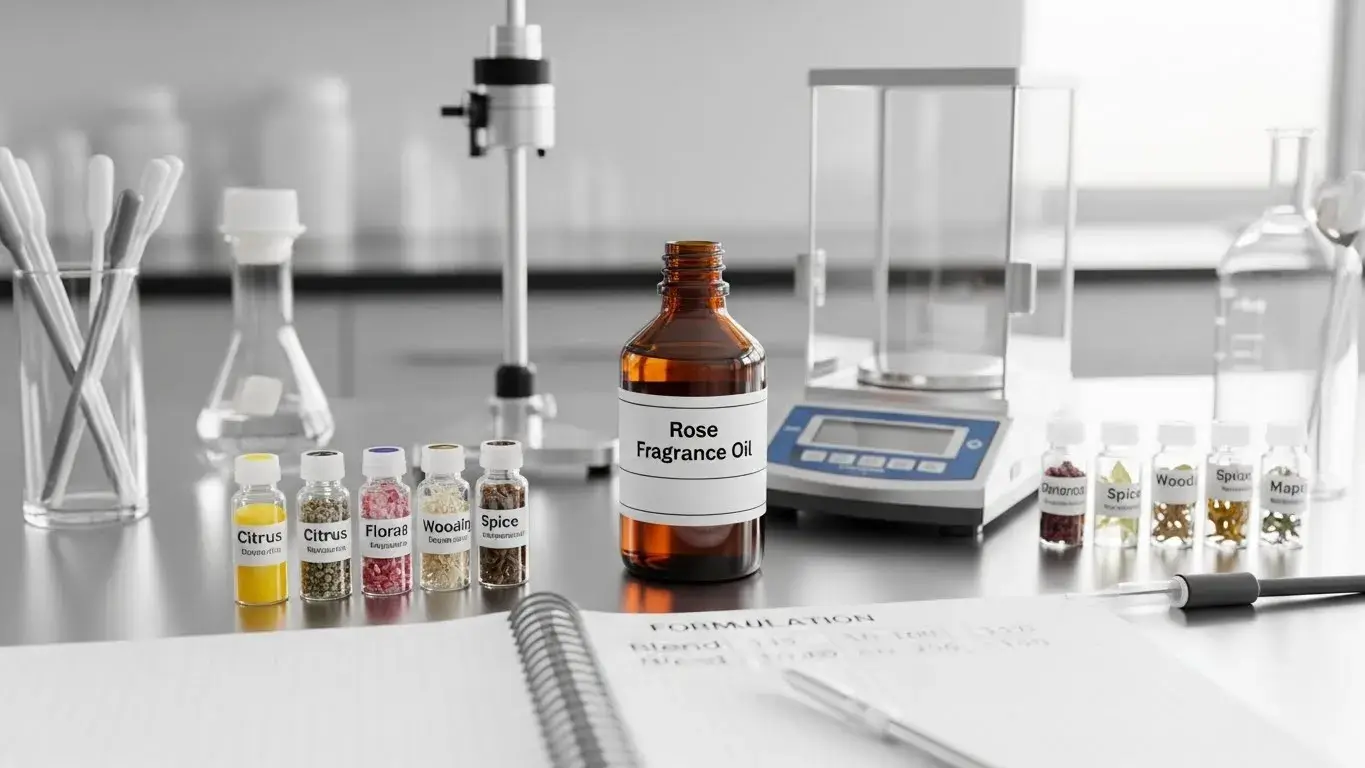
Creating rose blends confuses many formulators. Wrong combinations lead to overpowering, muddy scents that customers reject. I will show you exactly which notes pair with rose and how to build balanced, professional-grade formulas.
Rose fragrance oil blends best with citrus notes (bergamot, sweet orange), florals (jasmine, geranium, lavender), woody bases (sandalwood, patchouli), spices (cardamom, ginger), and gourmand elements (vanilla, honey). These pairings balance rose’s rich floral character across candles, perfumes, and personal care products.
In this guide, I cover scent family pairings, blend ratios, and proven recipes. You will learn how to create rose formulations that perform across different applications.
What Makes Rose Fragrance Oil an Ideal Base for Blending?
Many formulators underuse rose because they fear it will dominate blends. This hesitation limits creative possibilities. Understanding rose’s unique properties helps you use it confidently.
Rose fragrance oil functions as a versatile middle note with high fixative power. It blends successfully with 80%+ of common fragrance materials without clashing. The scent profile is floral, sweet, and slightly green, making it ideal as a 3-5% anchor in complex compositions.
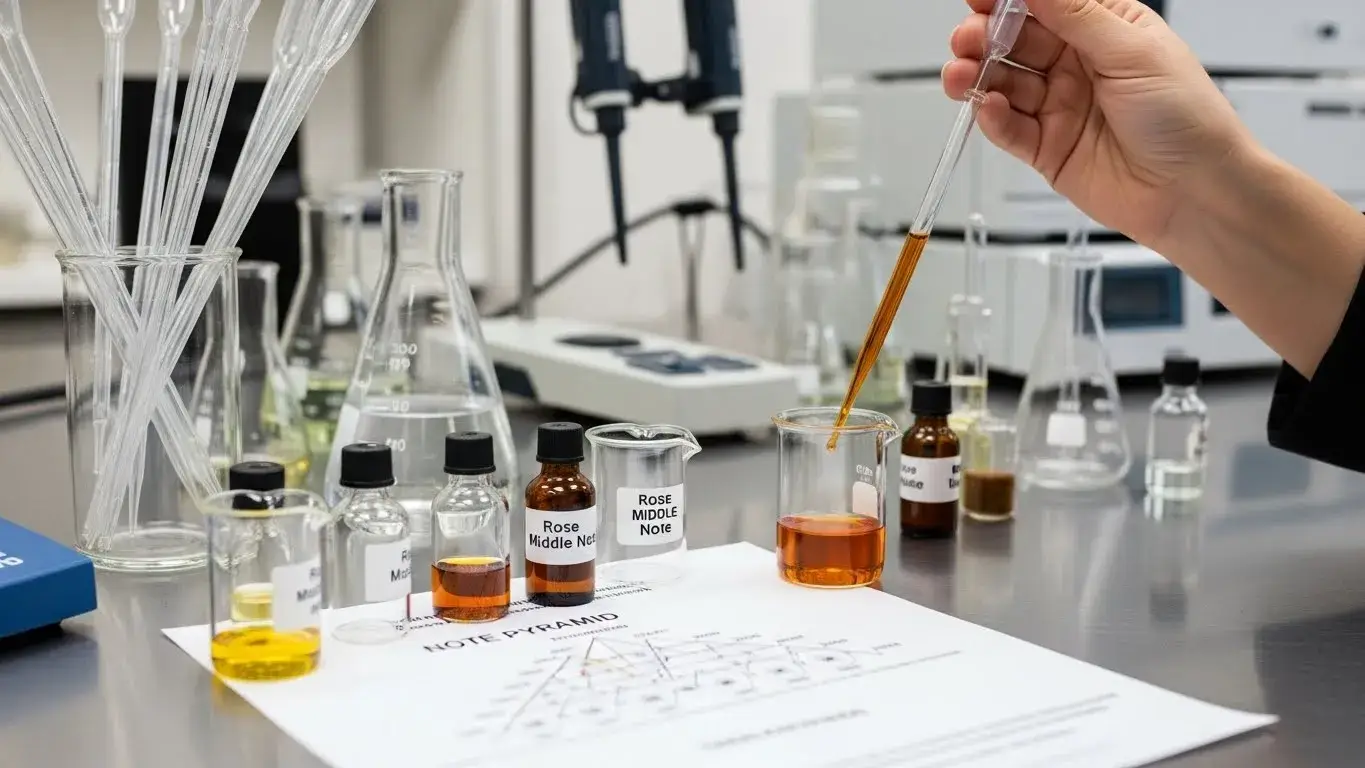
Rose’s Position in the Note Pyramid
Rose sits in the heart of most compositions. It is less volatile than citrus top notes. It is more volatile than heavy wood bases. This middle position makes rose an excellent bridge between opening notes and lasting bases.
| Note Position | Volatility | Rose’s Role |
|---|---|---|
| Top Notes | High | NOT here |
| Heart Notes | Medium | PRIMARY position |
| Base Notes | Low | Can extend here with fixatives |
Why Rose Works with So Many Notes
Rose contains over 300 aroma compounds1. This complexity allows it to find harmony with diverse partners. The main compounds include:
- Citronellol: Fresh, green character (connects with citrus)
- Geraniol: Sweet, rosy core (connects with florals)
- Phenylethyl alcohol: Honey-like sweetness (connects with gourmands)
- Rose oxide: Green, metallic facet (connects with herbs)
This chemical diversity explains why rose blends successfully with citrus, woods, spices, and gourmands. Each compound finds natural partners in different scent families.
Fragrance Oil vs Essential Oil Considerations
Rose fragrance oils offer advantages for B2B formulation:
| Factor | Rose Fragrance Oil | Rose Essential Oil |
|---|---|---|
| Cost | $50-200/kg | $5,000+/kg |
| Consistency | Batch-to-batch stable | Variable by harvest |
| Heat Stability | Good (80% retention) | Poor (50% fade) |
| IFRA Compliance | Often pre-certified | Requires careful calculation |
For candles and home fragrance, rose fragrance oils outperform essential oils. They maintain better hot throw and withstand wax temperatures without degradation.
Which Citrus Notes Create Fresh Rose Combinations?
Rose on its own can feel heavy and old-fashioned. Citrus notes solve this problem instantly. I will show you which citrus options work best and why.
Bergamot, sweet orange, and lemon are the most effective citrus partners for rose. They add brightness, cut sweetness, and create modern appeal. Use citrus at 20-30% of total formula in the top note position for balanced rose blends.
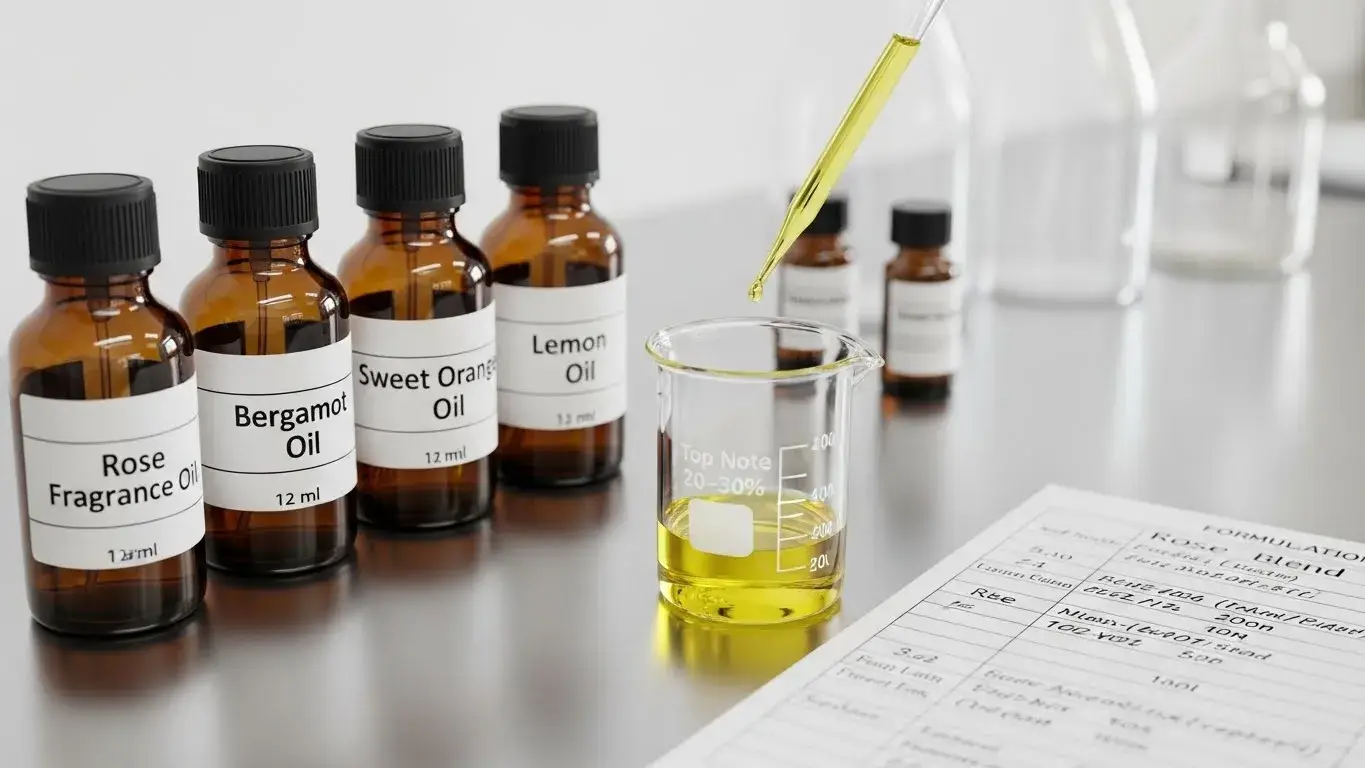
Why Rose Needs Citrus Lift
Rose fragrance oil is rich and dense. Without lifting notes, it can feel monotonous or "stuffy." Citrus top notes create movement in the scent journey:
- First impression: Fresh citrus greets the nose
- Development: Rose emerges as citrus fades
- Dry-down: Base notes anchor the composition
This evolution keeps users engaged. Static, single-note impressions bore customers quickly.
Citrus Options Compared
| Citrus Note | Character | Best Rose Application |
|---|---|---|
| Bergamot | Elegant, tea-like, soft | Fine fragrance, premium products |
| Sweet Orange | Warm, friendly, juicy | Candles, diffusers |
| Lemon | Bright, clean, sharp | Fresh rose accords |
| Grapefruit | Bitter, modern, sparkling | Youth-targeted products |
| Mandarin | Sweet, gentle, soft | Floral-dominant blends |
| Lime | Sharp, green, zesty | Summer collections |
A Practical Citrus-Rose Ratio
For most applications, I recommend this starting formula:
- Citrus (bergamot preferred): 20-25%
- Rose fragrance oil: 50-55%
- Base notes: 20-30%
This ratio provides adequate lift without overwhelming rose’s character. Bergamot creates the most sophisticated results2. Sweet orange creates the most accessible, crowd-pleasing blends.
"Rose-citrus hybrids have increased 30% in diffuser sales during 2025, driven by social media trends favoring fresh floral combinations."
How Do Woody and Resinous Oils Add Depth to Rose?
Rose needs grounding. Without base notes, blends feel incomplete and fade too quickly. I will explain which woods and resins complement rose best.
Sandalwood, patchouli, and benzoin are the most effective woody and resinous partners for rose. They add warmth, extend longevity, and prevent rose from smelling one-dimensional. Use these bases at 15-25% of total formula.
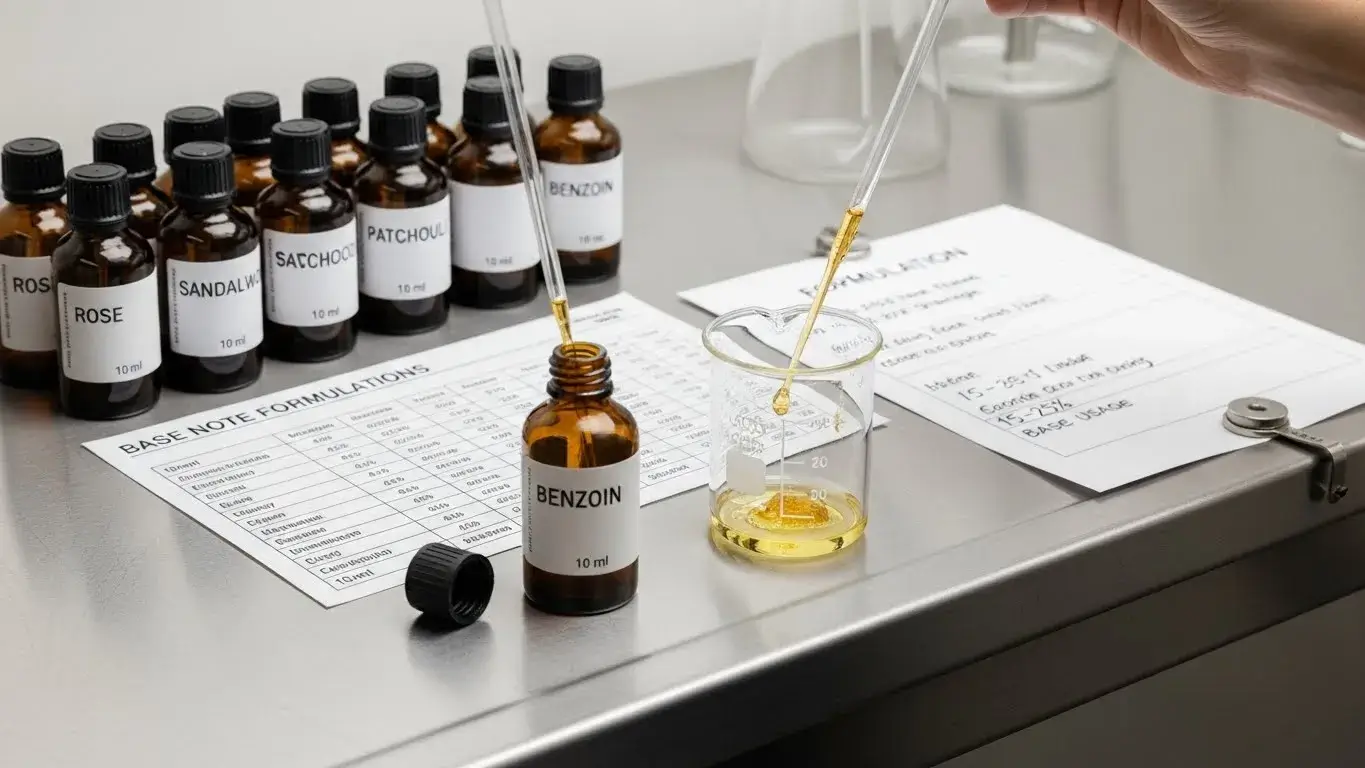
Why Sandalwood Dominates Rose Formulas
Sandalwood appears in most professional rose compositions. The pairing is classic for good reasons:
- Both notes share creamy, soft characteristics
- Sandalwood extends rose’s longevity by 30%
- The combination reads as "luxurious" to consumers
- No harsh contrasts or competition between notes
Sandalwood also fixes volatile rose compounds3. This extends wear time in perfumes and hot throw in candles.
Wood and Resin Options for Rose
| Base Note | Character | Effect with Rose |
|---|---|---|
| Sandalwood | Creamy, warm, milky | Perfect harmony, extends wear |
| Patchouli | Earthy, rich, grounding | Adds depth, vintage feel |
| Cedarwood | Soft, woody, clean | Modern, unisex appeal |
| Benzoin | Vanilla-like, balsamic | Sweetens, fixes |
| Frankincense | Resinous, spiritual | Elevates, adds mystery |
| Vetiver | Earthy, green, smoky | Grounding (use sparingly) |
Building a Rose-Wood Base Accord
For a solid rose-wood foundation, I recommend:
- Rose fragrance oil: 50%
- Sandalwood: 20%
- Benzoin: 10%
- Musk (white or clean): 10%
- Reserve 10% for top note additions
This creates a "rose-wood" base that you can customize with different top notes. Add citrus for freshness. Add jasmine for floral depth. Add spice for warmth.
What Floral Partners Enhance Rose Blends?
Rose combines beautifully with other florals. But wrong choices create muddy, indistinct results. I will show you which floral partners work and how to balance them.
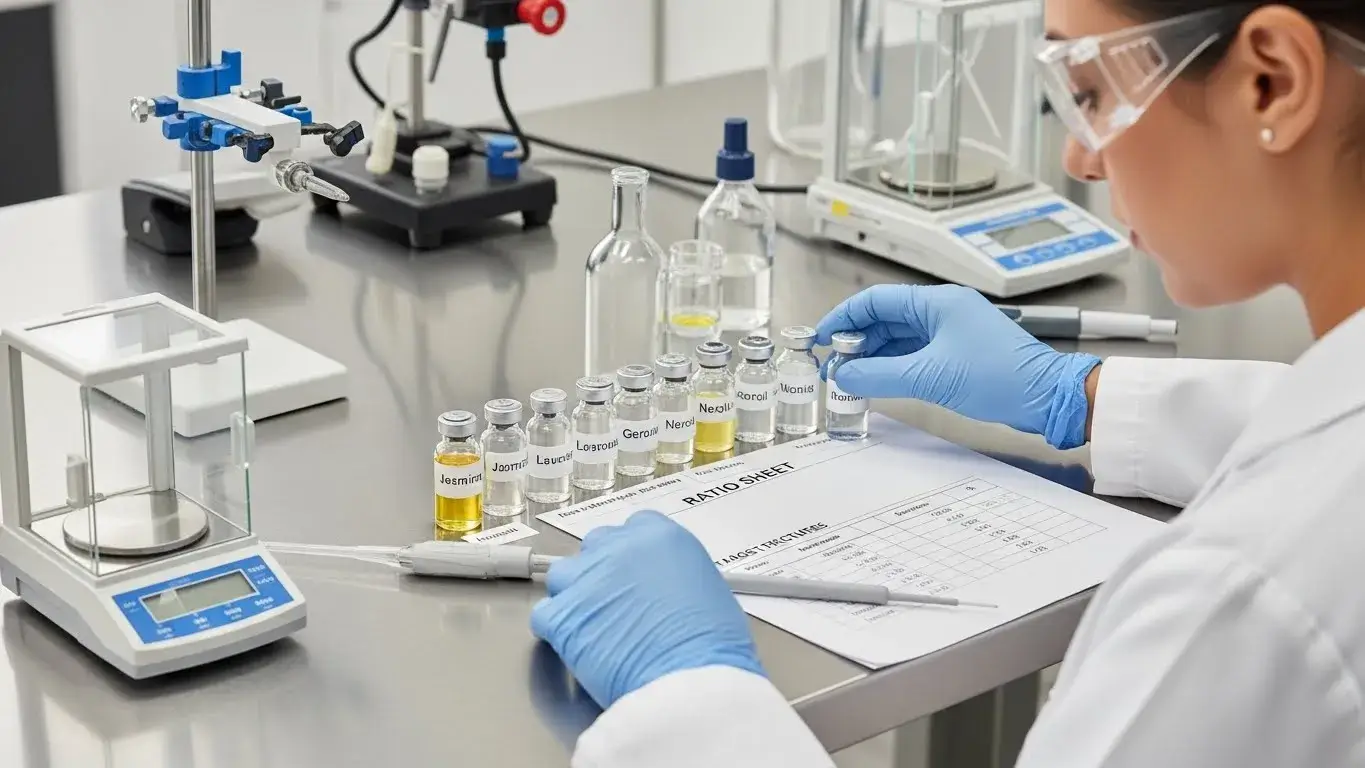
Jasmine, geranium, and lavender are the best floral partners for rose. Jasmine adds exotic depth. Geranium provides affordable green-floral support. Lavender creates calming aromatherapy blends. Use these florals at 15-30% alongside rose.
Floral Pairing Principles
Not all florals work equally well together. Rose pairs best with florals that offer contrast or enhancement:
Good partners offer:
- Different character (jasmine’s indolic vs rose’s green)
- Supporting role (geranium’s rosy-green under rose)
- Functional benefit (lavender’s calming association)
Poor partners create:
- Muddy same-ness (too many similar florals)
- Competition (equally strong notes fighting)
- Confusion (contradictory associations)
Floral Options Compared
| Floral Note | Character | Ratio with Rose | Best Application |
|---|---|---|---|
| Jasmine | Rich, exotic, indolic | 1:2 (jasmine:rose) | Luxury perfume |
| Geranium | Green, rosy, fresh | 1:3 | Budget formulations |
| Lavender | Herbal, calming, clean | 1:2 | Aromatherapy, sleep |
| Neroli | Citrus-floral, elegant | 1:3 | Fine fragrance |
| Ylang-ylang | Heavy, sweet, exotic | 1:4 (use sparingly) | Oriental blends |
| Peony | Light, fresh, dewy | 1:1 | Modern feminines |
The Rose-Jasmine Classic
Rose and jasmine together create the foundation of countless luxury fragrances. The combination works because:
- Jasmine’s indolic character adds depth
- Rose’s green facets add freshness
- Together they create "white floral" richness
Standard ratio: 2 parts rose to 1 part jasmine. This keeps rose as the star while jasmine provides supporting complexity.
Which Spicy and Herbal Oils Bring Warmth to Rose?
Spices transform rose from purely feminine to more complex and unisex. I will explain which spices work and how to use them effectively.
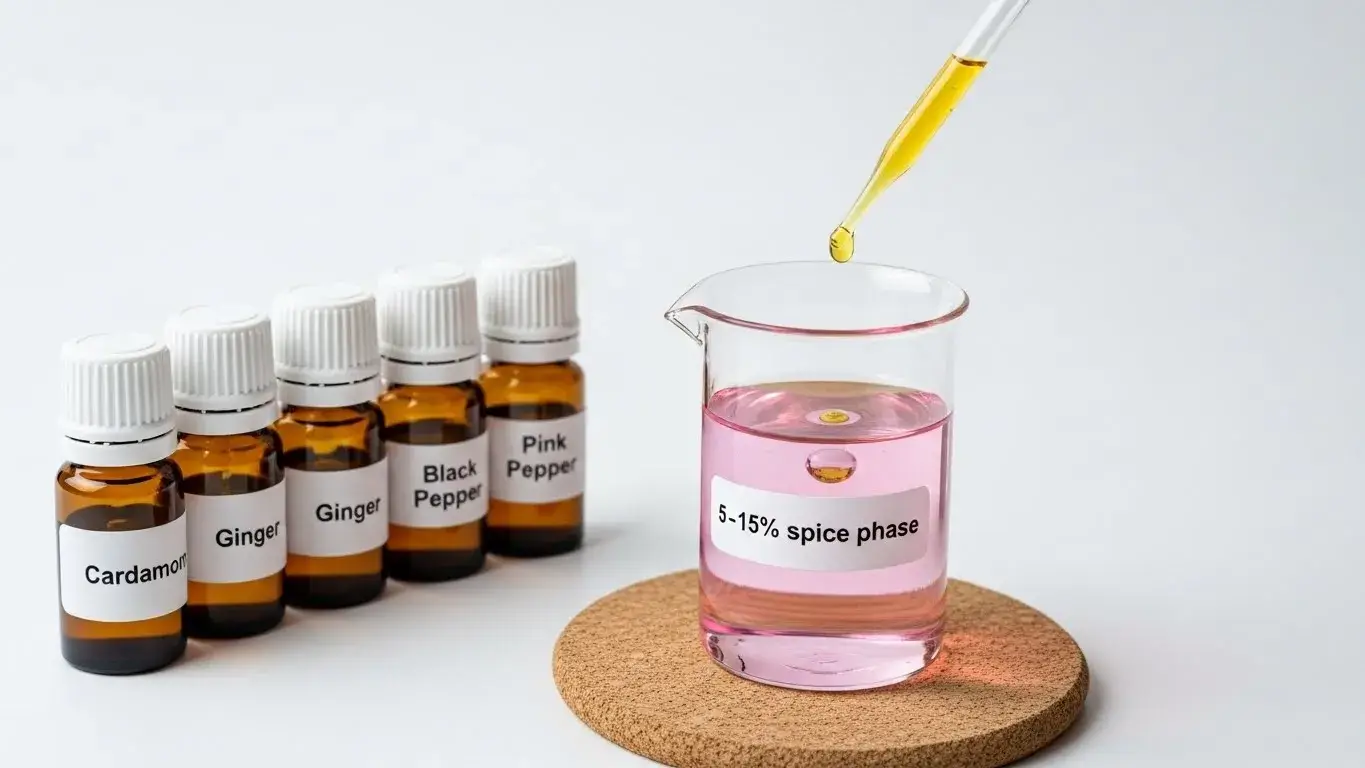
Cardamom, ginger, and black pepper are the most effective spicy partners for rose. They add warmth, complexity, and modern appeal. Use spices sparingly at 5-15% of total formula to avoid overwhelming rose’s delicate character.
Why Spice-Rose Blends Are Trending
Consumer preferences have shifted toward complex, unexpected combinations. Pure floral fragrances feel dated to younger buyers. Spice-rose blends offer:
- Unisex appeal (men and women both respond)
- Unexpected interest (stands out from competition)
- Warmth without heaviness (modern cozy)
- Gourmand crossover potential (edible associations)
Social media has amplified interest in rose-cardamom and rose-ginger combinations. These pairings appear frequently in trending fragrance discussions.
Spice Options for Rose
| Spice Note | Character | Effect with Rose | Usage Level |
|---|---|---|---|
| Cardamom | Warm, green, aromatic | Dessert-like warmth | 10-15% |
| Ginger | Fresh, spicy, zingy | Modern kick | 5-10% |
| Black Pepper | Sharp, dry, zesty | Edgy contrast | 3-8% |
| Cinnamon | Sweet, warm, cozy | Holiday feel | 5-10% |
| Clove | Rich, spicy, deep | Vintage character | 3-5% |
| Pink Pepper | Fruity, spicy, light | Modern freshness | 5-10% |
Building a Spiced Rose Accord
For a modern spiced rose formula, I recommend:
- Rose fragrance oil: 45%
- Cardamom: 12%
- Pink pepper: 8%
- Bergamot: 15%
- Sandalwood: 12%
- Vanilla: 8%
This creates a warm, inviting blend with gourmand undertones. The cardamom provides the primary spice character. Pink pepper adds brightness. Vanilla and sandalwood create a cozy base.
Are There Gourmand Elements That Complement Rose?
Gourmand-rose combinations are gaining market share rapidly. But wrong choices create cloying results. Let me show you which sweet notes work.
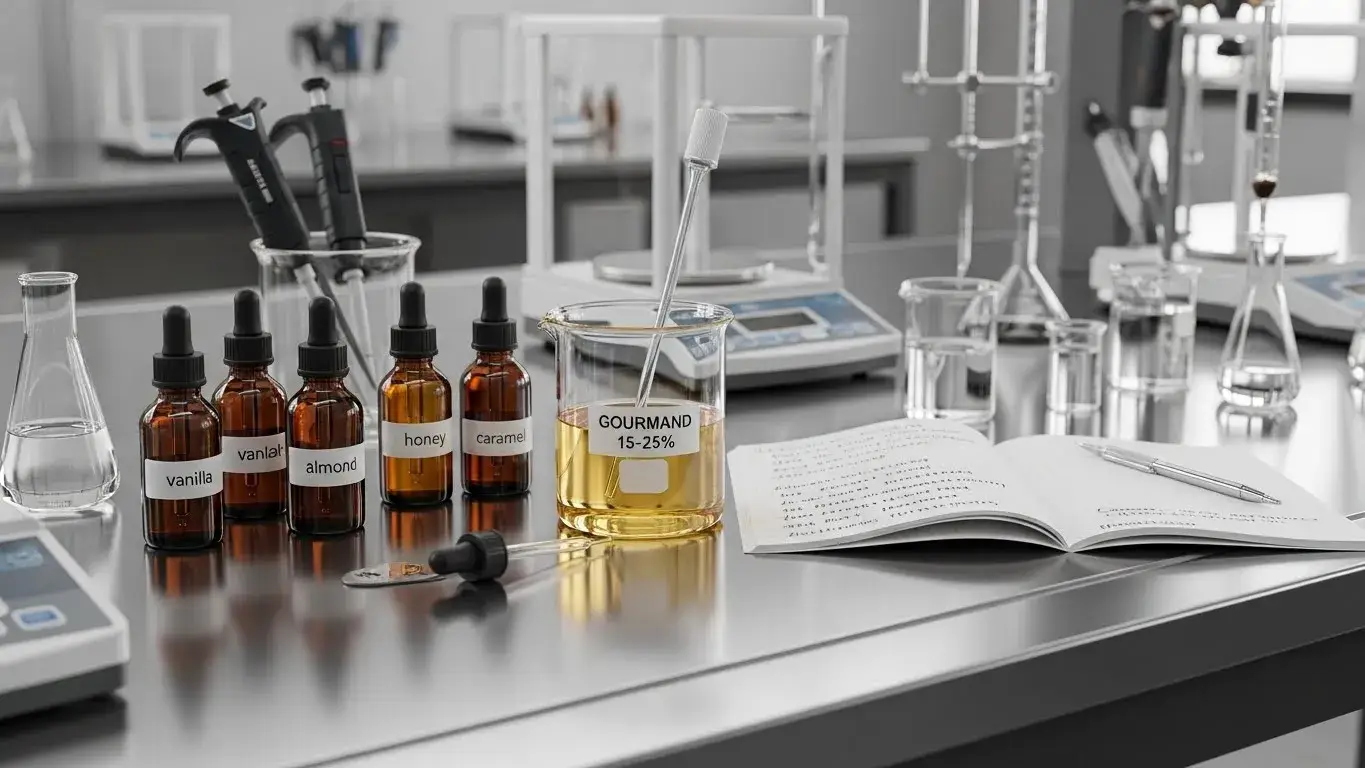
Vanilla, honey, and almond are the best gourmand partners for rose. They add creamy softness and dessert-like appeal. Use gourmand elements at 15-25% of total formula. Balance with citrus or spice to prevent excessive sweetness.
The Rise of Gourmand-Floral Hybrids
Market data shows gourmand-floral combinations growing faster than pure floral or pure gourmand categories. Rose-vanilla and rose-honey pairings appeal because they:
- Create comfort associations
- Feel approachable and wearable
- Work across multiple product categories
- Appeal to both traditional and adventurous buyers
Rose-cocoa butter combinations have shown 35% sales growth in recent trend reports.
Gourmand Options for Rose
| Gourmand Note | Character | Effect with Rose |
|---|---|---|
| Vanilla | Creamy, warm, sweet | Softens, adds comfort |
| Honey | Sweet, golden, warm | Natural sweetness |
| Almond | Nutty, cherry-like | Adds complexity |
| Caramel | Rich, buttery, sweet | Indulgent feel |
| Cocoa | Dark, rich, bitter-sweet | Sophisticated gourmand |
| Cashmere | Soft, powdery, cozy | Modern comfort |
Balancing Gourmand-Rose Blends
The main risk with gourmand-rose combinations is excessive sweetness. I use these techniques to maintain balance:
- Add citrus top notes: 15-20% bergamot or mandarin
- Include dry woods: 10-15% sandalwood or cedarwood
- Use restraint: Keep total gourmand under 25%
- Test extensively: Evaluate after 24-48 hour rest
A well-balanced rose-vanilla formula:
- Rose: 40%
- Vanilla: 15%
- Bergamot: 18%
- Sandalwood: 15%
- Musk: 12%
What Are Proven Rose Blend Recipes for Different Applications?
Theory helps, but formulators need working recipes. I will share tested formulas for diffusers, candles, and perfumes.
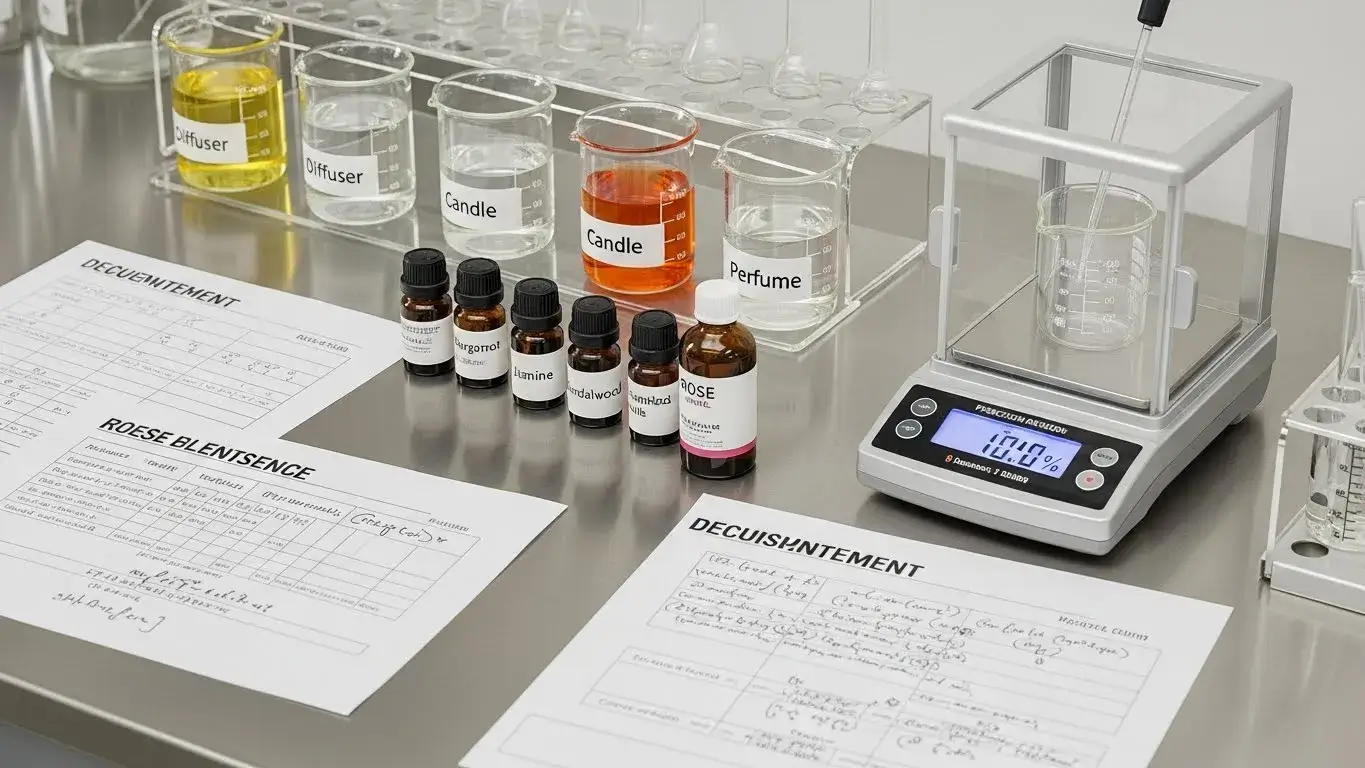
For diffusers, use 3 drops rose + 2 drops bergamot + 1 drop lavender. For candles, blend 5% rose + 2% sandalwood at 8% total load in soy wax. For perfumes, combine 30% rose + 20% jasmine + 10% vanilla in jojoba carrier oil.
Diffuser Blend Recipes
These recipes work for ultrasonic and reed diffusers:
Classic Rose Garden
- Rose: 3 drops
- Geranium: 2 drops
- Bergamot: 2 drops
Romantic Evening
- Rose: 3 drops
- Jasmine: 1 drop
- Sandalwood: 2 drops
- Vanilla: 1 drop
Fresh Rose Morning
- Rose: 2 drops
- Lemon: 2 drops
- Lavender: 2 drops
Candle Formulation Guidelines
For candle applications, rose fragrance oils perform best in:
| Wax Type | Recommended Load | Cure Time |
|---|---|---|
| Soy wax | 6-8% | 1-2 weeks |
| Coconut wax | 6-8% | 1 week |
| Paraffin | 8-10% | 3-5 days |
| Beeswax | 5-7% | 2 weeks |
Luxury Rose Candle Blend (at 8% total load):
- Rose fragrance oil: 60%
- Sandalwood: 20%
- Vanilla: 15%
- Musk: 5%
Always cure candles before evaluation. Rose blends develop significantly during the curing period4.
Perfume Oil Recipe
For roll-on perfume oils, I recommend this structure:
Rose Oriental Perfume
- Rose fragrance oil: 30%
- Jasmine: 15%
- Cardamom: 8%
- Bergamot: 12%
- Sandalwood: 15%
- Vanilla: 10%
- Musk: 10%
Dilute to 15-20% in fractionated coconut oil or jojoba for skin application.
How Do You Structure a Rose Blend Using the Fragrance Pyramid?
Understanding the olfactory pyramid5 helps create balanced rose compositions. Top notes provide initial impact, heart notes form the core, and base notes anchor the blend.
For rose-centered formulations, structure your blend with citrus or herbal top notes (15-25%), rose and supporting florals in the heart (40-55%), and woody or musky base notes (25-35%). This creates a fragrance that evolves beautifully over time.
What Role Do Fixatives Play in Rose Formulations?
Fixatives stabilize volatile compounds6 and extend the longevity of rose blends. Natural fixatives like sandalwood, benzoin, and labdanum work particularly well with rose’s delicate character.
For B2B applications, incorporating 10-20% fixative materials ensures your rose products maintain their scent profile throughout their intended use—whether in candles, diffusers, or personal care formulations.
Conclusion
Rose fragrance oil blends best with citrus, florals, woods, spices, and gourmands using proper ratios and structural balance.
-
Wikipedia’s comprehensive article on rose oil details the chemical composition including citronellol (24-35%), geraniol (13-22%), and other key aroma compounds that contribute to rose’s versatile blending properties. ↩
-
Fragrantica’s bergamot ingredient profile explains why this citrus note is called "the finest flower of citrus" and how it creates sophisticated pairings with floral notes like rose in chypre and fougère compositions. ↩
-
Mountain Rose Herbs’ guide to botanical fixatives explains how sandalwood and other natural base notes extend fragrance longevity by creating lasting foundations that anchor lighter notes like rose. ↩
-
CandleScience’s beginner guide details proper cure times for soy candles (1-2 weeks) and explains how curing allows fragrance oils to fully bind with wax for optimal scent throw. ↩
-
Experimental Perfume Club’s guide explains how top, middle, and base notes work together in the olfactory pyramid to create balanced fragrances that evolve beautifully from first spray to dry-down. ↩
-
Alpha Aromatics’ comprehensive article on fragrance fixatives explains how these compounds equalize vapor pressures and extend longevity, making them essential for professional rose formulations. ↩