
Choosing between organic and conventional evening primrose oil can feel overwhelming. Both promise similar benefits, yet prices vary dramatically.
The main difference lies in farming practices: organic evening primrose oil comes from plants grown without synthetic pesticides or fertilizers1, while conventional oil may contain trace chemical residues but costs 40-60% less.
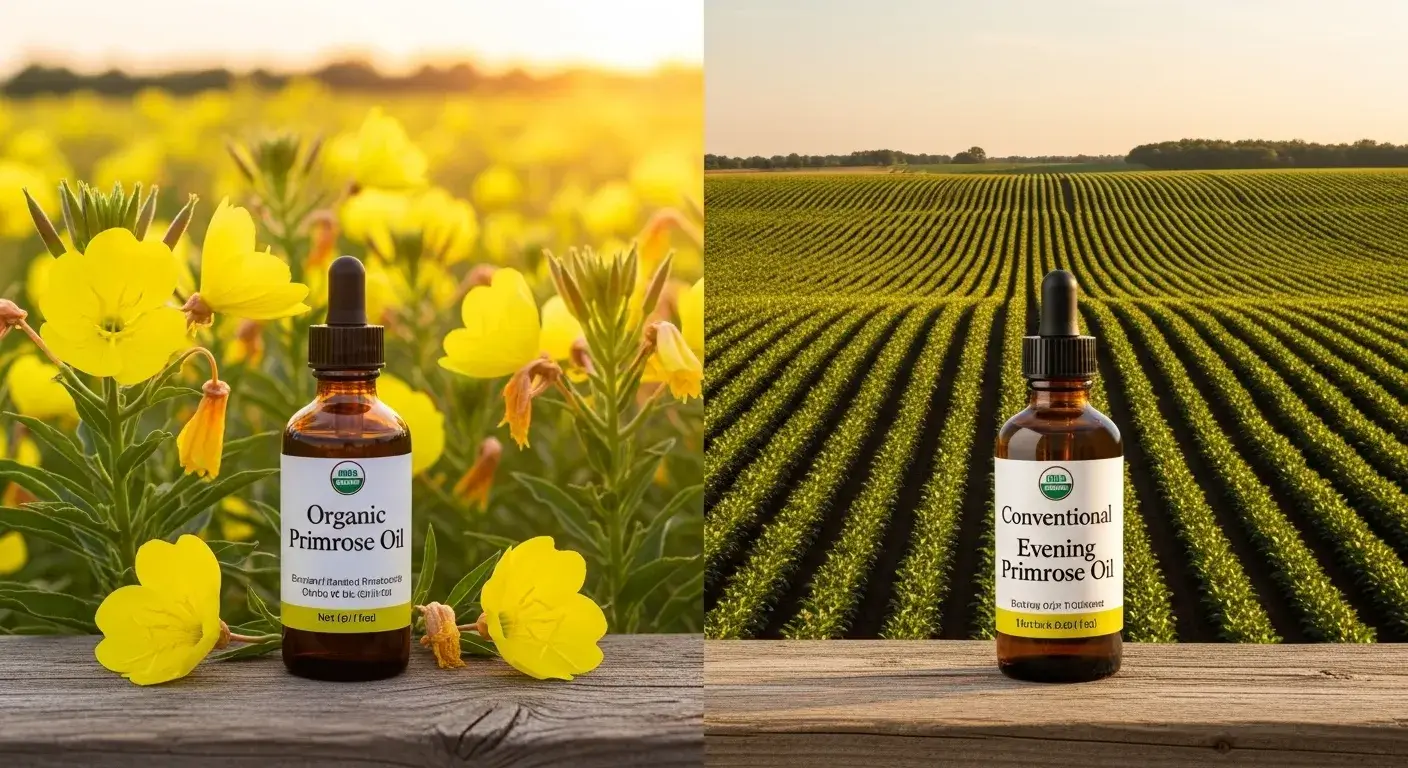
After years of working with essential oil suppliers worldwide, I’ve seen countless brands struggle with this decision. The evening primrose oil market2 is projected to reach $1.8 billion by 2033, driven by growing consumer demand for natural wellness products. Understanding these differences helps you make informed bulk essential oil sourcing decisions that align with your brand values and budget constraints.
Quick Answer: Which Evening Primrose Oil Should You Choose?
Your choice depends on your priorities and target market. Organic appeals to health-conscious consumers willing to pay premium prices.
Choose organic evening primrose oil for purity-focused brands targeting premium markets. Select conventional for cost-effective formulations where budget matters more than organic certification.
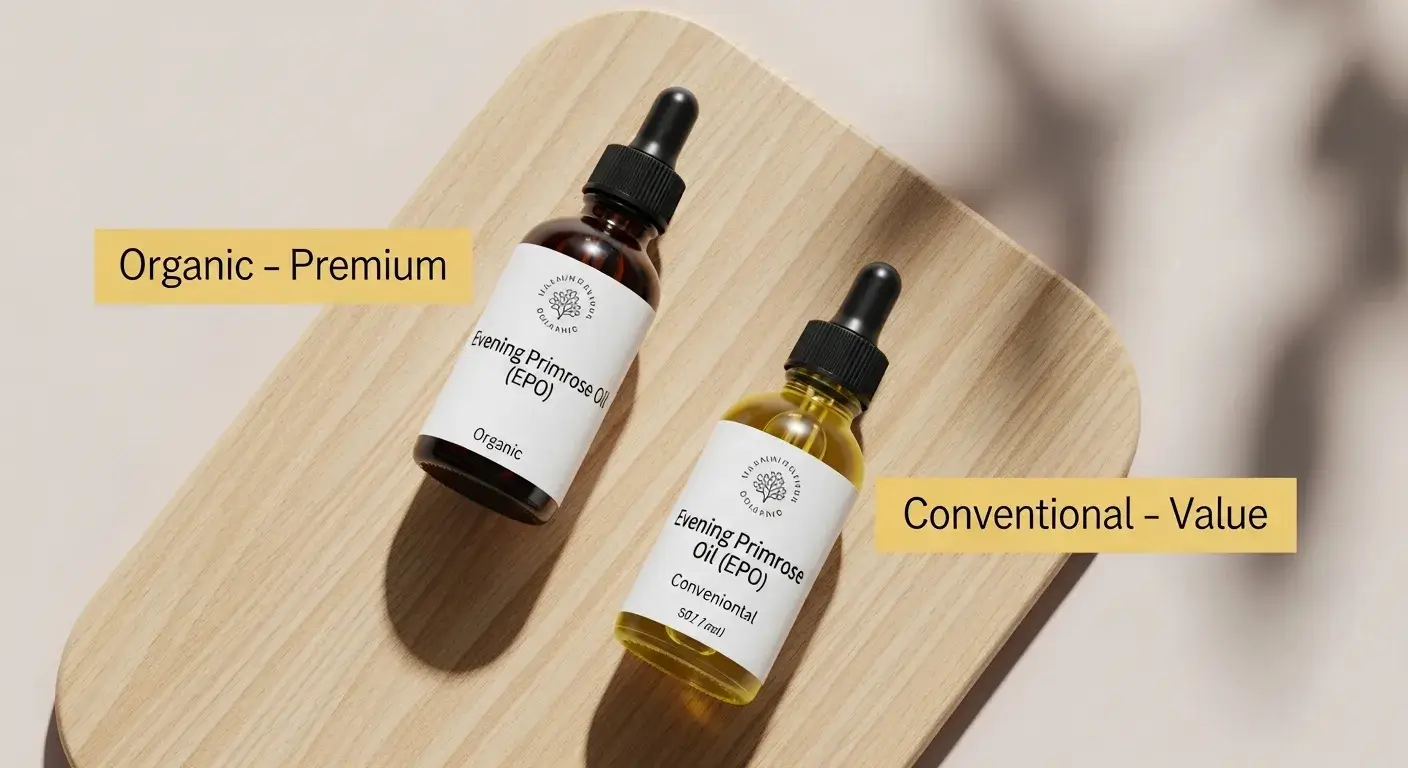
Decision Framework for Brands
The choice isn’t always black and white. I’ve helped numerous clients navigate this decision based on three key factors:
| Priority Factor | Choose Organic | Choose Conventional |
|---|---|---|
| Target Market | Premium, health-conscious consumers | Budget-conscious, mass market |
| Brand Positioning | Clean beauty, natural wellness | Affordable wellness, mainstream |
| Profit Margins | Higher margins justify premium costs | Tight margins require cost control |
Budget considerations play a crucial role. Organic evening primrose oil typically costs $2.50-$5.00 per ounce, while conventional ranges from $1.50-$3.00. This 40-60% price difference directly impacts your product’s final cost structure.
Market positioning matters equally. Brands targeting wellness-focused consumers often find organic certification essential for credibility. However, mainstream brands serving price-sensitive markets may prioritize affordability over organic status.
Quality testing remains critical regardless of your choice. Both organic and conventional oils should include comprehensive documentation including COA, GC-MS analysis, and residue testing to ensure safety and potency. Understanding the essential oil manufacturing process helps evaluate potential suppliers’ quality control capabilities.
Evening Primrose Oil Market Insights: What You Need to Know?
The global evening primrose oil market shows impressive growth potential. Current market value sits between $0.2-1.1 billion, with strong expansion expected.
Market projections indicate 4-7.2% annual growth through 2033, driven by increasing demand for natural health products and clean beauty formulations worldwide.

Market Dynamics Shaping Industry Growth
Understanding market trends helps inform your sourcing strategy. The evening primrose oil industry reflects broader shifts toward natural ingredients3 across multiple sectors.
Supply chain patterns reveal interesting geographic concentrations. China leads global exports, while the United States dominates imports. This creates opportunities for strategic partnerships with reliable suppliers who understand international quality standards.
Application distribution shows dietary supplements consuming 80% of market demand, followed by cosmetics and pharmaceuticals. This concentration means supplement-grade quality requirements often drive industry standards.
Consumer behavior trends indicate growing preference for transparency and traceability. Modern buyers want detailed documentation about farming practices, processing methods, and quality testing results.
| Market Segment | 2023 Value | Growth Driver |
|---|---|---|
| Dietary Supplements | 80% market share | Hormone balance, women’s health |
| Cosmetics | 15% market share | Anti-aging, eczema treatment |
| Pharmaceuticals | 5% market share | Therapeutic applications |
The organic segment represents a premium subset with higher growth rates. While specific organic market data remains limited, industry experts estimate organic products command 30-50% price premiums across natural ingredient categories.
Organic Evening Primrose Oil: Production Standards and Benefits?
Organic certification requires strict adherence to chemical-free farming practices. Plants grow without synthetic pesticides, fertilizers, or genetic modification.
Organic evening primrose oil offers guaranteed purity from synthetic residues, environmental sustainability benefits, and appeals to consumers prioritizing clean ingredients.

Understanding Organic Certification Standards
Organic certification involves rigorous oversight that goes beyond simple farming practices. The process ensures complete traceability from seed to final product.
Farming requirements eliminate synthetic inputs entirely. Organic farms use natural pest control methods, organic fertilizers, and crop rotation systems. This approach takes longer and requires more labor, contributing to higher costs.
Processing standards maintain organic integrity throughout extraction and refining. Cold-pressing remains the preferred method for preserving beneficial compounds like gamma-linolenic acid (GLA) and natural antioxidants.
Certification bodies like USDA Organic4 and the Soil Association conduct regular inspections. These audits verify compliance with organic standards and provide consumers with trusted third-party validation.
Key Benefits of Organic Evening Primrose Oil
| Benefit Category | Specific Advantage | Consumer Appeal |
|---|---|---|
| Purity | No synthetic pesticide residues | Health-conscious buyers |
| Sustainability | Eco-friendly farming practices | Environmentally aware consumers |
| Quality | Often unrefined, retains natural compounds | Premium product positioning |
| Certification | Third-party verified standards | Trust and transparency |
Shelf life considerations require careful handling. Organic evening primrose oil typically lasts 6-12 months when properly stored. Refrigeration extends shelf life and maintains potency of sensitive compounds.
Premium positioning allows brands to charge higher prices while appealing to consumers who value organic certification. This creates opportunities for higher profit margins despite increased raw material costs.
Conventional Evening Primrose Oil: Cost-Effective Alternative Analysis?
Conventional farming methods may include synthetic pesticides and fertilizers to maximize crop yields. This approach reduces production costs significantly.
Conventional evening primrose oil provides similar nutrient profiles at 40-60% lower costs, making it ideal for price-sensitive formulations and mass-market products.

Production Efficiency and Cost Benefits
Conventional farming optimizes yield through modern agricultural techniques. These methods enable large-scale production that keeps costs manageable for budget-conscious brands.
Yield optimization allows farmers to produce more oil per acre using proven fertilization and pest control methods. Higher yields translate directly into lower per-unit costs for manufacturers and brands.
Processing flexibility means conventional oil can undergo various refinement levels. Refined conventional oil has longer shelf life and neutral taste, while unrefined versions retain more natural compounds.
Supply chain advantages include greater availability and shorter lead times. Conventional evening primrose oil production volumes exceed organic by significant margins, ensuring consistent supply even during peak demand periods.
Quality Considerations for Conventional Oil
| Quality Factor | Conventional Approach | Quality Impact |
|---|---|---|
| Residue Testing | Required for safety compliance | Ensures consumer safety |
| GLA Content | 8-10% (same as organic) | Equivalent therapeutic potential |
| Processing Options | Refined or unrefined available | Flexibility for different applications |
| Documentation | COA, MSDS, allergen statements | Meets regulatory requirements |
Residue management involves thorough testing and refining processes. While conventional farming may leave trace pesticide residues, proper processing and quality control minimize these concerns.
Cost structure makes conventional oil attractive for mass-market products. The significant price difference allows brands to offer affordable wellness products while maintaining reasonable profit margins.
Regulatory compliance remains equally important. Conventional evening primrose oil must meet the same safety and quality standards as organic, including comprehensive testing and documentation.
Side-by-Side Comparison: 7 Key Differences That Matter?
Understanding specific differences helps inform your sourcing decisions. Each factor impacts cost, quality, and market positioning differently.
The seven critical differences include farming practices, certification requirements, chemical residue levels, environmental impact, pricing, processing methods, and consumer appeal factors.
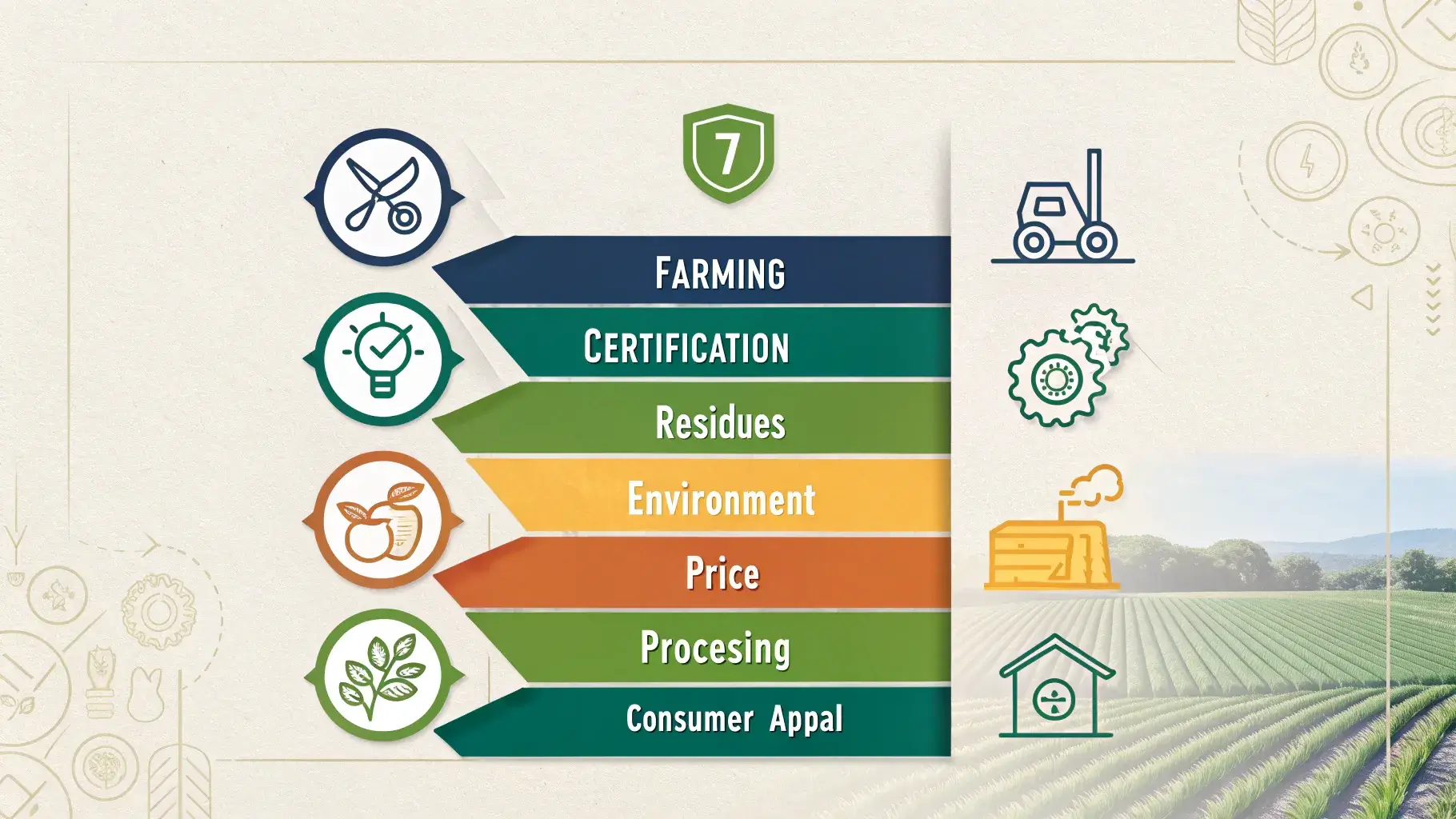
Comprehensive Comparison Analysis
Real-world sourcing decisions require detailed understanding of how these differences impact your business operations and customer satisfaction.
Farming practice variations create the foundation for all other differences. Organic farms operate under strict guidelines that prohibit synthetic inputs, while conventional farms optimize efficiency through modern agricultural methods.
Cost implications extend beyond raw material pricing. Organic certification requires additional documentation, testing, and supply chain verification that adds operational complexity.
Market positioning opportunities differ significantly between organic and conventional options. Premium brands often require organic certification for credibility, while value-focused brands prioritize cost efficiency.
| Comparison Factor | Organic Evening Primrose Oil | Conventional Evening Primrose Oil |
|---|---|---|
| Farming Methods | No synthetic pesticides, fertilizers, GMOs | May use synthetic agricultural inputs |
| Certification | USDA, Soil Association verified | No organic certification required |
| Chemical Residues | Guaranteed residue-free | Possible trace residues, minimized by processing |
| Environmental Impact | Lower environmental footprint | Potentially higher environmental impact |
| Price Range (USD/oz) | $2.50-$5.00 | $1.50-$3.00 |
| Processing Options | Often cold-pressed, unrefined | Flexible processing, refined or unrefined |
| Consumer Appeal | Premium, health-conscious markets | Budget-friendly, mainstream appeal |
Quality consistency remains achievable with both options when working with reputable suppliers. The key lies in establishing clear specifications and testing requirements regardless of organic status.
Supply chain complexity increases with organic certification due to additional documentation and traceability requirements. However, this complexity often translates into better overall quality control processes.
Quality Indicators: How to Choose Premium Evening Primrose Oil?
Quality evaluation goes beyond organic certification. Multiple factors determine oil potency, purity, and stability for your applications.
Premium evening primrose oil requires comprehensive testing documentation, proper extraction methods, optimal GLA content (8-10%), and appropriate storage conditions regardless of organic status.
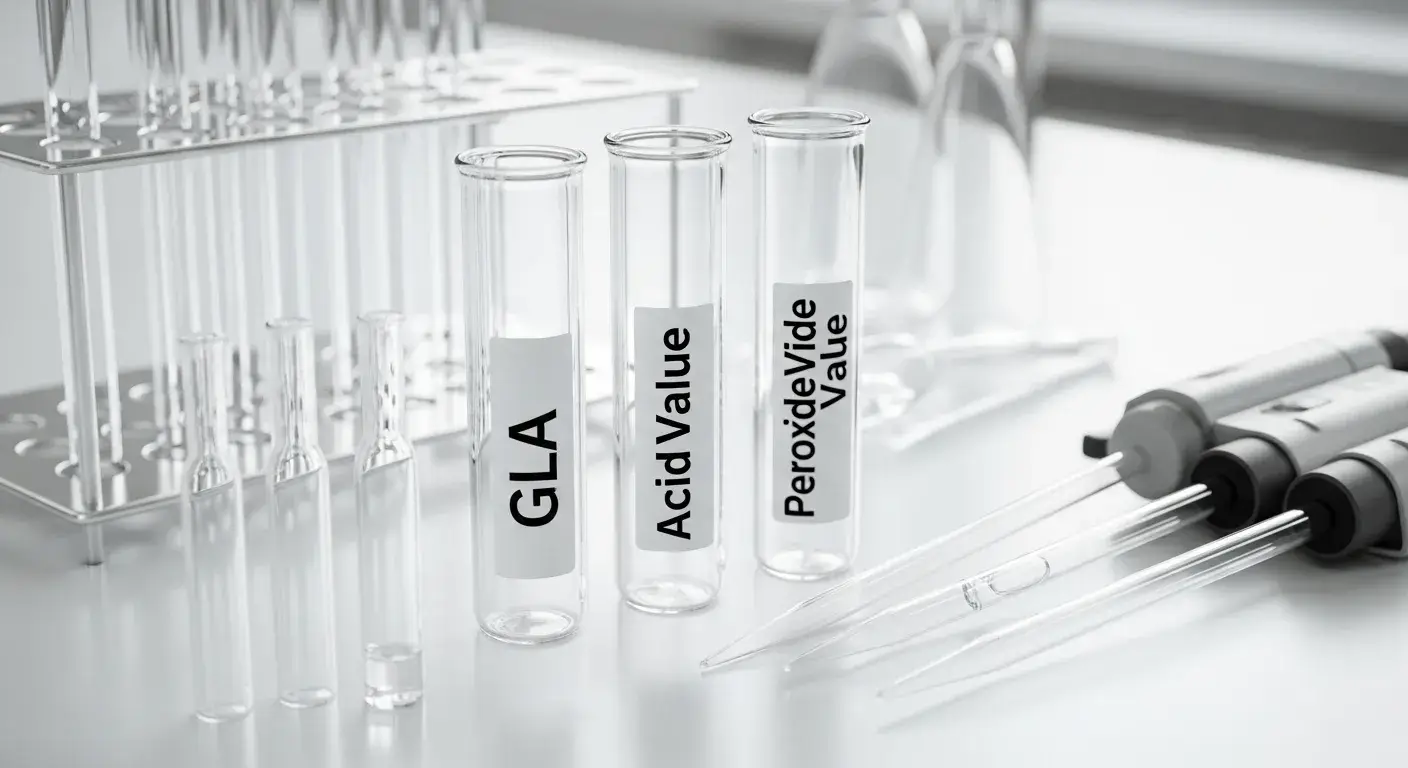
Essential Quality Testing Requirements
Working with essential oil suppliers for over a decade has taught me which quality indicators truly matter for product success and customer satisfaction.
GLA content analysis represents the most critical quality measurement. Evening primrose oil should contain 8-10% gamma-linolenic acid5 to deliver expected therapeutic benefits. Lower percentages indicate poor quality or adulteration.
Extraction method verification impacts both quality and shelf life. Cold-pressed oils6 retain more beneficial compounds but require careful storage. Solvent-extracted oils may have longer shelf life but could contain processing residues.
Comprehensive documentation should include Certificate of Analysis (COA), Gas Chromatography-Mass Spectrometry (GC-MS) reports, heavy metals testing, and microbiological analysis.
Quality Assessment Checklist
| Quality Parameter | Acceptable Range | Testing Method |
|---|---|---|
| GLA Content | 8-10% | GC-MS analysis |
| Moisture Content | <0.5% | Karl Fischer titration |
| Acid Value | <4.0 mg KOH/g | Titration method |
| Peroxide Value | <10 meq O2/kg | Iodometric titration |
| Heavy Metals | <10 ppm total | ICP-MS analysis |
Storage condition requirements significantly impact oil quality over time. Evening primrose oil requires cool, dark storage with minimal oxygen exposure. Nitrogen blanketing during storage and transport preserves quality.
Supplier qualification involves evaluating manufacturing capabilities, quality systems, and regulatory compliance. GMP-certified facilities7 provide better quality assurance than non-certified suppliers.
Traceability systems enable tracking from raw material sourcing through final product delivery. This capability becomes essential for organic certification and quality issue resolution.
Industry Expert Recommendations for Different Use Cases?
Application-specific requirements influence whether organic or conventional evening primrose oil works better. Different industries prioritize different factors.
Skincare brands typically choose organic for clean beauty positioning, while supplement manufacturers often select conventional for cost efficiency in mass-market products.

Application-Specific Sourcing Strategies
Years of consulting with brands across various industries have revealed clear patterns in successful evening primrose oil sourcing decisions.
Premium skincare applications almost universally benefit from organic certification. Consumers in this segment actively seek organic ingredients and willingly pay premium prices for perceived purity and quality.
Mass-market supplements often perform equally well with conventional oil when properly formulated and tested. The cost savings enable competitive pricing in price-sensitive market segments.
Therapeutic applications require focusing on GLA content and purity rather than organic status. Medical and pharmaceutical uses prioritize documented potency and safety over farming methods.
Industry-Specific Recommendations
| Industry Segment | Recommended Type | Key Considerations |
|---|---|---|
| Premium Skincare | Organic, unrefined | Clean beauty positioning, consumer expectations |
| Mass-Market Supplements | Conventional, refined | Cost efficiency, stable supply |
| Natural Cosmetics | Organic preferred | Brand alignment, marketing claims |
| Therapeutic Products | Either, focus on GLA | Potency verification, safety documentation |
| Private Label | Depends on target market | Client requirements, price sensitivity |
Formulation considerations may favor one type over another. Unrefined organic oil provides natural antioxidants but may have stronger odor. Refined conventional oil offers neutral characteristics for sensitive formulations.
Regulatory requirements vary by market and application. European markets often favor organic certification, while other regions may prioritize cost-effectiveness and consistent supply.
Supply chain planning should account for seasonal availability and lead times. Organic evening primrose oil may have longer lead times due to limited production capacity. For detailed specifications and sourcing information, visit our dedicated evening primrose oil product page.
Common Myths About Evening Primrose Oil Debunked?
Misconceptions about organic versus conventional evening primrose oil create confusion among brands and consumers. Separating fact from fiction improves decision-making.
Common myths include organic oil having higher GLA content, conventional oil being unsafe, and processing methods being tied to organic status.

Addressing Industry Misconceptions
Industry experience reveals several persistent myths that influence purchasing decisions without scientific basis. Understanding facts helps optimize sourcing strategies.
Myth 1: Organic oil contains more GLA. Both organic and conventional evening primrose oil typically contain 8-10% GLA. Farming methods don’t significantly impact this essential fatty acid concentration.
Myth 2: Conventional oil contains dangerous pesticide residues. While possible, proper processing and testing minimize residue risks. Many conventional oils test below detectable limits for pesticide residues.
Myth 3: Organic oil is always unrefined. Processing methods are independent of organic status. Some organic oils undergo refining for stability, while some conventional oils remain unrefined for natural appeal.
Fact-Based Comparisons
| Myth | Reality | Impact on Sourcing |
|---|---|---|
| "Organic has more nutrients" | Similar GLA content (8-10%) | Choose based on other factors |
| "Conventional is unsafe" | Proper testing ensures safety | Focus on supplier quality systems |
| "Organic lasts longer" | Storage conditions matter more | Prioritize proper handling |
| "Processing indicates quality" | Both types can be refined/unrefined | Specify processing requirements |
Evidence-based evaluation reveals that supplier quality and testing protocols impact safety and efficacy more than organic certification alone. Reputable suppliers provide comprehensive documentation regardless of farming methods.
Cost-benefit analysis should consider total value rather than raw material cost alone. Sometimes conventional oil with superior testing and documentation provides better value than poorly documented organic alternatives.
Scientific literature shows limited evidence for significant nutritional differences between properly processed organic and conventional evening primrose oils. Both can deliver expected therapeutic benefits when sourced from quality suppliers.
Conclusion
Choosing between organic and conventional evening primrose oil depends on your brand positioning, target market, and budget constraints. Both options can deliver quality results when sourced properly from established manufacturers serving multiple industries.
Footnotes:
About PhytoEx: As your trusted partner for essential oil solutions, PhytoEx provides both organic and conventional evening primrose oil with comprehensive testing documentation. Our GMP-certified facility ensures consistent quality whether you choose organic purity or conventional cost-efficiency. Contact us for samples and technical specifications tailored to your specific applications.
-
Official USDA guidelines define organic farming standards and prohibited synthetic substances ↩
-
Comprehensive market analysis with growth projections and industry trends through 2033 ↩
-
Industry report on consumer preferences driving natural ingredient market expansion ↩
-
Official certification requirements and standards for organic agricultural products ↩
-
Scientific research on gamma-linolenic acid benefits and therapeutic applications ↩
-
Technical comparison of oil extraction methods and their impact on quality ↩
-
FDA guidelines on good manufacturing practices for dietary supplement facilities ↩