

Industrial bulk storage of evening primrose oil requires specialized equipment and precise environmental controls
Quick Reference: Evening Primrose Oil Storage Specifications
| Storage Parameter | Unrefined EPO | Refined EPO | Critical Notes |
|---|---|---|---|
| Shelf Life (Unopened) | 6-12 months | Up to 24 months | Temperature-dependent |
| Shelf Life (Opened) | 3-6 months | 6-12 months | Requires refrigeration |
| Optimal Temperature | 4-15°C (39-59°F) | 4-15°C (39-59°F) | Consistent cold storage |
| Container Requirements | Dark glass/aluminum | Dark glass/aluminum | Light-blocking essential |
| Antioxidant Addition | Vitamin E (0.4-1%) | Synthetic options | Prevents oxidation |
| Nitrogen Blanketing | Recommended | Required for bulk | Industrial standard |
The Real Cost of Poor Storage (Why 30% of Bulk EPO Shipments Fail)
The evening primrose oil industry faces a harsh reality: approximately 30% of bulk EPO shipments fail quality tests upon arrival, according to recent oil stability research1. This isn’t just a quality issue—it’s a financial disaster waiting to happen.
The Hidden Financial Impact
Poor storage practices create a domino effect of costs that most B2B buyers underestimate:
- Direct product loss: $50,000-$200,000 per rejected bulk shipment
- Production delays: 2-4 weeks to source replacement material
- Regulatory compliance failures: Potential FDA warnings2 for supplement manufacturers
- Brand reputation damage: Customer complaints about rancid-smelling products
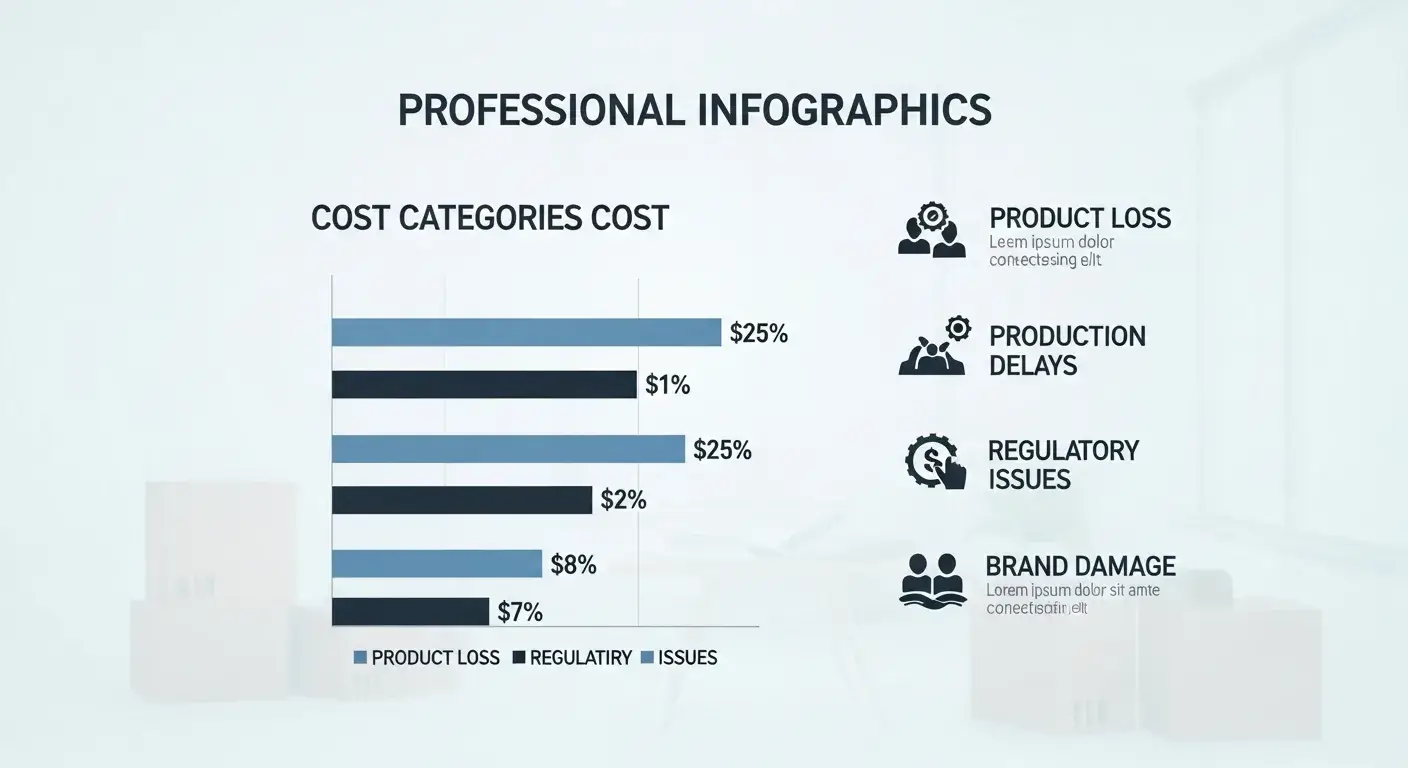
Cost breakdown analysis showing financial impact of improper evening primrose oil storage
Why Evening Primrose Oil Is Particularly Vulnerable
Unlike stable carrier oils such as jojoba or fractionated coconut oil, evening primrose oil contains 70-74% linoleic acid and 8-10% gamma-linolenic acid (GLA)—polyunsaturated fatty acids3 with multiple double bonds that act like magnets for oxygen molecules.
The chemistry is simple yet devastating: Each double bond represents a potential oxidation site. When oxygen attaches, it triggers a cascade reaction that transforms your valuable EPO into a rancid, potentially toxic substance.
Industry Alert: Recent testing by cosmetic ingredient laboratories4 shows that bulk EPO stored at room temperature (21°C) loses 40% of its GLA content within 4 months.
Evening Primrose Oil Shelf Life: The Complete Breakdown
Understanding evening primrose oil shelf life requires examining multiple variables that directly impact your bottom line. Here’s what the latest research reveals:
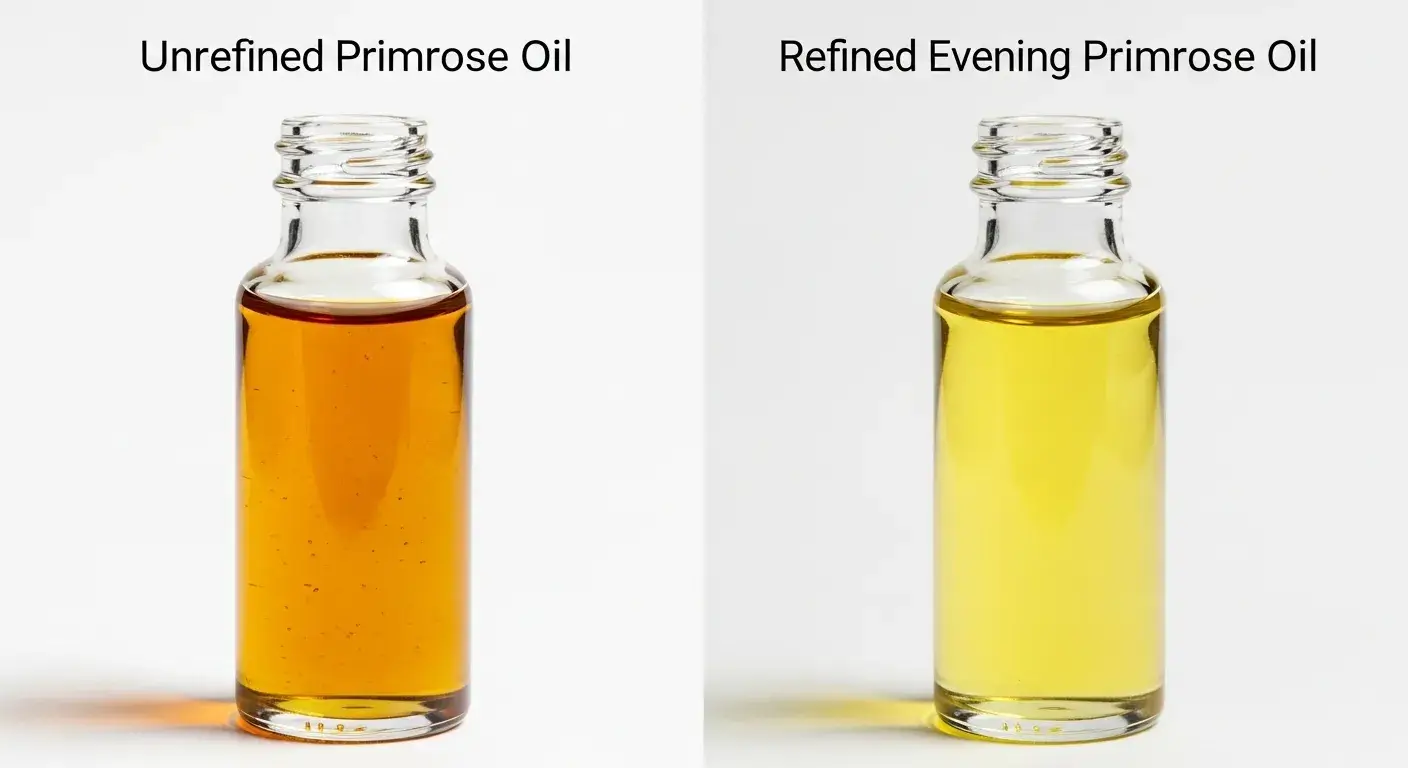
Comparative analysis of evening primrose oil degradation rates under different storage conditions
Unrefined vs Refined: The Quality Trade-Off
The manufacturing process significantly impacts shelf life expectations:
Unrefined (Cold-Pressed) EPO:
- Retains natural tocopherols (vitamin E compounds)
- Shorter shelf life: 6-12 months optimal
- Higher therapeutic value but requires careful handling
- More susceptible to temperature fluctuations
Refined EPO:
- Bleached, deodorized, and stabilized
- Extended shelf life: up to 24 months
- Lower natural antioxidant content
- Requires synthetic antioxidant addition
Temperature Impact: The Make-or-Break Factor
Research from pharmaceutical stability studies5 demonstrates dramatic temperature effects:
| Storage Temperature | Free Fatty Acid Increase | GLA Retention | Recommended Duration |
|---|---|---|---|
| 4°C (Refrigerated) | 1.0% after 4 months | 95%+ retention | Full shelf life |
| 21°C (Room Temp) | 2.1% after 4 months | 75% retention | 6 months maximum |
| 35°C (Warehouse) | 3.4% after 4 months | 60% retention | 2 months maximum |
Quality Degradation Timeline: What to Expect
Month 1-3 (Proper Storage):
- Minimal quality changes
- GLA content remains stable
- No sensory deterioration
Month 4-6 (Temperature Dependent):
- Peroxide values begin increasing
- Slight color darkening possible
- First signs of oxidation may appear
Month 7-12 (Cold Storage Only):
- Gradual quality decline
- Requires regular testing
- Still suitable for most applications
Beyond 12 Months:
- Quality becomes unpredictable
- Regular laboratory testing essential
- Consider reprocessing or disposal
Professional Storage Requirements for Bulk Quantities
Industrial-scale evening primrose oil storage demands specialized infrastructure that goes far beyond typical warehouse requirements. Here’s what serious B2B operations need:

Industrial Storage Infrastructure
Drum Storage (55-gallon containers):
- Temperature-controlled warehouse: 4-15°C constant
- Humidity control: <60% relative humidity
- Nitrogen blanketing capability for opened containers
- Food-grade stainless steel or FDA-approved plastic drums
Tote Storage (275-330 gallons):
- Dedicated refrigerated storage rooms
- Inert gas purging systems
- Temperature monitoring with 24/7 alerts
- Spill containment systems
Tank Storage (1000+ gallons):
- Jacketed tanks with glycol cooling systems
- Continuous nitrogen blanket
- Automated temperature logging
- Sanitary tri-clamp connections
Container Specifications by Volume
| Volume Range | Container Type | Material Requirements | Special Features |
|---|---|---|---|
| 1-5 kg | Dark glass bottles | Amber/cobalt glass | Inert gas flushing |
| 25-200 kg | Food-grade drums | HDPE/stainless steel | Removable lids, gaskets |
| 275-1000 kg | IBC totes | 316L stainless steel | Butterfly valves, CIP capability |
| 1000+ kg | Storage tanks | 316L SS with jackets | Automated systems |
Nitrogen Blanketing Procedures
Nitrogen blanketing isn’t optional for serious bulk operations—it’s essential insurance against oxidation:
Setup Requirements:
- High-purity nitrogen supply (99.5%+)
- Pressure regulation system (2-5 PSI)
- Oxygen monitoring equipment
- Emergency backup nitrogen supply
Implementation Process:
- Purge container with nitrogen before filling
- Maintain positive nitrogen pressure during storage
- Monitor oxygen levels6 (<2% recommended)
- Refresh nitrogen blanket after any container opening
Pro Tip: Many wholesale essential oil operations save 15-20% on product loss by implementing proper nitrogen blanketing protocols.
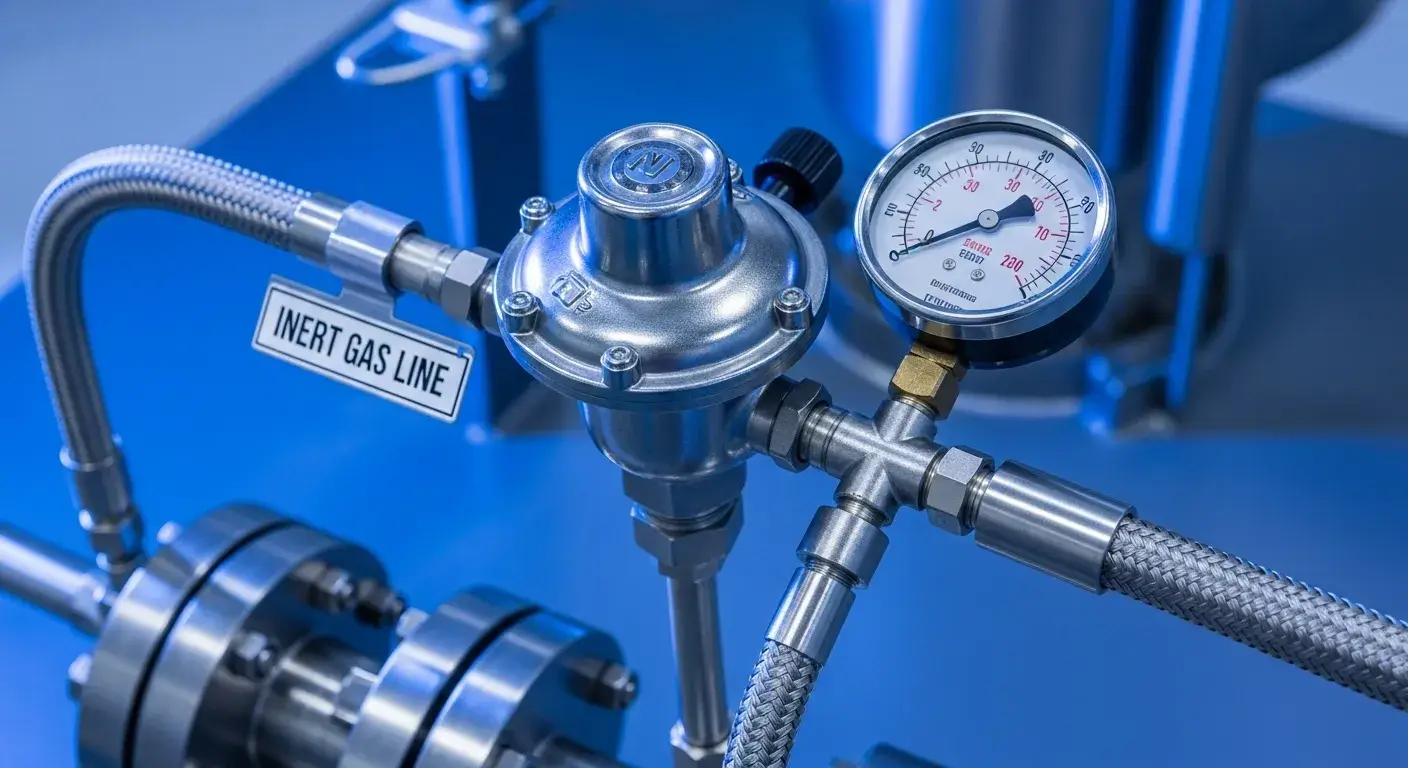
Nitrogen blanketing system setup for industrial evening primrose oil storage
Quality Testing & Monitoring Protocols
Laboratory testing transforms storage guesswork into data-driven decisions. Here’s how professional operations monitor evening primrose oil quality:
Required Testing Methods
Primary Quality Indicators:
-
Peroxide Value (PV) Testing
- Measures primary oxidation products
- Acceptable range: <10 meq O₂/kg
- Critical threshold: >15 meq O₂/kg (reject)
- Testing frequency: Monthly for bulk storage
-
Free Fatty Acid (FFA) Content
- Indicates hydrolytic rancidity
- Fresh EPO: <1% FFA
- Warning level: >2% FFA
- Action required: >3% FFA
-
GLA Content Verification
- Gas chromatography analysis7
- Target range: 8-10% GLA
- Quality decline: <7% GLA
- Regulatory requirement for supplement grade
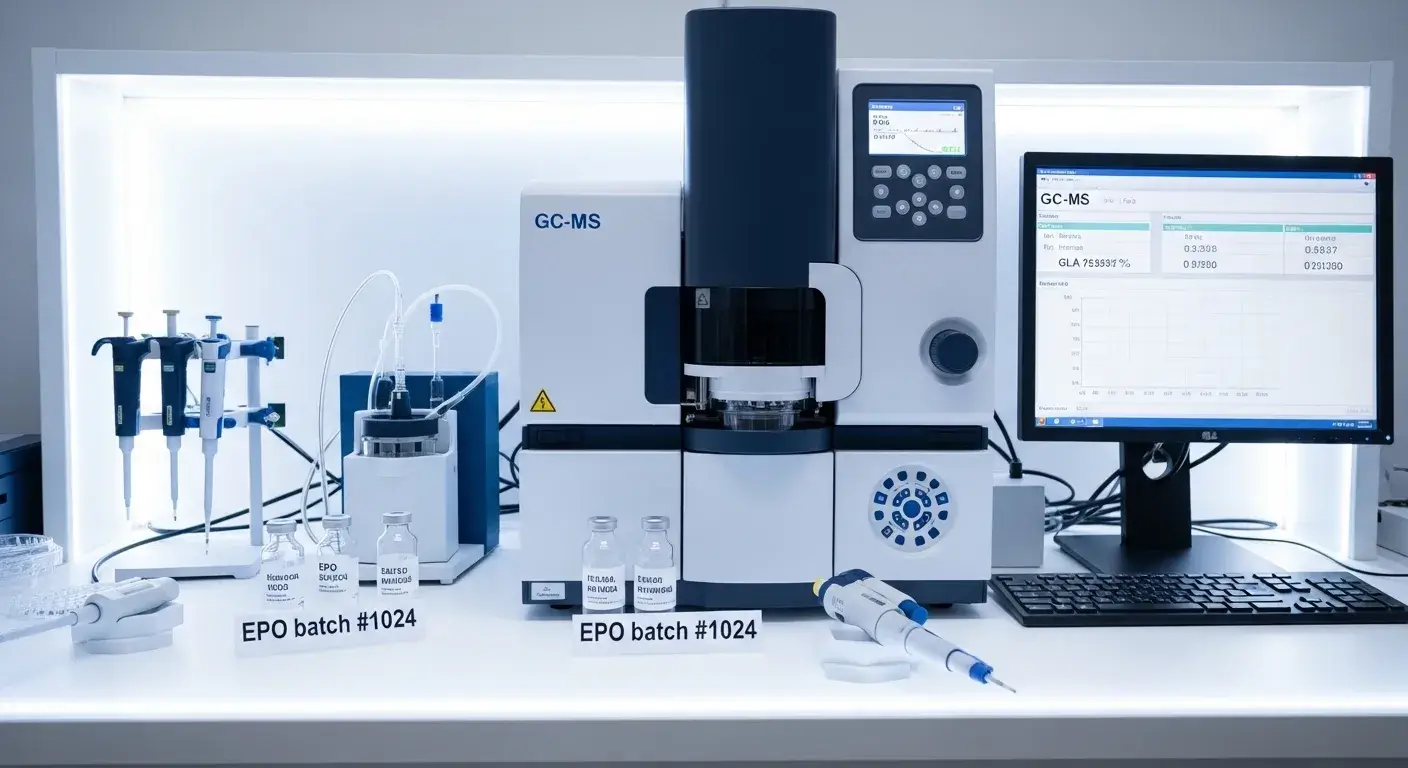
Laboratory testing equipment for evening primrose oil quality analysis
Testing Frequency Recommendations
| Storage Duration | Testing Schedule | Key Parameters | Action Threshold |
|---|---|---|---|
| 0-3 months | Initial + Monthly | PV, FFA, GLA | PV >5, FFA >1.5% |
| 3-6 months | Bi-weekly | All parameters | PV >8, FFA >2% |
| 6-12 months | Weekly | Full panel + sensory | PV >10, FFA >2.5% |
| 12+ months | Every 3 days | Critical monitoring | Any deviation |
Documentation Requirements for B2B Compliance
Professional operations maintain comprehensive records:
- Certificate of Analysis (COA) for each batch
- Material Safety Data Sheets (MSDS) current versions
- GC-MS reports for fatty acid profiles
- Allergen statements for regulatory compliance
- Traceability documentation from source to delivery
Regulatory Note: FDA and Health Canada requirements8 for evening primrose oil supplements demand rigorous quality documentation.
Cost-Benefit Analysis of Proper Storage
Smart storage investments deliver measurable ROI that justifies the initial equipment costs. Here’s the financial reality:
ROI of Proper Storage Equipment
Investment Breakdown (10,000 kg annual volume):
| Equipment Category | Initial Investment | Annual Operating Cost | Product Loss Prevention |
|---|---|---|---|
| Refrigerated Storage | $15,000-$25,000 | $2,400/year | $30,000+ saved |
| Nitrogen Blanketing | $8,000-$12,000 | $1,800/year | $20,000+ saved |
| Quality Testing Lab | $25,000-$40,000 | $6,000/year | $50,000+ saved |
| Total System | $48,000-$77,000 | $10,200/year | $100,000+ saved |
Payback Period: 8-12 months for typical bulk operations

ROI calculation chart showing storage investment vs. product loss prevention
Cost Comparison: Storage Investment vs. Product Loss
Scenario A: Minimal Storage (Room Temperature)
- 30% product loss rate
- $150,000 annual EPO purchases
- Annual loss: $45,000
- Quality complaints: 15-20% of shipments
Scenario B: Professional Storage (Controlled Environment)
- 5% product loss rate
- $150,000 annual EPO purchases
- Annual loss: $7,500
- Quality complaints: <2% of shipments
- Net savings: $37,500 annually
Insurance and Liability Considerations
Proper storage isn’t just about preserving product—it’s about protecting your business:
- Product liability insurance: 20-30% lower premiums with documented quality systems
- Customer retention: 95%+ satisfaction rates with proper storage protocols
- Regulatory compliance: Avoid FDA warning letters and Health Canada violations
- Supply chain reliability: Consistent quality builds long-term partnerships
Troubleshooting Common Storage Problems
Real-world storage challenges require practical solutions. Here are the most frequent issues B2B buyers encounter:
Problem 1: Unexpected Rancidity in "Fresh" Shipments
Symptoms:
- Bitter, fishy odor upon opening
- Higher than expected peroxide values
- Customer complaints within weeks of delivery
Root Causes:
- Poor supplier storage practices
- Extended transit time in hot climates
- Inadequate packaging protection
Solutions:
- Implement incoming quality inspection
- Require supplier storage certifications
- Use expedited shipping for summer deliveries
- Add contractual quality guarantees
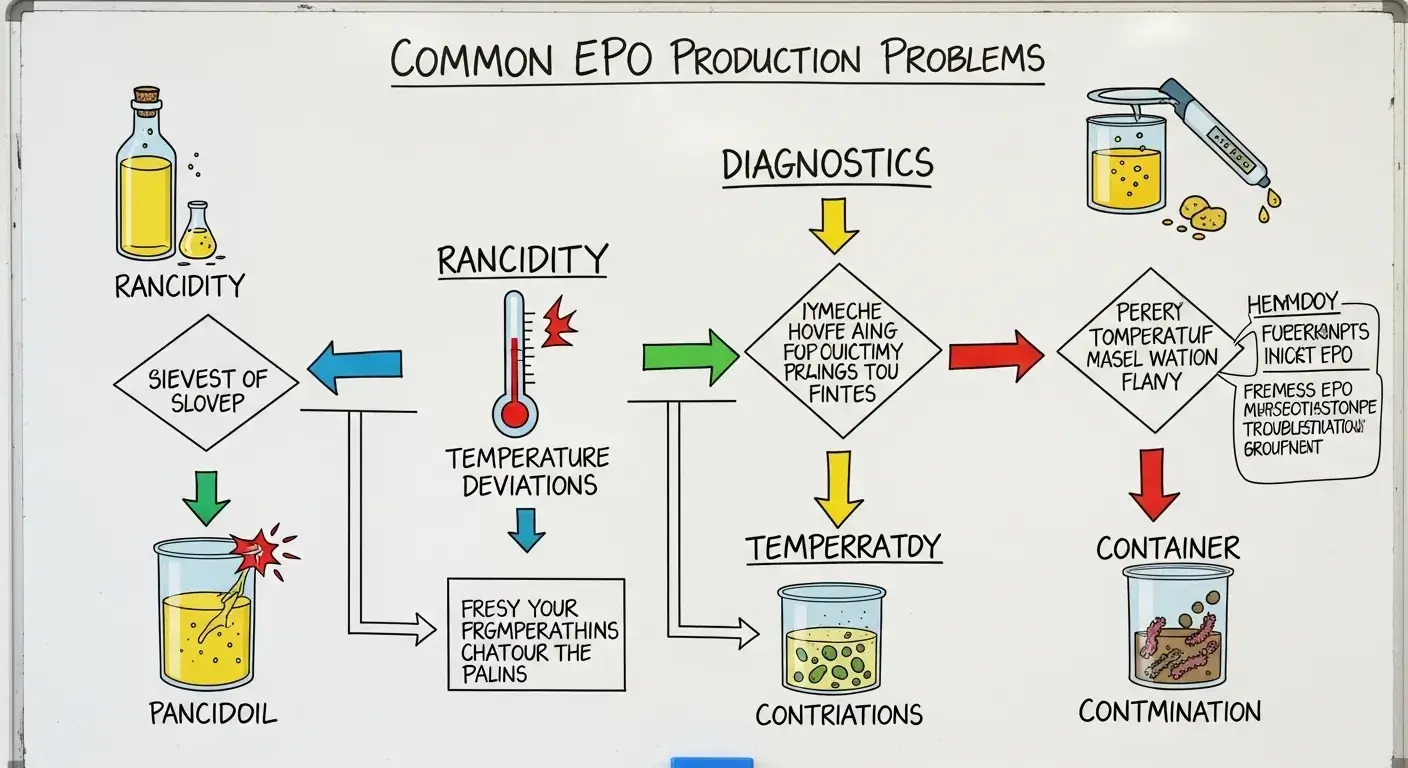
Flowchart showing quality inspection process for incoming evening primrose oil shipments
Problem 2: Inconsistent Quality Across Batches
Symptoms:
- Variable GLA content between shipments
- Unpredictable shelf life performance
- Customer formulation consistency issues
Root Causes:
- Multiple supplier sources
- Seasonal raw material quality variations
- Inadequate supplier qualification
Solutions:
- Establish preferred supplier partnerships (like PhytoEx’s GMP-certified facilities)
- Implement batch blending protocols
- Require detailed source documentation
- Maintain strategic inventory reserves
Problem 3: Storage Temperature Deviations
Symptoms:
- Accelerated oxidation rates
- Shortened shelf life
- Increased FFA formation
Root Causes:
- Equipment failures
- Power outages
- Inadequate backup systems
Solutions:
- Install redundant cooling systems
- Implement 24/7 temperature monitoring
- Maintain emergency power backup
- Establish rapid response protocols
Problem 4: Container Contamination Issues
Symptoms:
- Off-flavors not related to oxidation
- Microbial growth
- Unexpected color changes
Root Causes:
- Improper container cleaning
- Cross-contamination from previous contents
- Inadequate sanitization procedures
Solutions:
- Implement validated cleaning procedures
- Use dedicated EPO-only containers
- Regular microbiological testing
- Establish container qualification protocols
Emergency Protocols for Compromised Batches
When storage issues occur, quick action minimizes losses:
Immediate Assessment (0-4 hours):
- Isolate affected batches
- Conduct rapid quality testing
- Document incident details
- Notify key stakeholders
Investigation Phase (4-24 hours):
- Identify root cause
- Assess contamination extent
- Evaluate salvage options
- Calculate financial impact
Resolution Actions (24-72 hours):
- Implement corrective measures
- Communicate with affected customers
- Adjust inventory forecasts
- Update prevention protocols
Implementation Checklist – Your 30-Day Action Plan
Transform your evening primrose oil storage from risky to reliable with this proven implementation roadmap:
Week 1: Assessment and Planning
Days 1-3: Current State Analysis
- Audit existing storage conditions
- Inventory current EPO stock and age
- Document current quality issues
- Calculate annual product loss costs
Days 4-7: Requirements Definition
- Define target storage volumes
- Establish quality standards
- Set budget parameters
- Identify regulatory requirements
Week 2: Infrastructure Development
Days 8-10: Equipment Procurement
- Source temperature control systems
- Evaluate nitrogen blanketing options
- Select appropriate containers
- Arrange laboratory testing services
Days 11-14: Installation and Setup
- Install refrigeration equipment
- Configure monitoring systems
- Train staff on procedures
- Establish emergency protocols
Week 3: Supplier Optimization
Days 15-17: Supplier Evaluation
- Assess current supplier quality systems
- Request storage and handling documentation
- Evaluate alternative suppliers if needed
- Negotiate quality guarantees
Days 18-21: Quality Agreements
- Establish incoming inspection procedures
- Define acceptable quality parameters
- Create batch documentation requirements
- Implement supplier scorecards
Week 4: System Validation
Days 22-24: Testing and Validation
- Conduct temperature mapping studies
- Validate monitoring systems
- Test emergency procedures
- Document all procedures
Days 25-30: Go-Live and Optimization
- Begin full implementation
- Monitor initial results
- Adjust procedures as needed
- Schedule first quality review

Implementation timeline showing 30-day evening primrose oil storage optimization plan
Vendor Evaluation Criteria
When selecting suppliers or service providers, use these critical evaluation factors:
Quality System Requirements:
- GMP certification and compliance
- ISO 9001/22000 certifications
- Documented storage procedures
- Regular third-party audits
Technical Capabilities:
- Controlled environment storage
- Nitrogen blanketing capabilities
- Quality testing laboratories
- Batch tracking systems
Business Reliability:
- Financial stability
- Insurance coverage
- Emergency response capabilities
- Customer reference checks
Performance Metrics:
- On-time delivery rates (>95%)
- Quality complaint rates (<2%)
- Documentation accuracy (100%)
- Communication responsiveness (<12 hours)
Success Story: Companies implementing comprehensive EPO storage protocols typically see 60-80% reduction in quality complaints and 25-35% improvement in customer retention rates within the first year.
Conclusion: Securing Your Evening Primrose Oil Investment
The evening primrose oil market demands excellence, and storage quality separates industry leaders from struggling operations. With global EPO market value9 projected to reach $76.2 million by 2028, proper storage isn’t just best practice—it’s competitive advantage.
Key Takeaways:
- Professional storage systems pay for themselves within 8-12 months
- Temperature control is the single most critical success factor
- Quality testing transforms reactive problems into proactive solutions
- Supplier partnerships determine long-term success
Ready to Optimize Your Evening Primrose Oil Supply Chain?
Don’t let poor storage practices destroy your product quality and profits. PhytoEx’s GMP-certified facilities and proven storage protocols ensure your evening primrose oil arrives in perfect condition and stays that way.
Get Started Today:
- Free Storage Assessment: Evaluate your current practices
- Custom Storage Solutions: Tailored to your volume requirements
- Quality Guarantee: Full documentation and testing support
- Expert Consultation: Direct access to our technical team
Contact PhytoEx Now → | Download Our Complete Essential Oils Guide →
Questions about bulk evening primrose oil storage? Our technical team responds within 12 hours. Reach out today and secure your supply chain tomorrow.
External Resources:
- FDA Guidelines for Oil Storage10
- International Standards for Oil Quality Testing11
- AOCS Official Methods for Oil Analysis12
Footnotes
-
Comprehensive scientific database covering lipid oxidation mechanisms and stability testing protocols ↩
-
Official FDA enforcement actions and warning letter database for supplement manufacturers ↩
-
Detailed biochemical explanation of fatty acid structures and their oxidation susceptibility ↩
-
Industry testing protocols and stability data for cosmetic ingredient quality control ↩
-
Peer-reviewed research on pharmaceutical oil stability under various storage conditions ↩
-
Technical guidance on oxygen monitoring systems for inert gas storage applications ↩
-
Laboratory methods and equipment specifications for fatty acid analysis in oils ↩
-
Regulatory requirements and compliance guidelines for evening primrose oil supplements ↩
-
Market research and industry analysis covering global evening primrose oil trends ↩
-
Official FDA guidance documents for proper oil storage and handling practices ↩
-
International testing standards and quality specifications for edible and cosmetic oils ↩
-
Standardized analytical methods for oil quality assessment and certification ↩