
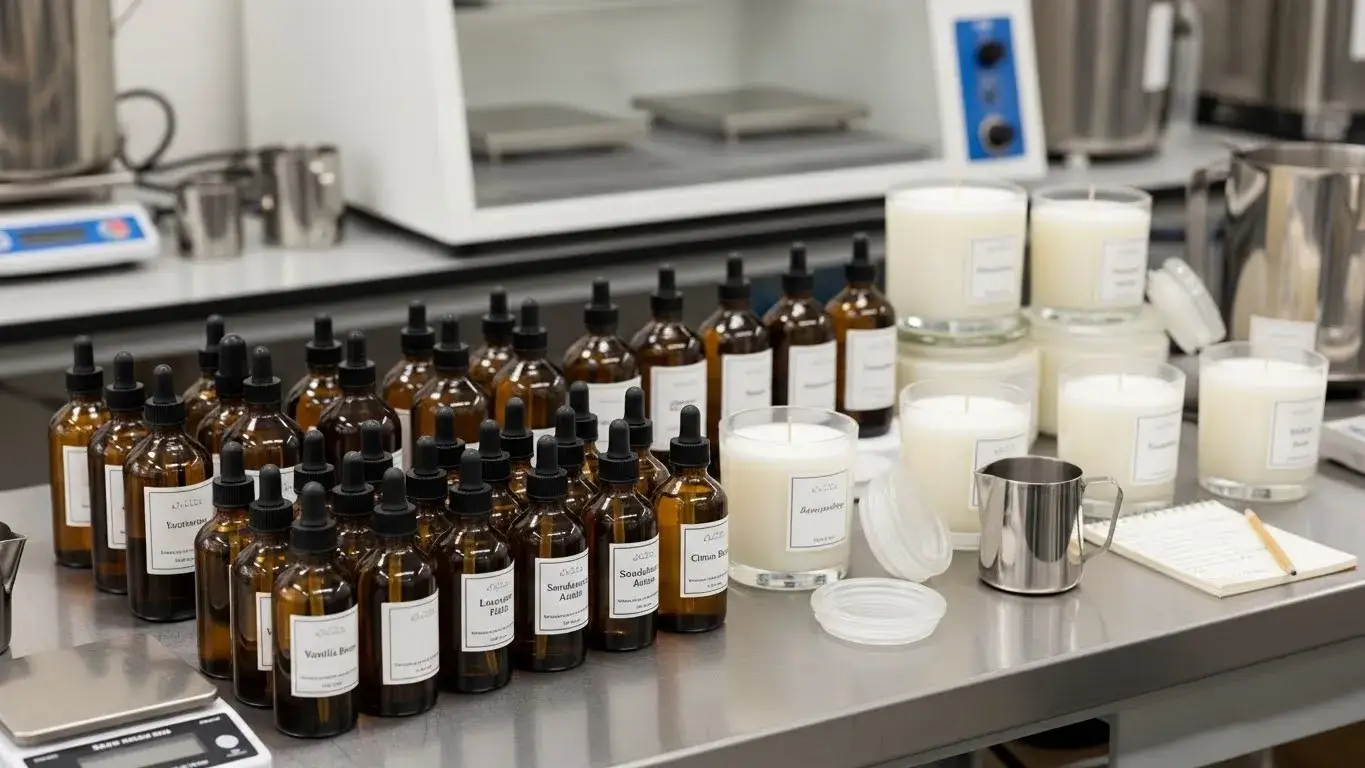
Your candles need stronger scent throw. Customers complain about weak fragrance or inconsistent performance. I’ll show you exactly what makes a candle fragrance oil perform well and how to source the best options for your production line.
The best candle fragrance oils deliver strong scent throw (both cold and hot), remain stable in wax during burning, and meet safety standards (phthalate-free, IFRA-compliant). Top-performing categories include woody (sandalwood, cedarwood), floral (lavender, jasmine), citrus (bergamot, lemon), and gourmand (vanilla, caramel). The ideal choice depends on wax type compatibility and target market preferences.
In this guide, I’ll cover what makes fragrance oils perform well in candles, how to test them properly, and which categories dominate the market.
What Makes a Candle Fragrance Oil the "Best"?
Candle makers often confuse "best" with "most popular" or "most expensive." These are different things. Performance metrics matter more than subjective appeal.
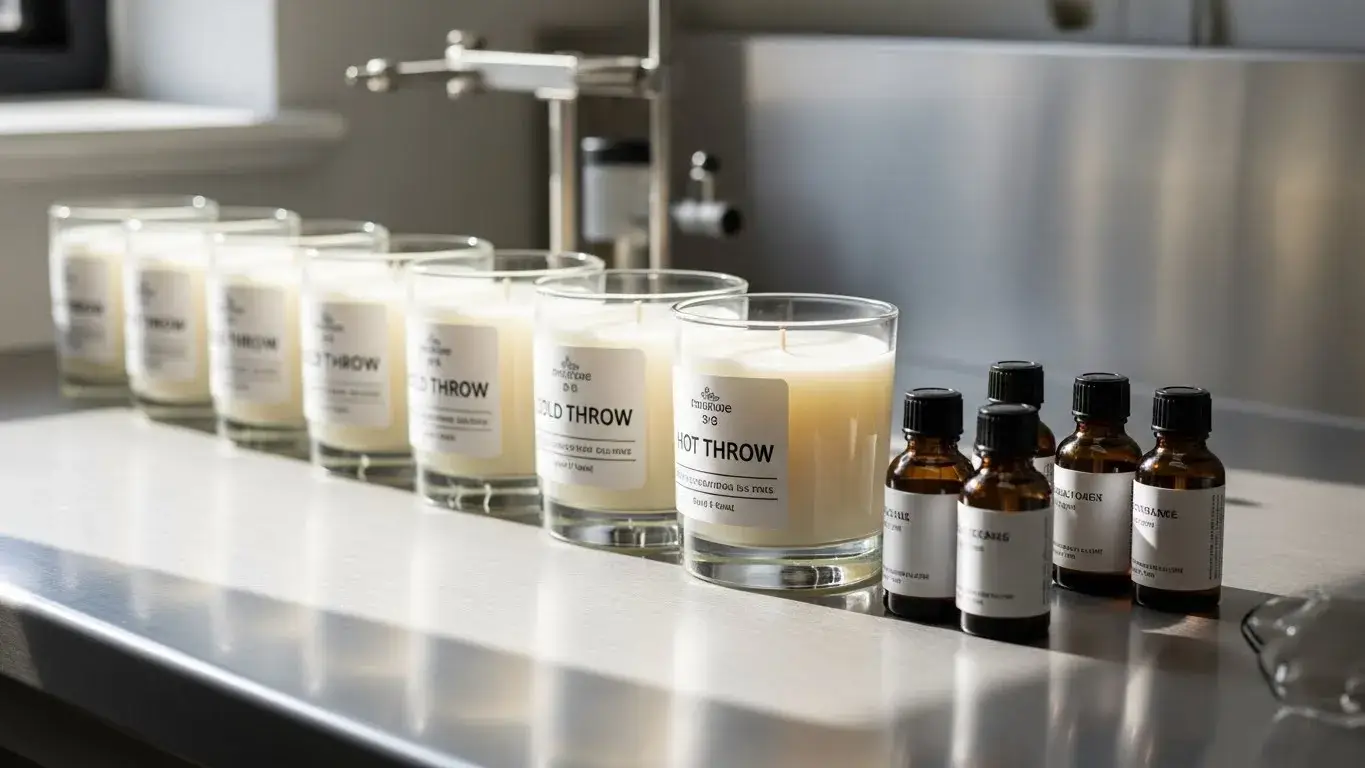
The best candle fragrance oil offers strong, consistent scent throw in both cold (unlit) and hot (burning) states. It must be stable in your specific wax type without separation or clogging. Safety compliance (phthalate-free, IFRA-compliant) is mandatory for commercial products. The oil should also perform reliably across production batches.
Defining "Best" with Measurable Criteria
I evaluate candle fragrance oils across five key dimensions:
1. Scent Throw Performance
Scent throw measures how well the fragrance fills a room. We measure this in two states:
- Cold throw: Fragrance strength when the candle is unlit
- Hot throw: Fragrance strength when burning
Both matter. Cold throw sells candles in stores. Hot throw satisfies customers at home.
2. Wax Compatibility
Not all fragrance oils work in all waxes. An oil that performs excellently in paraffin might separate in soy. Compatibility testing is essential before committing to bulk orders.
3. Stability During Burning
A good fragrance oil maintains consistent scent from first light to last burn. Some oils fade quickly. Others become overpowering. The best oils deliver even performance throughout the candle’s life.
4. Flash Point
Flash point is the temperature at which the oil can ignite. For candle applications, higher flash points (above 170°F / 77°C) are generally safer and preferred. The ASTM D93 standard test method1 provides industry-recognized procedures for measuring flash point.
5. Safety Compliance
Commercial candles require:
- IFRA compliance (maximum usage levels)
- Phthalate-free formulation
- Proper documentation for retail
The Quality Hierarchy
| Factor | Weight | Why It Matters |
|---|---|---|
| Hot throw strength | 25% | Primary customer satisfaction driver |
| Cold throw strength | 20% | Drives retail purchase decisions |
| Wax stability | 20% | Prevents production issues |
| Consistency batch-to-batch | 15% | Enables scalable production |
| Safety compliance | 10% | Regulatory requirement |
| Price-performance ratio | 10% | Business viability |
For B2B buyers, this hierarchy helps prioritize evaluation criteria. A low-cost oil that fails on scent throw isn’t actually economical.
What Are the Top-Performing Fragrance Oil Categories for Candles?
Certain fragrance families consistently outperform others in candle applications. Understanding these patterns helps you select oils more efficiently.
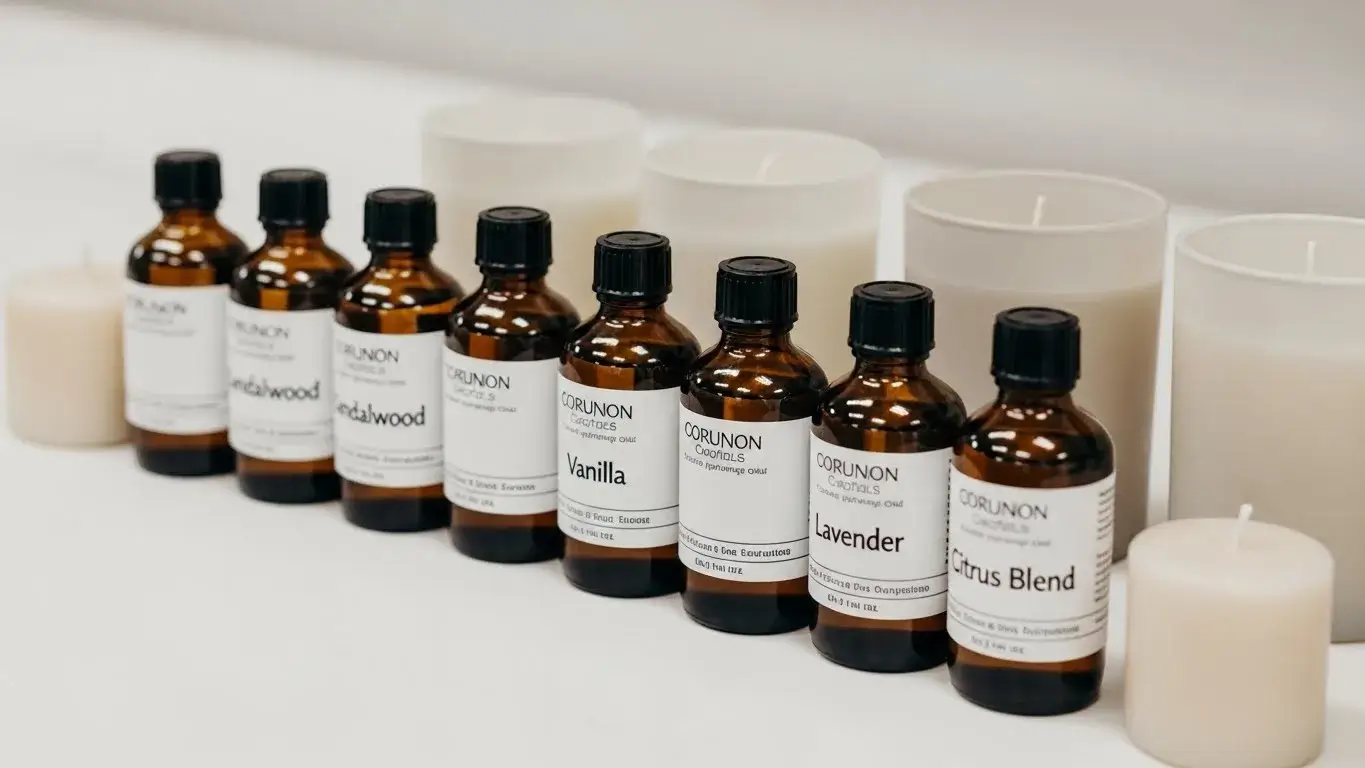
Top-performing candle fragrance categories include woody scents (sandalwood, cedarwood, oud), floral notes (lavender, jasmine, rose), citrus oils (bergamot, lemon, orange), and gourmand accords (vanilla, caramel, coffee). These categories offer strong molecular structures that survive heat well and provide excellent scent throw in wax-based systems.
Category Performance Analysis
Based on industry testing and market feedback, here’s how major fragrance categories perform:
| Category | Cold Throw | Hot Throw | Stability | Market Demand |
|---|---|---|---|---|
| Woody | Excellent | Excellent | Very High | Strong |
| Gourmand | Very Good | Excellent | High | Very Strong |
| Floral | Good | Very Good | Medium-High | Strong |
| Citrus | Very Good | Good | Medium | Moderate |
| Fresh/Clean | Good | Good | Medium | Growing |
| Oriental/Spicy | Good | Very Good | High | Moderate |
Why Some Categories Perform Better
Woody Fragrances
Woods like sandalwood and cedarwood contain heavy molecules. These molecules have low volatility. They don’t evaporate quickly when heated. This means:
- Sustained scent release during burning
- Strong hot throw
- Excellent longevity
Gourmand Fragrances
Vanilla-based and sweet scents are molecular powerhouses in candles. Vanillin (the main vanilla compound) has excellent heat stability. It also has strong psychological appeal. Consumers associate these scents with comfort and warmth.
Floral Fragrances
Florals perform well but require careful formulation. Pure floral notes can fade under heat. The best candle florals are supported by synthetic fixatives that extend performance without compromising the natural character.
Citrus Fragrances
Citrus oils are volatile by nature. They evaporate quickly. In candles, this means:
- Strong initial burst
- Weaker sustained throw
- Better cold throw than hot throw
To improve citrus performance, suppliers often add fixatives or blend with woody bases.
Trending Categories in 2024-2025
The market is shifting toward:
- Designer dupes: Scents inspired by luxury perfumes
- Abstract concepts: "Rainy day," "Sunday morning," "Library"
- Elevated clean: Spa-like, hotel-inspired aromas
- Sustainable naturals: Botanical-forward, eco-positioned scents
For B2B buyers, tracking these trends helps anticipate customer demand.
How Do I Choose the Best Fragrance Oil for My Specific Wax?
Wax type dramatically affects fragrance performance. An oil that excels in paraffin may fail completely in soy. Matching oil to wax is essential.
Different waxes hold and release fragrance differently. Paraffin accepts higher fragrance loads (8-10%) and offers strongest scent throw. Soy wax requires specifically formulated oils at 6-9% load. Coconut wax blends balance throw and clean burning. Always test fragrance oils in your exact wax before bulk purchasing.
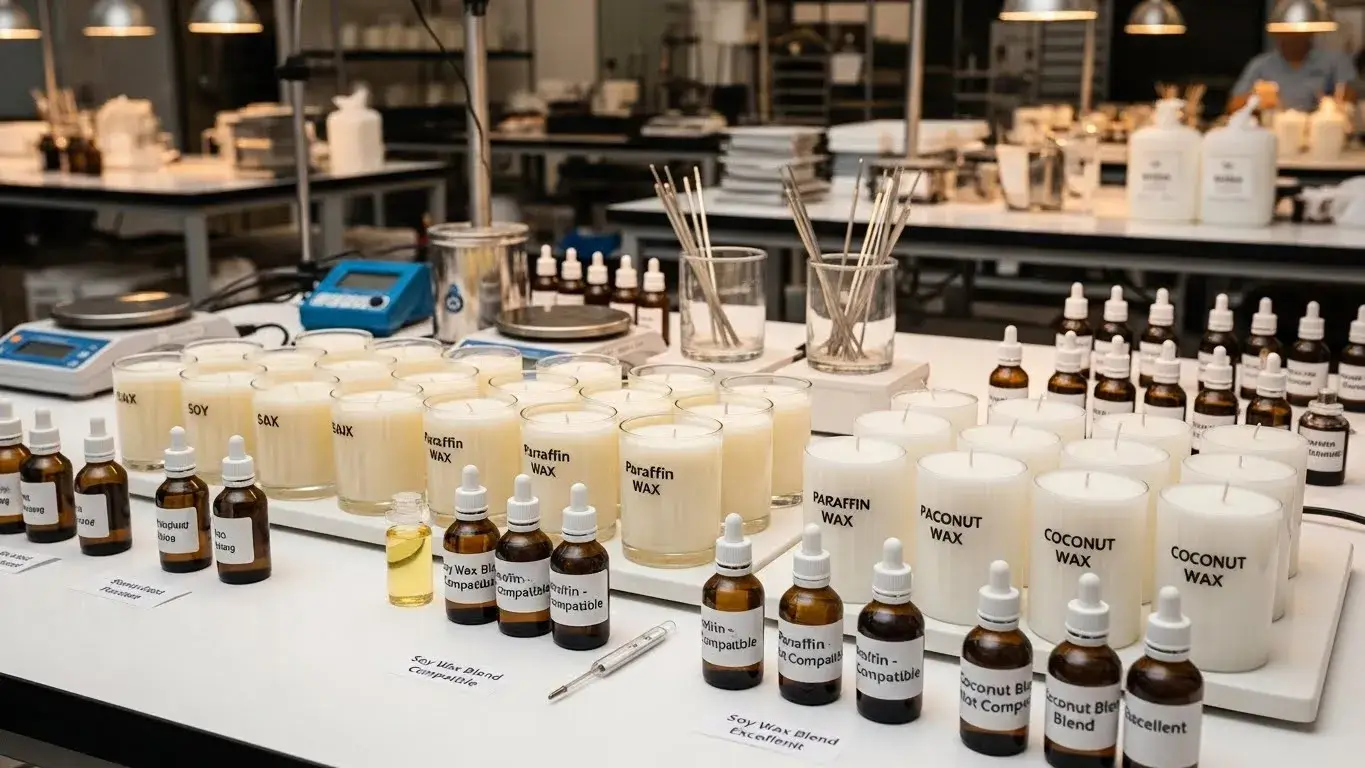
Wax-Fragrance Compatibility Guide
| Wax Type | Optimal Fragrance Load | Scent Throw | Notes |
|---|---|---|---|
| Paraffin | 8-10% | Excellent | Best overall performance |
| Soy (100%) | 6-9% | Good | Requires soy-specific oils |
| Soy-paraffin blend | 7-10% | Very Good | Popular compromise |
| Coconut | 6-8% | Very Good | Trendy, clean burning |
| Beeswax | 3-6% | Moderate | Natural scent competes |
| Palm | 6-9% | Good | Sustainability concerns |
Why Wax Type Matters
Paraffin Wax
Paraffin is petroleum-derived. It has an open molecular structure that readily accepts fragrance oils. The oil binds well and releases effectively when heated. This makes paraffin the "gold standard" for scent throw.
Soy Wax
Soy has a denser molecular structure. It doesn’t bind fragrance as easily. Some fragrance oils will:
- Float on melted soy (separation)
- Clog wicks
- Produce weak hot throw
Soy-specific fragrance oils are formulated with additives that improve binding. Always verify that your supplier’s oils are soy-compatible.
Coconut Wax
Coconut wax blends are gaining popularity. They offer:
- Clean burning
- Good scent throw
- Smooth appearance
Most coconut waxes are actually blends (coconut + soy or coconut + paraffin). Test fragrance oils specifically in your blend.
Testing Protocol for Wax Compatibility
Before committing to bulk orders, test every fragrance oil:
- Small batch test: Make 2-3 candles with each oil
- Cure properly: Allow 1-2 weeks cure time
- Evaluate cold throw: Smell unlit candle from 12 inches
- Burn test: Light and evaluate at 1, 2, and 3 hours
- Check for issues: Separation, sweating, wick clogging
- Compare batches: Repeat with second sample
This process prevents expensive production failures.
Are Phthalate-Free and IFRA-Compliant Oils Better?
Safety compliance isn’t optional for commercial candles. But what do these terms actually mean? And do compliant oils perform differently?
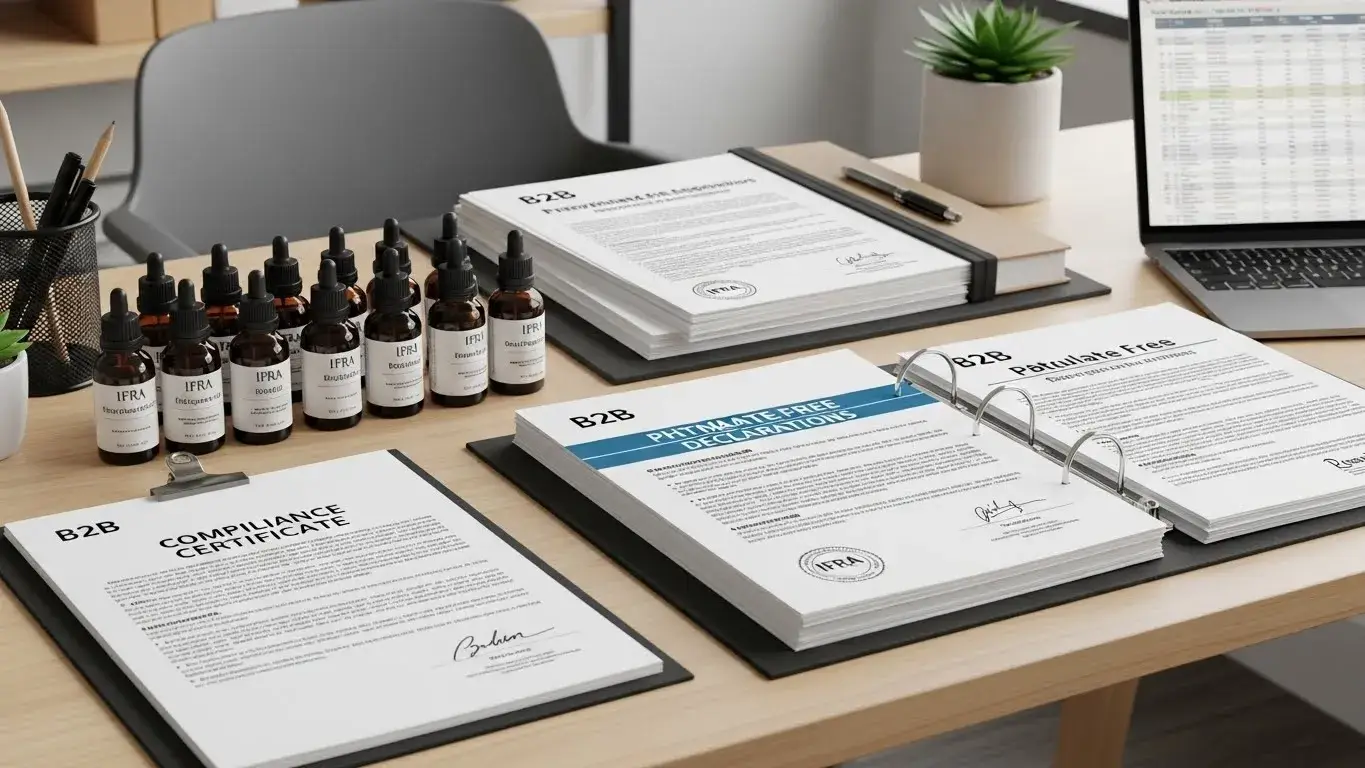
Phthalate-free oils exclude potentially harmful plasticizing chemicals linked to health concerns. IFRA (International Fragrance Association) compliance ensures oils meet maximum safe usage levels. Both standards are increasingly required by retailers and expected by consumers. Compliant oils are not necessarily weaker—modern formulations match or exceed older phthalate-containing products.
Understanding Phthalate-Free
Phthalates are chemicals that help fragrance oils bind and last longer. They’re effective but controversial. Some phthalates have been linked to:
- Hormone disruption
- Reproductive issues
- Environmental persistence
The FDA provides guidance on phthalates in cosmetics2, noting these chemicals are used in products to fix fragrance and hold color.
Many retailers now require phthalate-free formulations. Major chains like Target, Whole Foods, and Amazon have restricted phthalate-containing products.
What "phthalate-free" means for formulation:
Modern fragrance chemistry has developed alternatives. Today’s phthalate-free oils use:
- Bio-based solvents
- Alternative fixatives
- Improved synthetic carriers
These replacements can match or exceed traditional performance.
Understanding IFRA Compliance
IFRA sets maximum usage levels for fragrance ingredients. These limits are based on safety testing. They vary by:
- Product type (candle, lotion, perfume)
- Specific ingredients
- Exposure pathway
For candles (IFRA Category 123), limits tend to be less restrictive than skin-contact products. However, some ingredients still have maximum concentrations.
Why IFRA compliance matters:
- Legal protection
- Retailer requirements
- Consumer trust
- Insurance coverage
Documentation Requirements
B2B buyers should request:
- Phthalate-free declaration
- IFRA Certificate of Conformity
- Safety Data Sheet (SDS)
- Maximum usage levels
- Allergen declaration
Reputable suppliers provide this documentation automatically with each product.
How Do I Test and Evaluate Candle Fragrance Oils?
Testing separates good fragrance oils from poor ones. A systematic approach prevents costly mistakes and ensures consistent product quality.
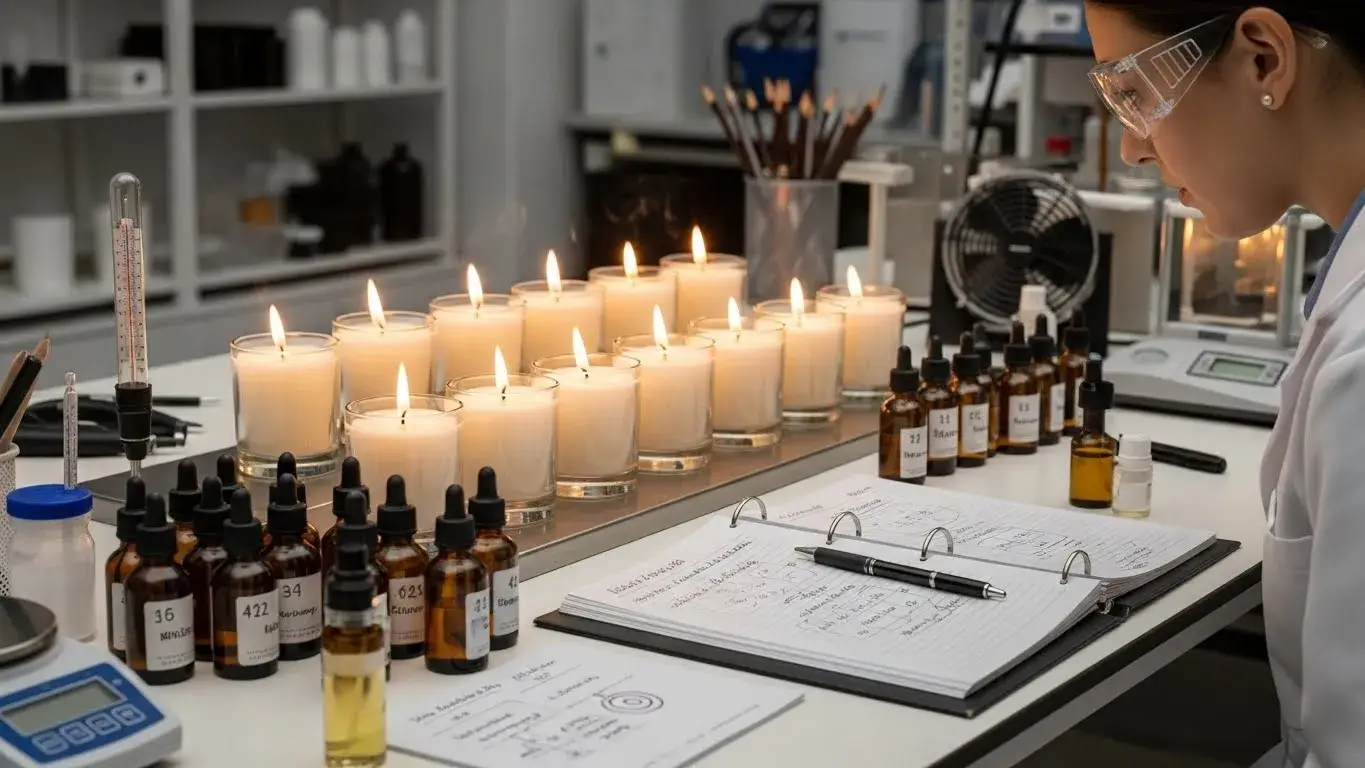
Test fragrance oils using a standardized protocol: create small test batches in your production wax, cure for 1-2 weeks, evaluate cold throw at room temperature, burn test for 2-3 hours measuring hot throw, and check for technical issues like separation, sweating, or wick problems. Document results for comparison across suppliers and batches.
Step-by-Step Testing Protocol
Step 1: Prepare Test Candles
- Use your exact production wax
- Pour at your standard temperature
- Use consistent wick size
- Apply fragrance oil at intended load percentage
- Make 2-3 identical test candles
Step 2: Cure Period
Allow candles to cure before testing. Curing lets fragrance bind fully with wax.
- Soy: 10-14 days minimum
- Paraffin: 3-7 days
- Coconut blends: 7-10 days
Step 3: Cold Throw Evaluation
Test unlit fragrance strength:
- Room should be odor-neutral
- Remove lid/packaging
- Evaluate from 12 inches, then 24 inches
- Rate on 1-10 scale
Step 4: Hot Throw Evaluation
Light candle and test burning fragrance:
- Evaluate at 30 minutes (initial throw)
- Evaluate at 2 hours (sustained throw)
- Evaluate at 3+ hours (longevity)
- Rate on 1-10 scale
Step 5: Technical Assessment
Check for problems:
- Sweating (oil beads on surface)
- Separation (oil pools)
- Wick clogging
- Uneven burn pool
- Soot production
- Scent morphing (unwanted smell changes)
Creating a Scoring Matrix
I use this format to compare oils objectively:
| Criteria | Weight | Oil A | Oil B | Oil C |
|---|---|---|---|---|
| Cold throw (1-10) | 20% | 8 | 6 | 7 |
| Hot throw (1-10) | 25% | 9 | 7 | 8 |
| Stability | 20% | 10 | 8 | 9 |
| Technical performance | 15% | 9 | 7 | 8 |
| Price per unit | 10% | 7 | 9 | 8 |
| Supplier reliability | 10% | 8 | 8 | 7 |
| Weighted Score | 100% | 8.5 | 7.3 | 7.9 |
This systematic approach removes emotion from sourcing decisions.
How Do Fragrance Oils Compare to Essential Oils for Candles?
Many candle makers debate this question. Both have applications, but they perform very differently. Understanding the trade-offs helps you make informed decisions.
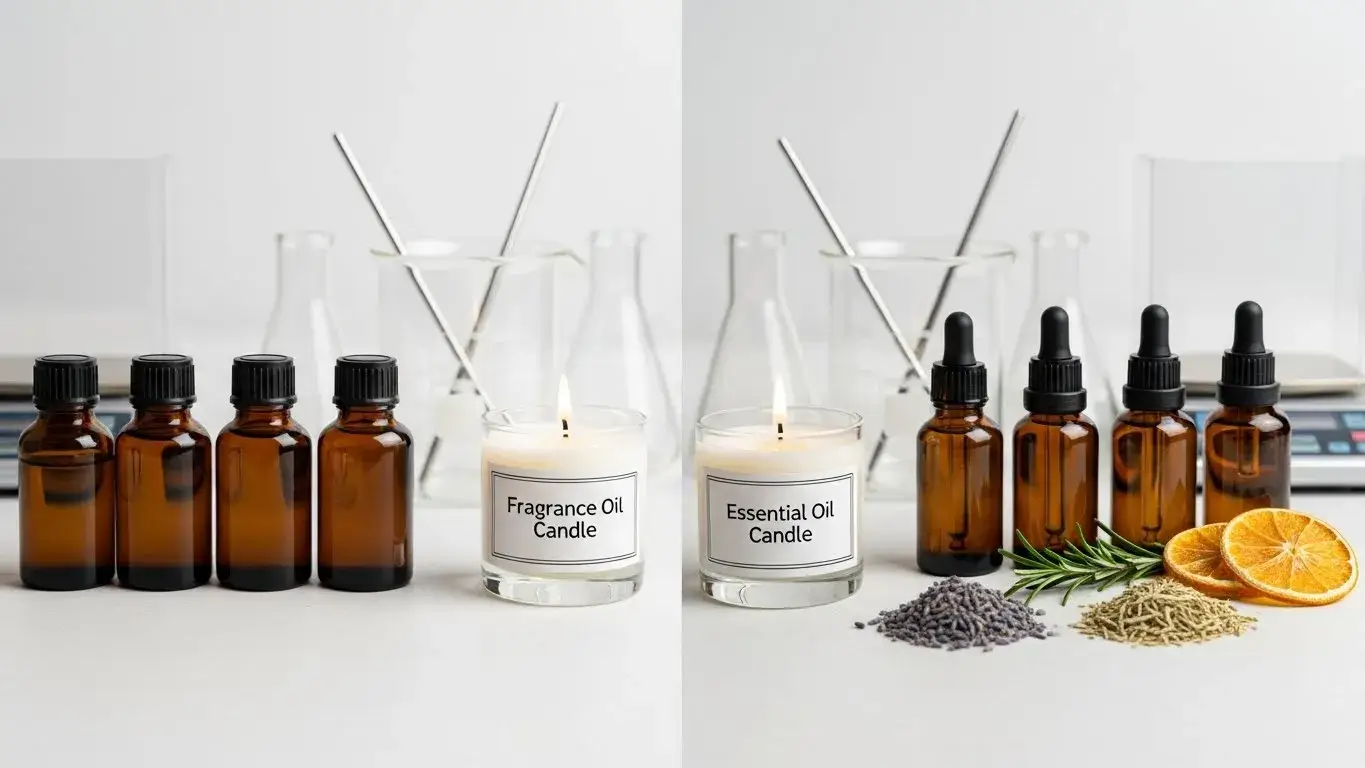
Fragrance oils generally outperform essential oils in candle applications. Fragrance oils offer stronger scent throw, better heat stability, greater consistency, lower cost, and wider scent variety. Essential oils provide natural positioning and aromatherapy claims but are weaker in throw, less stable under heat, and significantly more expensive. Most commercial candle producers use fragrance oils or blends.
Direct Comparison
| Factor | Fragrance Oils | Essential Oils |
|---|---|---|
| Scent throw | Strong | Weak-Moderate |
| Heat stability | Excellent | Poor-Moderate |
| Consistency | Very High | Variable |
| Cost | Lower | Higher (3-10x) |
| Scent variety | Unlimited | Limited to botanicals |
| Natural claims | No (typically) | Yes |
| Aromatherapy claims | No | Yes (if qualified) |
| Flash point | Generally higher | Often lower |
| Shelf life | 1-2 years | 6 months – 2 years |
Why Essential Oils Struggle in Candles
Essential oils have chemical properties that work against candle performance:
High volatility: Most essential oils evaporate quickly. When heated by candle flame, they disperse too fast. This creates:
- Strong initial burst
- Rapid fade
- Weak sustained throw
Heat sensitivity: Many aromatic compounds in essential oils break down under heat4. This causes:
- Scent morphing
- Loss of top notes
- Burnt or off-notes
Cost prohibitions: Some popular scents require enormous amounts of plant material. For example:
- 1 oz rose essential oil requires ~60,000 roses
- 1 oz jasmine absolute requires ~8 million flowers
According to research on rose oil extraction5, the typical yield from distillation is approximately 1:3,000, meaning it takes about 3,000 pounds of rose petals to produce just one pound of rose essential oil.
These costs make pure essential oil candles commercially unviable at scale.
When Essential Oils Make Sense
Essential oils can work for:
- Premium "natural" positioning
- Specific aromatherapy claims
- Blending with fragrance oils for marketing
- Low-heat applications (wax melts with lower temperatures)
The Hybrid Approach
Many successful candle brands use blends:
- 70-80% fragrance oil base
- 20-30% essential oil addition
- Marketing as "made with essential oils"
This approach balances performance with natural positioning.
What Are the Latest Trends in Candle Fragrance Oils?
The candle market evolves constantly. Staying current with trends helps you develop products that sell.
Key candle fragrance trends include designer dupe scents (affordable versions of luxury perfumes), abstract conceptual fragrances (evoking experiences rather than specific scents), elevated clean aromas (spa and luxury hotel inspired), and sustainability-focused naturals. The market is also seeing growth in gender-neutral scents and layerable fragrance systems.
2024-2025 Trend Analysis
Designer Dupes
Fragrance oils inspired by popular perfumes are dominating:
- Baccarat Rouge 540 interpretations
- Le Labo Santal dupes
- Jo Malone-inspired collections
These appeal to consumers wanting luxury scents at candle prices.
Conceptual/Abstract Scents
Scents named for experiences rather than ingredients:
- "Lazy Sunday Morning"
- "Library at Midnight"
- "First Snowfall"
These create emotional connections and storytelling opportunities.
Elevated Clean
Sophisticated fresh scents replacing simple "clean linen":
- Luxury hotel lobby vibes
- High-end spa experiences
- Cashmere and white tea combinations
Sustainability Focus
Eco-conscious positioning with:
- Upcycled fragrance materials
- Carbon-neutral manufacturing
- Refillable systems
Emerging Categories
Watch these growing segments:
- Functional fragrances: Scents positioned for sleep, focus, or mood
- Seasonal limiteds: Trend-driven collections refreshed quarterly
- Layerable systems: Mix-and-match fragrance families
- Nostalgia scents: 90s and Y2K inspired aromas
According to the National Candle Association6, fragrance is by far the most important characteristic impacting candle purchases, with three-fourths of buyers saying it is "extremely important" or "very important" in their selection.
For B2B buyers, tracking trends helps anticipate which fragrance oils to stock and develop.
Conclusion
The best candle fragrance oils combine strong scent throw, wax compatibility, batch consistency, and safety compliance. B2B buyers should prioritize systematic testing, supplier documentation, and trend awareness to source oils that perform commercially.
-
ASTM D93 is the industry-standard test method for determining flash point using the Pensky-Martens Closed Cup Tester, widely used for petroleum products and fragrance safety evaluation. ↩
-
The FDA provides official guidance on phthalate use in cosmetics and fragrance products, including safety assessments and regulatory considerations for manufacturers. ↩
-
The IFRA Standards Library provides the complete database of fragrance ingredient restrictions and maximum usage levels by product category, essential for compliance documentation. ↩
-
Industry resource explaining the chemical differences between essential oils and fragrance oils, including heat stability and volatility characteristics affecting candle performance. ↩
-
Comprehensive reference on rose oil extraction methods and typical yields, demonstrating why pure essential oils are cost-prohibitive for commercial candle production. ↩
-
The National Candle Association provides authoritative industry statistics on consumer preferences, market trends, and candle usage patterns in the United States. ↩