
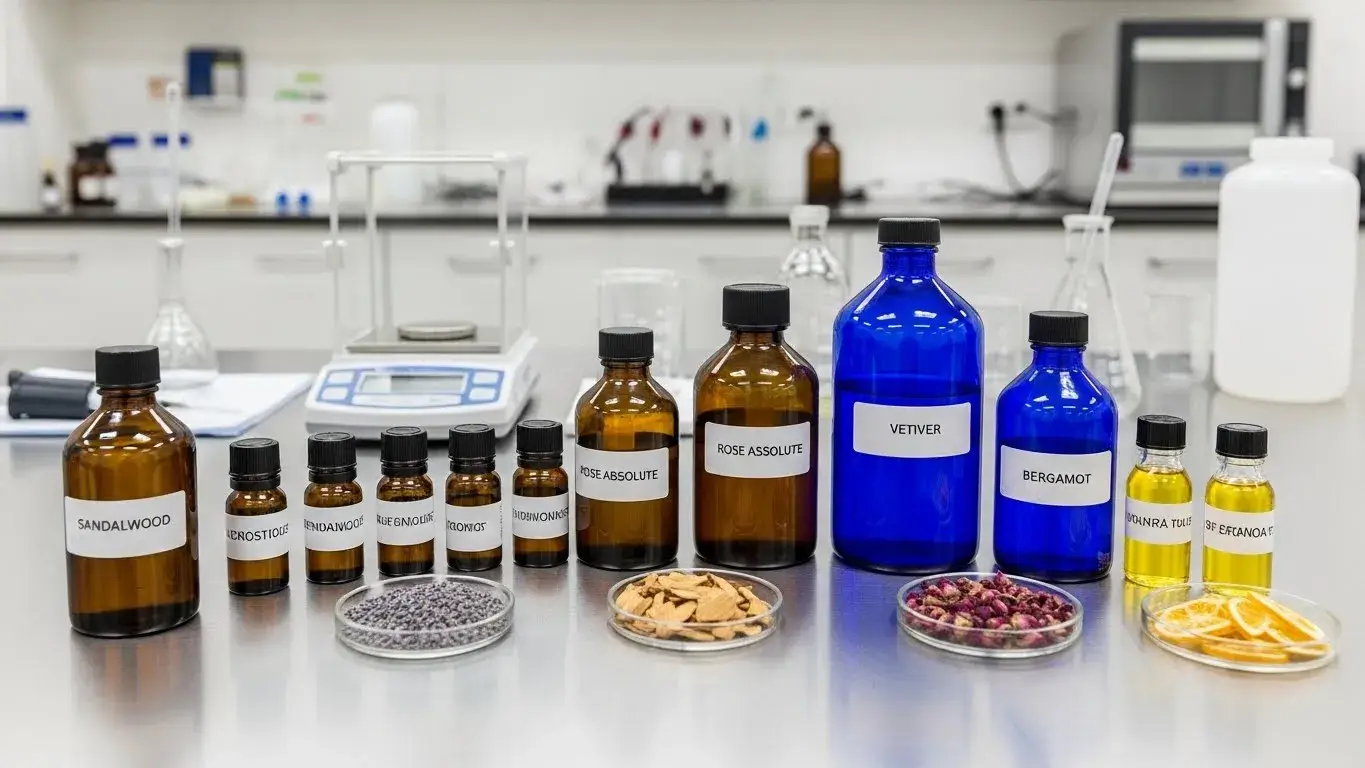
Your customers demand "natural" and "clean" fragrance products. But the market is full of confusing terminology and inconsistent quality. I’ll explain exactly what natural fragrance oils are and how to source them reliably for your formulations.
Natural fragrance oils are aromatic compounds derived from plants, flowers, fruits, bark, roots, or other natural sources. They are extracted through methods like steam distillation, cold pressing, or solvent extraction. Unlike essential oils, natural fragrance oils are often blended or modified for specific scent profiles while maintaining natural origin claims under IFRA and ISO standards.
In this guide, I’ll cover extraction methods, regulatory requirements, sourcing considerations, and how natural fragrance oils compare to synthetic alternatives for B2B applications.
What Are Natural Fragrance Oils and How Are They Made?
Many buyers confuse natural fragrance oils with essential oils. They’re related but different. Understanding the distinction helps you make better sourcing decisions.
Natural fragrance oils are aromatic compounds extracted from botanical sources using steam distillation, cold pressing, enfleurage, or solvent extraction. Unlike pure essential oils, they may be blended, diluted, or modified while maintaining natural origin. The extraction method affects scent profile, stability, purity, and cost.

Understanding Extraction Methods
Each extraction method produces different results. Knowing these differences helps you select the right ingredient for your application.
Steam Distillation
This is the most common method. Steam passes through plant material. The steam carries volatile aromatic compounds. These compounds condense into oil and water. The oil floats on top and is collected.
Steam distillation works best for:
- Leaves (eucalyptus, peppermint)
- Flowers (lavender, rose)
- Wood and bark (sandalwood, cinnamon)
Cold Pressing (Expression)
This mechanical method squeezes oil from plant material. No heat is involved. It’s used primarily for citrus peels. Cold-pressed oils retain more volatile top notes but have shorter shelf lives.
Solvent Extraction
Chemical solvents dissolve aromatic compounds from delicate materials. The solvent is then removed. This produces:
- Concretes (waxy, semi-solid)
- Absolutes (concentrated liquid after removing wax)
Solvent extraction captures compounds that steam destroys. It’s used for jasmine, tuberose, and other delicate flowers.
CO2 Extraction
Carbon dioxide under high pressure acts as a solvent. It produces very clean extracts. The CO2 evaporates completely, leaving no residue. This method is more expensive but produces premium-quality oils. CO2 supercritical extraction1 possesses an advantage over essential oils because the botanical material and extraction process requires much less heat.
Extraction Method Comparison
| Method | Temperature | Best For | Yield | Cost | Purity |
|---|---|---|---|---|---|
| Steam Distillation | High | Most botanicals | Medium | Low | High |
| Cold Pressing | Ambient | Citrus | High | Low | Medium |
| Solvent Extraction | Low | Delicate flowers | High | Medium | Medium |
| CO2 Extraction | Variable | Premium applications | Medium | High | Very High |
| Enfleurage | Ambient | Traditional/artisan | Very Low | Very High | High |
What Makes It "Natural"?
The term "natural" has specific meanings under different regulatory frameworks:
ISO 9235 Definition:
Natural fragrance materials are obtained from plant or animal raw materials by physical means (distillation, expression) or enzymatic/microbiological processes. The ISO 9235 standard2 specifies the terms and definitions relating to aromatic natural raw materials, providing the international benchmark for defining natural fragrance oils.
IFRA Definition:
Natural Complex Substances (NCS) are obtained from plants by various physical or enzymatic processes. They must maintain the original composition of the source material.
For B2B buyers, this means verifying that your supplier provides:
- Certificate of Origin
- GC-MS analysis confirming composition
- Compliance documentation for target markets
How Do Natural Fragrance Oils Differ from Synthetic Fragrance Oils?
This comparison drives most purchasing decisions. Understanding the trade-offs helps you balance cost, performance, and marketing claims.
Natural fragrance oils come from botanical sources and offer authentic, complex scent profiles valued by consumers. Synthetic fragrance oils are lab-created, offering lower cost, better stability, and consistent supply. Many commercial products use blends of both to balance performance and marketing requirements.

Key Differences for B2B Buyers
Here’s an objective comparison across factors that matter for commercial applications:
| Factor | Natural Fragrance Oils | Synthetic Fragrance Oils |
|---|---|---|
| Cost | Higher, variable | Lower, stable |
| Supply Stability | Weather-dependent | Consistent year-round |
| Scent Complexity | Multi-faceted, nuanced | Can be simpler or engineered |
| Batch Consistency | Varies by harvest | Highly consistent |
| Shelf Life | Shorter (6-24 months) | Longer (2-3+ years) |
| Consumer Appeal | Strong for "clean" positioning | Neutral or negative |
| Regulatory Status | Generally preferred | More restrictions in some markets |
| Allergen Profile | Contains natural allergens | Can be designed allergen-free |
The Nature-Identical Middle Ground
Some compounds sit between natural and synthetic categories:
Nature-identical ingredients are synthetically produced molecules that are chemically identical to those found in nature. For example, synthetic vanillin has the same molecular structure as vanillin from vanilla beans.
Regulatory treatment varies:
- EU considers nature-identical as synthetic for labeling
- US regulations are less prescriptive
- Clean beauty standards vary by certifying body
For B2B buyers, understanding these distinctions helps you:
- Make accurate label claims
- Meet customer specifications
- Navigate different market requirements
When to Choose Natural vs. Synthetic
Choose natural when:
- Target market demands "clean" or "natural" claims
- Premium positioning justifies higher cost
- Authentic scent profile is critical
- Brand story involves natural sourcing
Choose synthetic when:
- Cost is primary concern
- Consistent year-round supply is essential
- Long shelf life is required
- Specific molecule performance matters
- Creating scents with no natural equivalent
Choose blends when:
- Balancing cost and marketing claims
- Extending natural ingredients with compatible synthetics
- Improving stability of natural compositions
What Are the Main Sources of Natural Fragrance Oils?
Knowing botanical sources helps you understand pricing, availability, and scent characteristics. Different parts of plants yield different aromatic profiles.
Natural fragrance oils come from flowers (rose, jasmine, lavender), fruits (citrus, berries), leaves (mint, basil, eucalyptus), bark (cinnamon, birch), roots (vetiver, ginger), resins (frankincense, benzoin), and seeds (cardamom, anise). Each source produces distinct aromatic compounds suited to different fragrance families.
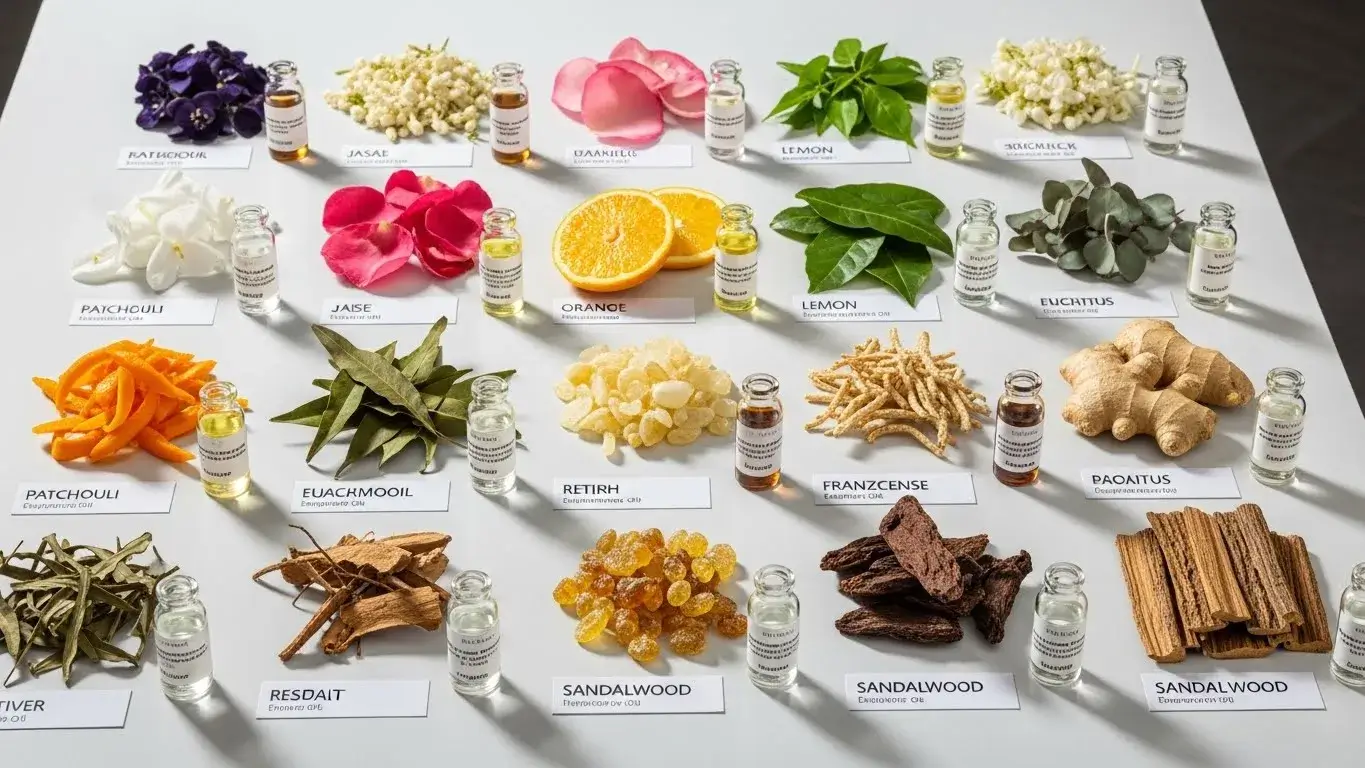
Botanical Sources by Plant Part
Flowers
Floral sources produce some of the most valued and expensive fragrance oils:
- Rose (Bulgaria, Turkey, Morocco)
- Jasmine (Egypt, India)
- Lavender (France, Bulgaria)
- Ylang-ylang (Comoros, Madagascar)
- Neroli (Tunisia, Morocco)
Floral oils are typically extracted by steam distillation or solvent extraction. They form the heart of many fine fragrances.
Fruits and Citrus
Citrus oils are extracted by cold pressing the peel:
- Orange (Brazil, US)
- Lemon (Italy, Argentina)
- Bergamot (Italy)
- Grapefruit (US)
- Lime (Mexico)
Citrus oils provide bright top notes. They’re less expensive but have shorter shelf lives due to oxidation.
Leaves and Herbs
Leaf-based oils are usually steam-distilled:
- Eucalyptus (Australia, China)
- Peppermint (US, India)
- Tea tree (Australia)
- Basil (Egypt, India)
- Rosemary (Morocco, Spain)
Wood and Bark
These sources provide base notes with excellent longevity:
- Sandalwood (Australia, India)
- Cedarwood (US, Morocco)
- Cinnamon bark (Sri Lanka)
- Oud/Agarwood (Southeast Asia)
Roots
Root-derived oils offer earthy, grounding notes:
- Vetiver (Haiti, Indonesia)
- Ginger (China, India)
- Angelica (France)
Resins and Balsams
These produce rich, warm base notes:
- Frankincense (Somalia, Oman)
- Myrrh (Ethiopia, Somalia)
- Benzoin (Laos, Indonesia)
Geographic Sourcing Considerations
Origin significantly affects quality and price:
| Botanical | Premium Origin | Alternative Origin | Price Difference |
|---|---|---|---|
| Rose | Bulgaria | Turkey, Morocco | 30-50% |
| Jasmine | Grasse, France | Egypt, India | 200-400% |
| Lavender | Provence, France | Bulgaria, China | 50-100% |
| Sandalwood | Mysore, India | Australia | 100-200% |
| Vetiver | Haiti | Indonesia, China | 40-60% |
For B2B buyers, understanding these origin differences helps you:
- Negotiate pricing effectively
- Justify premium positioning when warranted
- Identify cost-saving alternatives
Are Natural Fragrance Oils Safe for Skin Applications?
Safety is non-negotiable for cosmetic applications. Natural doesn’t automatically mean safe. Proper testing and concentration limits are essential.
Most natural fragrance oils are safe for skin at appropriate concentrations following IFRA guidelines. However, natural oils can contain allergens, irritants, and photosensitizing compounds. Regulatory compliance requires listing 26 EU allergens when present above thresholds. Proper dilution, patch testing, and adherence to maximum usage levels are mandatory.

Understanding IFRA Guidelines
The International Fragrance Association (IFRA) sets maximum usage levels3 for fragrance ingredients. These limits vary by product category:
IFRA Category Examples:
- Category 1: Lip products (strictest limits)
- Category 4: Fine fragrances
- Category 5A: Body lotions
- Category 9: Rinse-off products
- Category 11: Candles, air fresheners
Each natural fragrance oil has specified maximum concentrations for each category. Your supplier should provide IFRA compliance certificates showing allowable usage levels.
Common Safety Concerns with Natural Oils
Allergens
EU regulations require declaration of 26 fragrance allergens4 when present above:
- 0.001% in leave-on products
- 0.01% in rinse-off products
Common allergens found in natural oils include:
- Linalool (lavender, bergamot)
- Limonene (citrus oils)
- Citronellol (rose, geranium)
- Eugenol (clove, cinnamon)
- Cinnamal (cinnamon)
Phototoxicity
Some citrus oils cause skin reactions when exposed to UV light:
- Bergamot (bergapten content)
- Cold-pressed lime
- Bitter orange
IFRA limits these oils in leave-on products applied to sun-exposed skin.
Sensitization
Repeated exposure to certain compounds can cause allergic reactions over time. Oxidized terpenes (from aged citrus oils) are particular concerns.
Safety Documentation Checklist
B2B buyers should request:
- IFRA Certificate of Conformity
- Allergen declaration
- Material Safety Data Sheet (MSDS)
- Stability data
- Purity certification (GC-MS)
- Phototoxicity statement (for citrus)
How Do Natural Fragrance Oils Compare to Essential Oils?
These terms are often confused. Understanding the distinction helps you communicate accurately with customers and regulators.
Essential oils are pure, undiluted extracts from a single botanical source. Natural fragrance oils may be blended essential oils, diluted extracts, or isolates derived from natural sources. Essential oils are used in aromatherapy for therapeutic claims, while fragrance oils are used purely for scent in cosmetics, candles, and home care products.
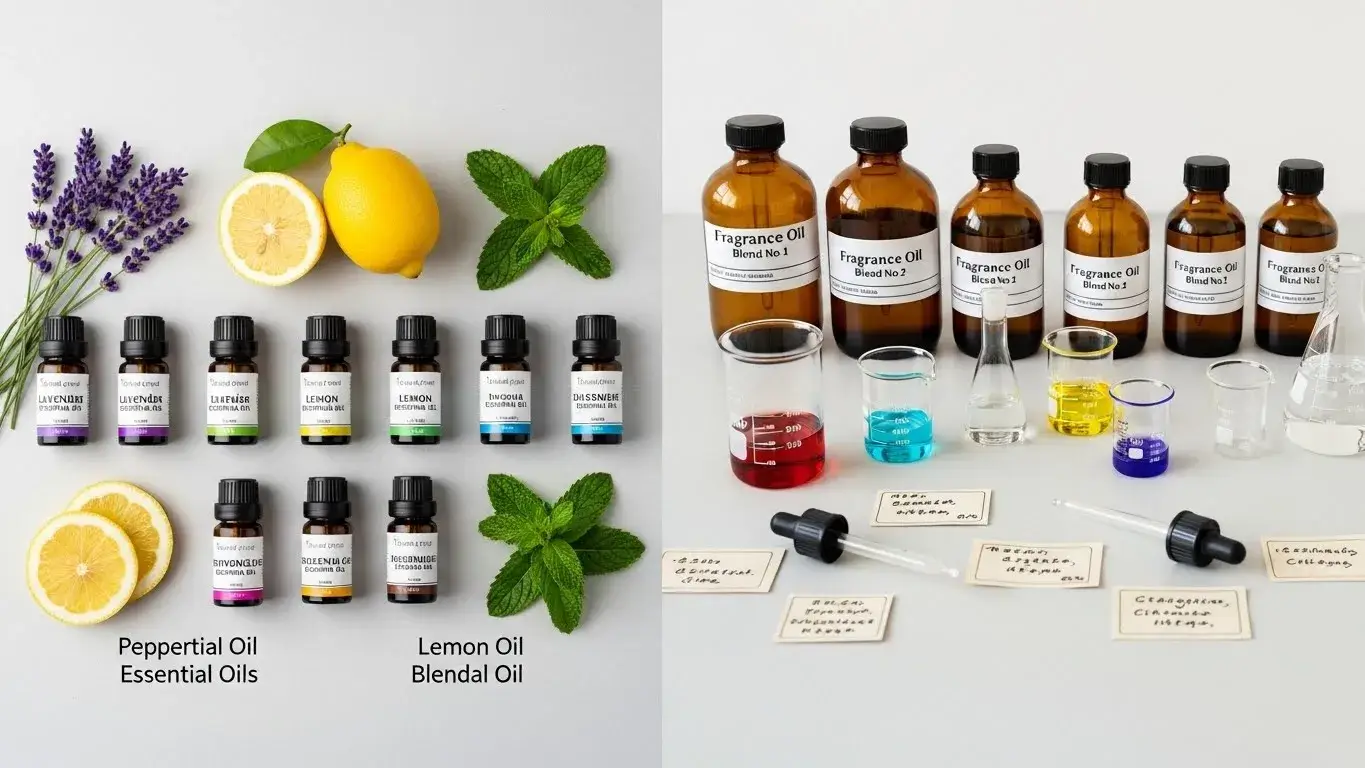
Technical Differences
| Characteristic | Essential Oils | Natural Fragrance Oils |
|---|---|---|
| Composition | Single-source, pure | May be blended or modified |
| Concentration | 100% (undiluted) | Varies (often diluted) |
| Standardization | Varies by batch | Often standardized |
| Therapeutic Claims | Permitted (aromatherapy) | Not permitted |
| Labeling | Must state botanical | Can use descriptive names |
| Price | Generally higher | Varies widely |
| Application Focus | Aromatherapy, wellness | Fragrance, scent |
When to Use Each
Use essential oils when:
- Making therapeutic or aromatherapy claims
- Targeting wellness and natural health markets
- Single-note simplicity is desired
- Maximum purity is required
Use natural fragrance oils when:
- Creating complex scent compositions
- Cost management is important
- Standardized scent profile is needed
- Making fragrance (not therapeutic) claims
Regulatory Implications
The distinction matters for labeling and claims:
Cosmetic labeling: Both can be listed as "parfum" or "fragrance" in ingredient lists. Specific allergens must be declared separately.
Therapeutic claims: Only essential oils used according to aromatherapy standards can support therapeutic positioning. Natural fragrance oils cannot make health claims.
Natural certifications: Different certifying bodies have different standards for what qualifies as "natural." Verify your supplier’s certifications match your target market’s requirements.
What Should B2B Buyers Look for When Sourcing Natural Fragrance Oils?
Quality varies enormously in this market. Knowing what to verify protects your products and your brand.
B2B buyers should verify botanical origin, extraction method, purity testing (GC-MS analysis), IFRA compliance, allergen declarations, and supplier certifications (ISO, GMP). Request samples for evaluation, confirm batch-to-batch consistency, and assess supply chain transparency including sustainability practices.
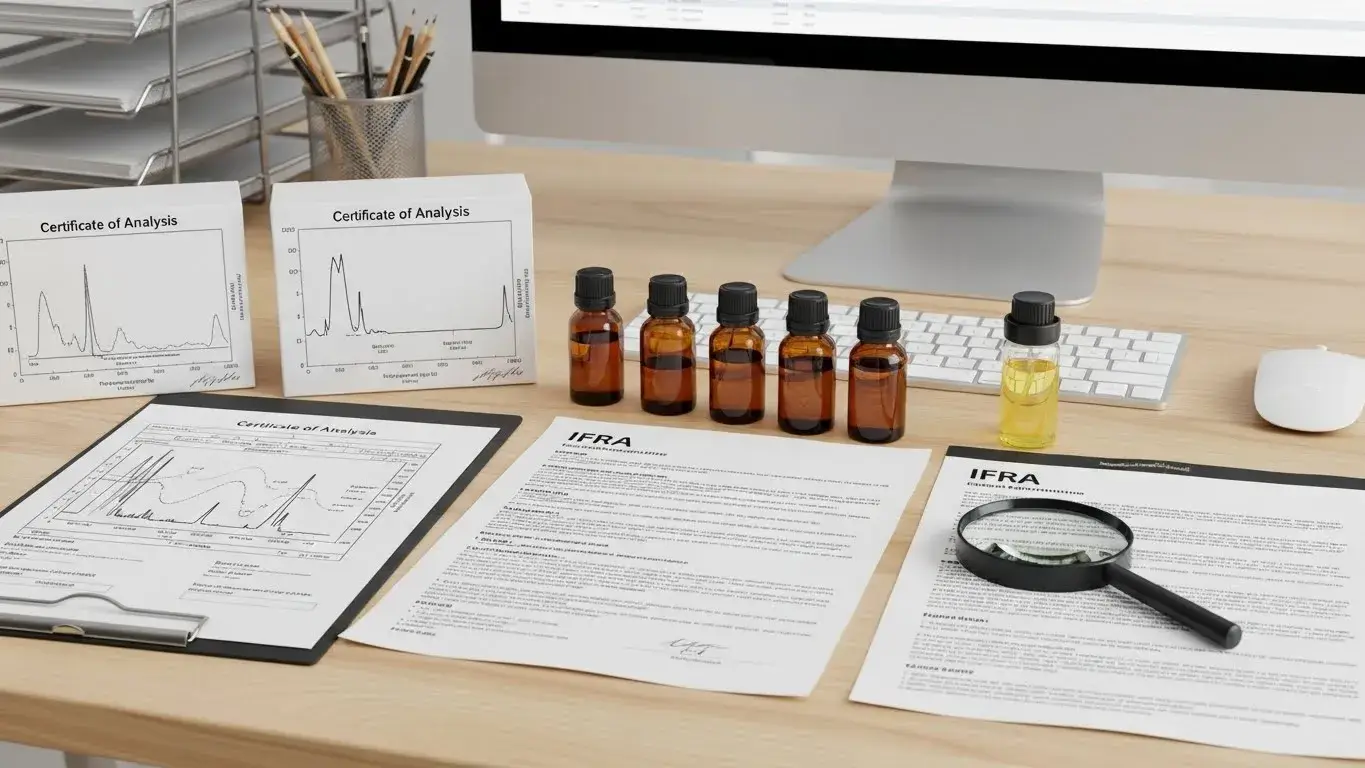
Essential Documentation
Every purchase should include:
Technical Documentation:
- Certificate of Analysis (COA)
- GC-MS chromatogram
- IFRA Certificate of Conformity
- Material Safety Data Sheet (MSDS)
- Allergen declaration
Quality Certifications:
- ISO 9001 (quality management)
- ISO 22716 (cosmetic GMP)
- REACH compliance (EU market)
- Organic certification (if claimed)
Traceability:
- Country of origin
- Botanical species verification
- Harvest date/season
- Batch number tracking
Evaluating Suppliers
Ask potential suppliers these questions:
- What extraction method do you use?
- Can you provide GC-MS analysis for each batch?
- What is your batch-to-batch consistency?
- Do you have IFRA compliance certificates?
- What is your minimum order quantity (MOQ)?
- What is your lead time for samples and orders?
- Do you offer reformulation support?
- What sustainability certifications do you hold?
Red Flags to Watch For
Be cautious of suppliers who:
- Cannot provide GC-MS analysis
- Offer prices significantly below market rates
- Have vague or inconsistent origin information
- Cannot explain their extraction process
- Lack proper certifications
- Refuse to provide samples before bulk orders
How Do Natural Fragrance Oils Impact Sustainability?
Sustainability is increasingly important for brand positioning and consumer preference. Understanding the issues helps you make responsible sourcing decisions.
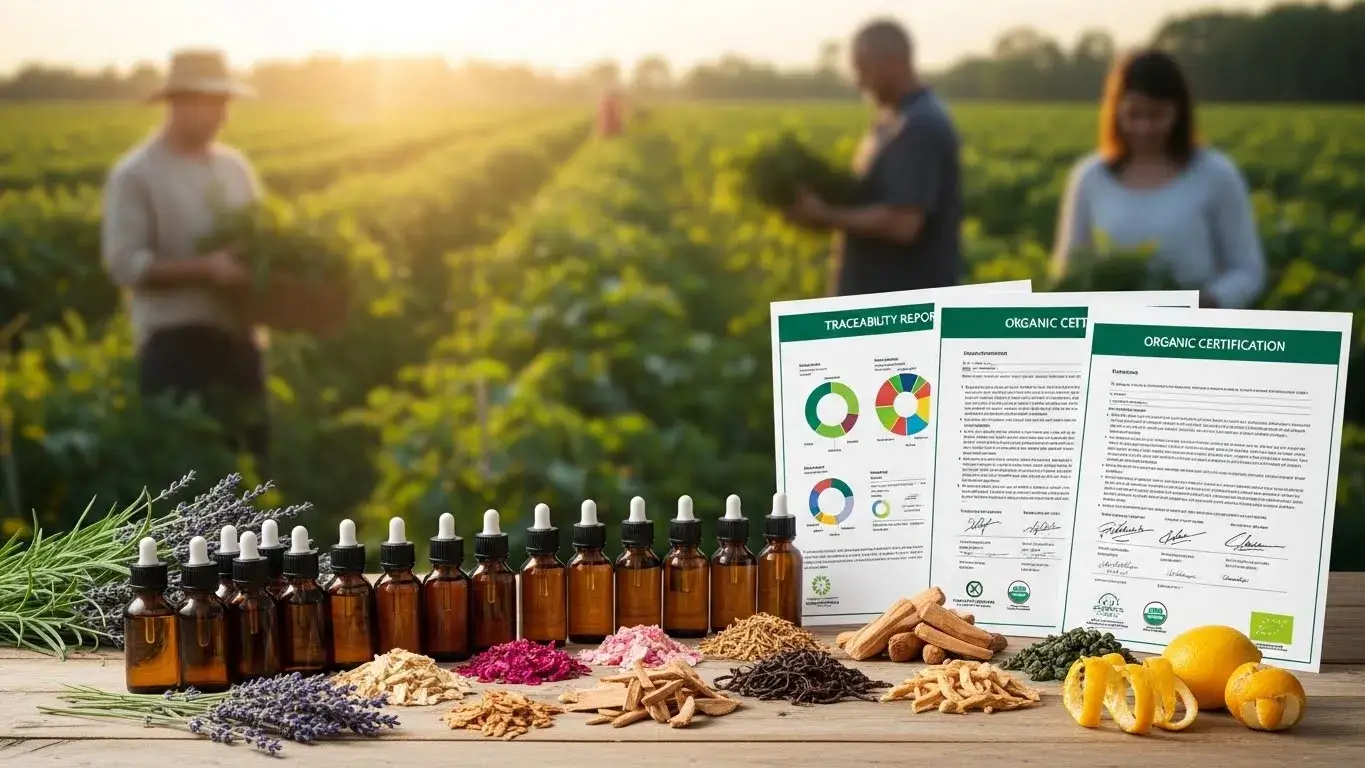
Natural fragrance oil production can have positive or negative environmental impacts depending on sourcing practices. Sustainable practices include organic farming, fair trade sourcing, efficient extraction methods, and biodiversity protection. Concerns include overharvesting of wild plants, habitat destruction, and resource-intensive extraction. Biotechnology offers emerging sustainable alternatives.
Sustainability Challenges
Overharvesting
Wild-harvested botanicals face population pressure. Sandalwood in India and rosewood in Brazil have been particularly affected. This has led to:
- CITES restrictions on some species5
- Price increases for scarce materials
- Development of sustainable alternatives
Land Use
Agriculture for fragrance crops competes with food production and natural habitats. Rose cultivation in Bulgaria, for example, requires significant land area.
Water and Energy
Steam distillation requires substantial water and energy inputs. Some extraction facilities have significant environmental footprints.
Sustainable Solutions
Responsible Sourcing Programs
Many suppliers now offer:
- Fair trade certified ingredients
- Organic certification
- Rainforest Alliance partnerships
- Community development programs
Green Chemistry
Innovative extraction methods reduce environmental impact:
- CO2 extraction (no solvent residue)
- Enzyme-assisted extraction
- Microwave-assisted distillation
Biotechnology
Lab-grown fragrance compounds offer sustainability benefits:
- Fermentation-derived ingredients
- Yeast-produced molecules identical to natural
- No agricultural land required
- Consistent supply regardless of weather
Sustainability Certifications
| Certification | Focus | Recognition |
|---|---|---|
| UEBT | Ethical sourcing | High |
| Rainforest Alliance | Biodiversity | High |
| Fair Trade | Economic justice | High |
| Organic (various) | Chemical-free farming | High |
| COSMOS | Natural cosmetics | Growing |
What Are the Latest Trends in Natural Fragrance Oils?
The market is evolving rapidly. Understanding trends helps you anticipate customer needs and stay competitive.
Key trends include biotechnology-derived naturals, upcycled and circular ingredients, transparency and traceability demands, clean beauty formulations, regional and terroir-focused sourcing, and functional fragrances with wellness benefits. The global fragrance oil market is projected to reach $21.97 billion by 2035, with natural segments growing fastest.

Market Growth Data
The fragrance oil market shows strong growth. According to industry market research6:
- 2024 market size: $13.7 billion
- 2035 projected size: $21.97 billion
- CAGR: 4.38% (2024-2035)
Natural and sustainable segments are growing faster than the overall market as consumer preferences shift toward clean beauty and transparent sourcing.
Emerging Trends
Biotechnology and Fermentation
Companies are producing natural-identical ingredients through fermentation. This includes:
- Sustainable alternatives to scarce naturals
- Consistent quality without agricultural variability
- Reduced environmental footprint
Upcycled Ingredients
Fragrance compounds extracted from food industry waste:
- Citrus peel from juice production
- Coffee grounds
- Grape pomace from winemaking
Transparency Technology
Blockchain and digital tools for:
- Supply chain traceability
- Origin verification
- Sustainability documentation
Functional Fragrances
Scents positioned for wellness benefits:
- Stress relief
- Sleep support
- Focus enhancement
For B2B buyers, these trends create opportunities to differentiate products and command premium positioning.
Conclusion
Natural fragrance oils offer authentic scents valued by consumers but require careful sourcing, regulatory compliance, and quality verification. B2B buyers should prioritize documentation, supplier transparency, and sustainability to succeed in this growing market segment.
-
AromaWeb provides comprehensive educational resources on CO2 supercritical extracts, explaining the technical advantages of this extraction method including lower heat requirements and cleaner product yields compared to traditional distillation. ↩
-
ISO 9235 is the international standard that specifies terms and definitions relating to aromatic natural raw materials, serving as the global benchmark for defining what constitutes a "natural" fragrance ingredient. ↩
-
The International Fragrance Association (IFRA) establishes the globally recognized safety standards for fragrance ingredients, setting maximum usage levels based on scientific safety assessments conducted by RIFM and reviewed by an independent Expert Panel. ↩
-
The European Commission provides official guidance on fragrance allergen labeling requirements for cosmetic products sold in EU markets, including the 26 regulated allergens that must be declared above specified concentration thresholds. ↩
-
CITES (Convention on International Trade in Endangered Species) maintains the official appendices listing protected species including several fragrance-producing botanicals like sandalwood, providing the legal framework for international trade restrictions. ↩
-
Market Research Future provides comprehensive industry analysis on the global fragrance oil market, offering detailed forecasts, segmentation data, and trend analysis valuable for B2B sourcing and strategic planning decisions. ↩