

Evening primrose flowers bloom at sunset, revealing the source of this valuable essential oil
Quick Facts About Evening Primrose Essential Oil
| Key Information | Details |
|---|---|
| Scientific Name | Oenothera biennis |
| Main Components | 70-74% Linoleic Acid, 8-10% GLA (Gamma-Linolenic Acid) |
| Primary Uses | Skin health, women’s wellness, anti-inflammatory support |
| Safety Level | Generally safe for adults with mild side effects possible |
| Scientific Evidence | Mixed results – limited strong evidence for most claims |
| Best Form | Cold-pressed oil from GMP-certified manufacturers |
| Global Market Size | $1.5 billion (2023) with 5.5% projected annual growth |
What is Evening Primrose Essential Oil?
Evening primrose essential oil comes from the seeds of the Oenothera biennis plant, a North American wildflower.
This oil contains high levels of omega-6 fatty acids, particularly gamma-linolenic acid (GLA), which may support anti-inflammatory processes in the body.
However, scientific evidence for many health claims remains limited, making quality sourcing and realistic expectations essential for users.
What Evening Primrose Essential Oil Is
Evening primrose essential oil represents one of nature’s most concentrated sources of gamma-linolenic acid (GLA)1.
This golden-colored oil comes from the tiny seeds of the evening primrose plant, which earned its name because its bright yellow flowers bloom dramatically at sunset.
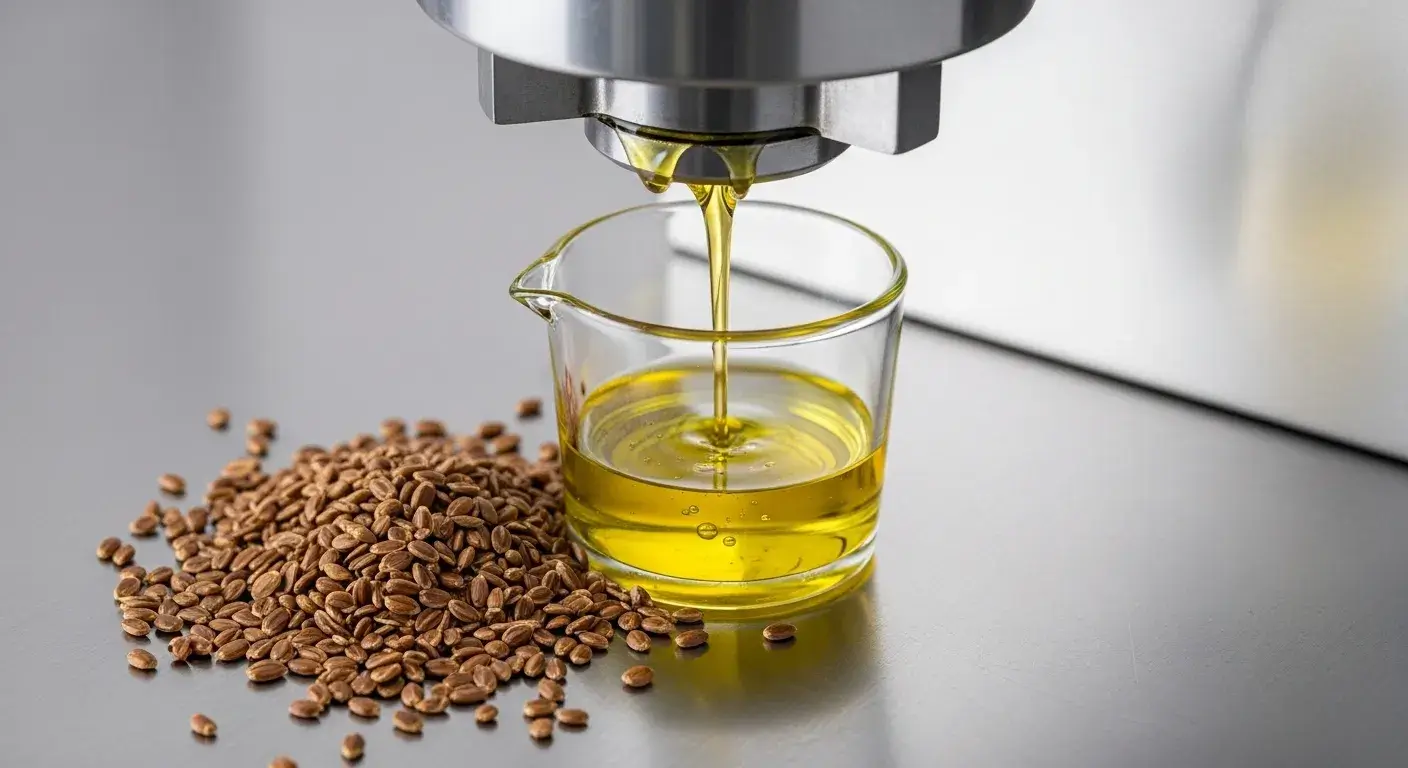
Evening primrose seeds being processed through cold-press extraction methods
The oil’s composition makes it particularly interesting for health applications.
Unlike many plant oils, evening primrose oil contains 70-74% linoleic acid and 8-10% GLA – a rare omega-6 fatty acid that our bodies can’t produce naturally.
This unique profile has made it a popular choice in both traditional medicine and modern wellness applications.
Historically, Native Americans used the entire evening primrose plant for various health concerns, from skin inflammation to digestive issues.
By the 17th century, European settlers had nicknamed it "King’s cure-all" due to its widespread folk remedy uses.
Today’s essential oil manufacturing process has refined these traditional applications into concentrated, standardized products.
The extraction process typically involves cold-pressing the seeds to preserve the delicate fatty acid structure.
Quality manufacturers follow strict protocols to ensure the oil maintains its beneficial compounds without oxidation or contamination – a crucial factor we’ll explore in detail later.
Science-Backed Benefits Analysis
Understanding what research actually shows about evening primrose essential oil helps separate fact from marketing claims.
I’ve reviewed numerous studies to give you an honest assessment of where the science stands today.
Skin Health Applications
Evening primrose oil’s reputation for skin benefits centers on its high GLA content.
This omega-6 fatty acid theoretically supports skin barrier function and may help reduce inflammation.
However, the research tells a more nuanced story.
For eczema (atopic dermatitis)2, the most studied skin condition, oral evening primrose oil has shown disappointing results.
The National Center for Complementary and Integrative Health3 states clearly that oral EPO "has not been shown to be effective" for eczema treatment.
Topical applications may offer more promise.
When applied directly to skin, the oil can provide moisturizing benefits and may help with dry skin conditions.
However, this likely works more as a general moisturizer than as a specific therapeutic treatment.
For acne and psoriasis, the evidence remains largely anecdotal.
While some people report improvements, controlled studies haven’t consistently demonstrated significant benefits over standard treatments or placebo.
Women’s Health Support
Many women turn to evening primrose oil for menstrual and menopausal symptoms, making this one of its most common applications.
Let me share what the research actually reveals.
For PMS symptoms4, a comprehensive review of available studies found insufficient evidence to support evening primrose oil’s effectiveness.
A 1994 meta-analysis examining seven placebo-controlled trials concluded that sample sizes were too small and results too inconsistent to draw reliable conclusions.
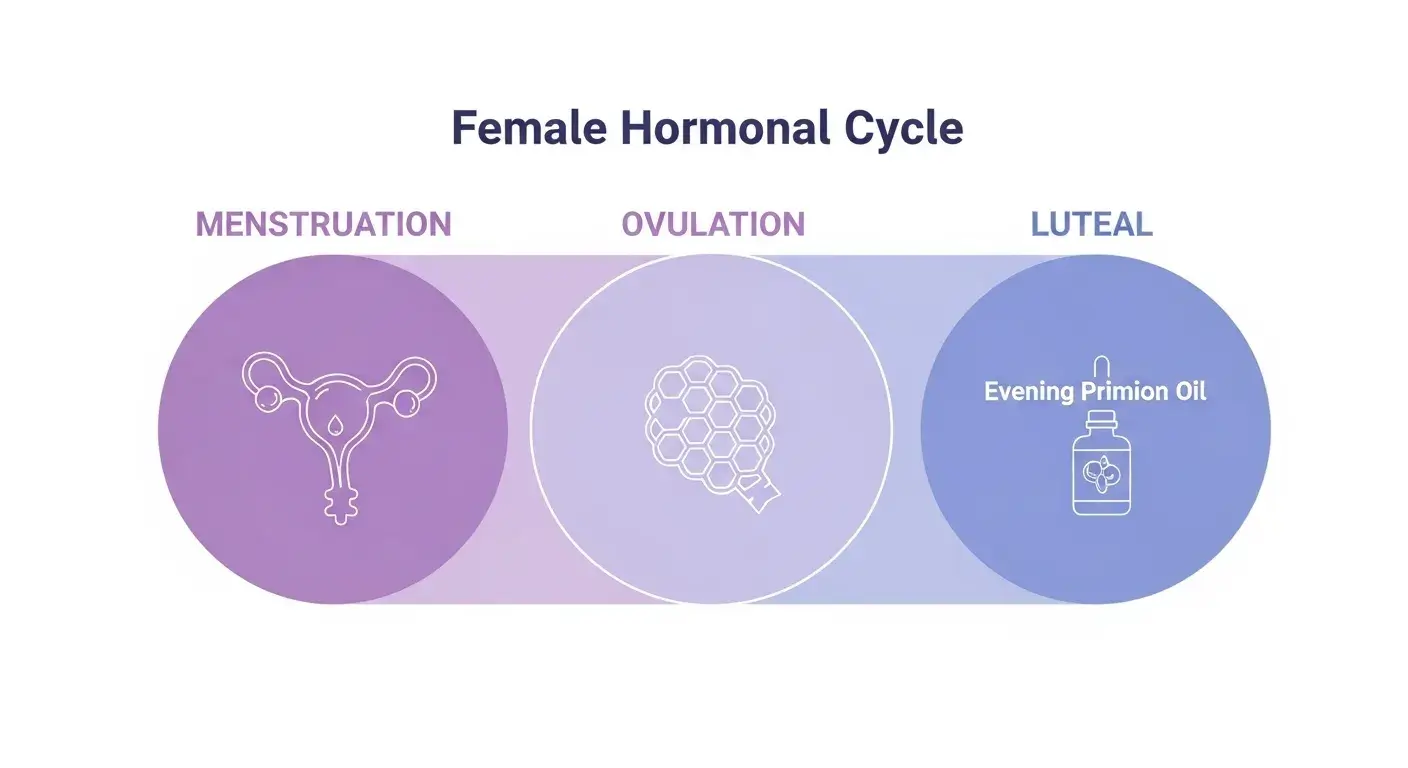
Hormonal cycle diagram showing where evening primrose oil is theorized to provide support
Menopausal symptoms5 show similarly mixed results.
A systematic review of five randomized clinical trials involving 402 participants found minimal improvement in overall symptom severity but no significant effect on hot flashes or night sweats – the symptoms most women hope to address.
Breast pain (mastalgia) represents one of the most thoroughly studied applications.
Unfortunately, a meta-analysis of 13 randomized controlled trials with 1,752 participants found evening primrose oil no more effective than placebo for reducing breast pain.
Anti-inflammatory Properties
The theoretical basis for evening primrose oil’s anti-inflammatory effects lies in its GLA content.
GLA can be converted to compounds that may help regulate inflammatory responses in the body.
However, translating this biochemical possibility into real-world health benefits has proven challenging.
Rheumatoid arthritis6 studies have shown mixed results.
Some small studies suggested modest improvements in joint tenderness and morning stiffness, but larger, better-designed trials haven’t consistently replicated these findings.
The Mayo Clinic notes insufficient evidence for arthritis applications.
General inflammation markers in healthy individuals don’t appear significantly affected by evening primrose oil supplementation, according to most controlled studies.
What Research Actually Shows
| Condition | Evidence Quality | Research Findings | Bottom Line |
|---|---|---|---|
| Eczema (oral use) | Moderate | No significant benefit vs. placebo | Not recommended |
| PMS symptoms | Low | Insufficient evidence from small trials | Unproven |
| Menopausal hot flashes | Moderate | No significant reduction in symptoms | Ineffective |
| Breast pain | High | No benefit over placebo in large studies | Not effective |
| Rheumatoid arthritis | Low-Moderate | Mixed results, no consistent benefit | Unproven |
| Skin moisturizing (topical) | Low | Some moisturizing effects | Possible benefit |
The pattern across multiple conditions suggests that while evening primrose oil is generally safe, its therapeutic benefits may be more limited than commonly believed.
This doesn’t mean it’s worthless, but it does mean we should have realistic expectations.
Practical Usage Guide
If you decide to try evening primrose oil despite the limited evidence, using it correctly maximizes any potential benefits while minimizing risks. Here’s how to approach it practically.
Oral Supplementation Methods
Evening primrose oil supplements typically come as soft gel capsules or liquid oil.
The capsule form offers convenience and precise dosing, while liquid oil allows for more flexible dosing but may have a stronger taste.
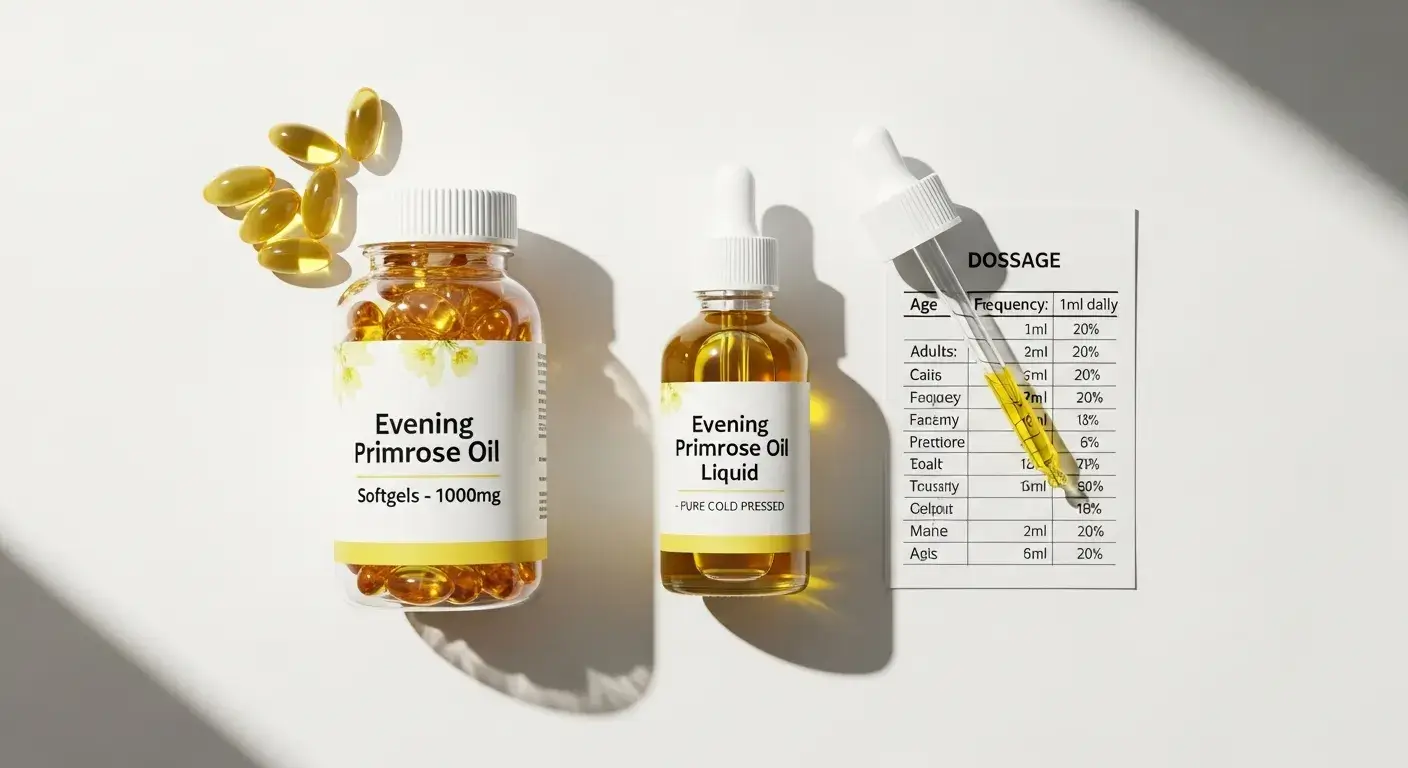
Various forms of evening primrose oil supplements showing capsules and liquid options
Standard dosing ranges from 500mg to 4,000mg daily, depending on the intended use.
Most people start with 1,000-1,500mg daily, taken with meals to improve absorption and reduce potential stomach upset.
For women’s health applications, some practitioners recommend:
- PMS support: 1,000-1,500mg daily throughout the cycle
- Menopausal symptoms: 1,000-2,000mg daily
- General wellness: 500-1,000mg daily
Timing matters with oral supplements. Taking evening primrose oil with meals that contain some fat helps absorption of the fat-soluble compounds.
Dividing the daily dose between meals may also reduce digestive side effects.
Topical Applications
Topical use of evening primrose oil offers a different approach, particularly for skin-related concerns.
The oil can be applied directly or mixed with other skincare products.
Direct application works well for small areas of dry or irritated skin.
Use just a few drops, as the oil absorbs slowly and can leave a greasy feeling if overapplied.
Many people find it works best when applied to slightly damp skin.
Mixed applications involve adding a few drops to your regular moisturizer, serum, or cream.
This approach distributes the oil more evenly and reduces the greasy feeling while potentially enhancing your existing skincare routine.
Patch testing is crucial before widespread topical use. Apply a small amount to your inner wrist or behind your ear and wait 24-48 hours to check for any adverse reactions.
Dosage Recommendations
Based on available research and clinical experience, here are practical dosage guidelines for different applications:
General wellness/preventive use:
- Adults: 500-1,000mg daily
- Duration: Can be used long-term with periodic breaks
Targeted health support:
- Adults: 1,000-2,000mg daily
- Duration: 3-6 months to assess effectiveness
- Monitor for improvements and side effects
Topical use:
- Start with 2-3 drops for facial applications
- Use 5-10 drops for larger body areas
- Apply 1-2 times daily as needed
Best Practices for Different Conditions
For skin concerns:
- Combine topical and oral approaches cautiously
- Start with topical use to assess skin tolerance
- Consider professional guidance for serious skin conditions
For women’s health:
- Track symptoms to objectively assess any improvements
- Consider timing supplementation with menstrual cycles
- Discuss with healthcare providers, especially if on hormonal medications
Quality considerations:
- Choose cold-pressed oils to preserve beneficial compounds
- Look for third-party testing certificates
- Store properly in cool, dark places to prevent oxidation
Safety & Quality Considerations
Understanding the safety profile and quality indicators of evening primrose oil helps you make informed decisions and avoid potential problems. Let me walk you through the key considerations.
Side Effects and Interactions
Evening primrose oil is generally well-tolerated, but like any supplement, it can cause side effects in some people.
Most side effects are mild and resolve when you stop taking the supplement.
Common side effects include:
- Upset stomach or nausea (most frequent)
- Headaches
- Bloating or gas
- Loose stools
- Skin rash (rare)
Drug interactions7 present more serious concerns. Evening primrose oil can interact with several medications:
- Blood thinners (warfarin, heparin): May increase bleeding risk
- Seizure medications: Could potentially lower seizure threshold
- Blood pressure medications: May affect blood pressure control
- Psychiatric medications: Particularly those for schizophrenia
The Cleveland Clinic emphasizes the importance of medical supervision when combining evening primrose oil with prescription medications.
Who Should Avoid EPO
Certain groups should exercise extra caution or avoid evening primrose oil entirely:
Pregnant and breastfeeding women should generally avoid evening primrose oil unless specifically recommended by their healthcare provider. Some concern exists about its potential effects on pregnancy and labor.
People with bleeding disorders or those scheduled for surgery should stop evening primrose oil at least two weeks before procedures due to potential bleeding risks.
Individuals with seizure disorders should consult neurologists before use, as some reports suggest evening primrose oil might lower seizure thresholds in susceptible individuals.
Those with hormone-sensitive conditions should use caution, as the oil’s effects on hormonal pathways aren’t fully understood.
Quality Indicators to Look For
The evening primrose oil market varies dramatically in quality, making careful selection crucial for both safety and potential effectiveness. Here’s what to look for:
Third-party testing8 represents the gold standard for quality assurance. Look for:
- USP (United States Pharmacopeia) verification
- NSF International certification
- ConsumerLab testing results
- Independent laboratory certificates of analysis
Processing methods significantly impact oil quality:
- Cold-pressed extraction preserves heat-sensitive compounds
- Hexane-free processing avoids potentially harmful chemical residues
- Nitrogen flushing prevents oxidation during bottling
Packaging considerations affect long-term quality:
- Dark glass bottles protect against light degradation
- Small bottle sizes (2-4 oz) ensure freshness for individual users
- Proper sealing prevents air exposure and oxidation
Source transparency indicates responsible manufacturing:
- Clear identification of plant source and origin
- Harvest date and processing information
- Bulk essential oils wholesale practices that maintain quality standards
GMP Manufacturing Standards
Good Manufacturing Practice (GMP)9 certification ensures that evening primrose oil is produced under controlled conditions that prioritize safety and consistency. Understanding these standards helps you identify reliable suppliers.
GMP-certified facilities must maintain:
- Strict environmental controls for temperature, humidity, and cleanliness
- Documented procedures for every step of production
- Regular testing of raw materials and finished products
- Trained personnel following standardized protocols
- Comprehensive record-keeping for traceability

Inside a GMP-certified essential oil manufacturing facility showing quality control processes
ISO certifications10 add additional quality layers:
- ISO 9001: Quality management systems
- ISO 22000: Food safety management
- ISO 14001: Environmental management systems
For businesses considering bulk essential oil sourcing, GMP certification becomes even more critical. Large-scale operations require consistent quality across multiple batches, making certified manufacturers essential partners.
When evaluating suppliers, ask specifically about:
- Current GMP certification status and renewal dates
- Internal quality control procedures
- Batch testing protocols and frequency
- Customer audit policies and facility tour availability
Companies like PhytoEx that maintain GMP certification demonstrate commitment to quality standards that protect both individual consumers and business clients.
This becomes particularly important when sourcing bulk essential oils for commercial applications.
Industry Insights & Market Trends
The evening primrose oil market reflects broader trends in natural health products, with growing demand driving both opportunities and quality challenges.
Understanding these market dynamics helps inform purchasing decisions and business strategies.
Global Market Statistics
The global evening primrose oil market11 has shown steady growth, reaching approximately $1.5 billion in 2023 with projections for continued expansion at a 5.5% compound annual growth rate through 2030. This growth reflects increasing consumer interest in natural wellness solutions and expanding applications across multiple industries.

Global market share breakdown by region and application showing growth trends
Regional market distribution shows interesting patterns:
- North America: 35% market share, driven by dietary supplement demand
- Europe: 28% market share, with strong cosmetics and personal care applications
- Asia-Pacific: 25% market share, fastest-growing region due to expanding middle class
- Other regions: 12% market share, including emerging markets in Latin America and Middle East
Application breakdown reveals diverse usage patterns:
- Dietary supplements: 45% of market volume
- Cosmetics and personal care: 30% of market volume
- Pharmaceuticals: 15% of market volume
- Food and beverages: 10% of market volume
Quality Manufacturing Standards
The growing market has unfortunately led to quality variations that can significantly impact product effectiveness and safety.
Understanding manufacturing standards helps distinguish premium products from lower-quality alternatives.
Premium manufacturers typically maintain:
- Organic certification12 for source materials when possible
- Solvent-free extraction methods to avoid chemical residues
- Nitrogen atmosphere processing to prevent oxidation
- Comprehensive stability testing to ensure shelf life accuracy
- Full traceability systems from seed to finished product
Quality challenges in the current market include:
- Adulteration with cheaper oils to reduce costs
- Oxidation from poor storage and handling practices
- Contamination from inadequate processing facilities
- Mislabeling of GLA content and potency claims
The essential oil manufacturing process becomes crucial for businesses seeking reliable suppliers. Companies serving multiple industries must maintain consistent quality standards across different applications and regulatory requirements.
Bulk Supply Considerations for Businesses
Businesses requiring evening primrose oil face unique challenges in sourcing reliable, high-quality supplies. Understanding these considerations helps optimize procurement strategies and ensure product consistency.
Volume requirements vary significantly by industry:
- Cosmetics manufacturers: Typically need 100-1000 kg annually
- Supplement companies: May require 1000-5000 kg annually
- Pharmaceutical applications: Often need smaller volumes (50-500 kg) but highest quality
- Food and beverage: Variable needs based on product lines and seasonal demand
Supply chain reliability indicators include:
- Inventory depth: Suppliers maintaining substantial stock reserves
- Multiple sourcing locations: Reducing risk from crop failures or regional issues
- Flexible minimum order quantities: Accommodating different business sizes
- Rapid fulfillment capabilities: Meeting urgent production schedules

Supply chain diagram showing optimal bulk essential oil distribution network
Documentation requirements for business buyers typically include:
- Certificates of Analysis (COA) for each batch
- Material Safety Data Sheets (MSDS) for handling and storage
- GC-MS reports verifying chemical composition
- Allergen statements for food and cosmetic applications
- Organic certificates when required for final products
Cost considerations for bulk purchasing involve multiple factors:
- Volume discounts: Typically available for orders above minimum thresholds
- Long-term contracts: Often provide price stability and priority allocation
- Payment terms: Affecting cash flow and total cost of ownership
- Shipping and storage: Significant factors for international sourcing
For companies exploring bulk essential oil sourcing, partnering with established suppliers like PhytoEx provides access to GMP-certified manufacturing, comprehensive documentation, and reliable supply chains that support business growth and regulatory compliance.
Emerging trends in bulk supply include:
- Sustainability certifications13 becoming increasingly important
- Blockchain traceability for enhanced supply chain transparency
- Custom blending services for proprietary formulations
- Rapid prototyping support for new product development
FAQ Section
Based on common questions I receive about evening primrose oil, here are the most important answers that address real user concerns and misconceptions.
What are the proven benefits of evening primrose oil?
Honestly, the scientifically proven benefits are more limited than many people expect. The strongest evidence suggests mild moisturizing effects for topical skin applications. For other commonly claimed benefits like PMS relief, menopause symptoms, or eczema treatment, large-scale studies haven’t consistently shown significant advantages over placebo treatments. This doesn’t mean the oil is worthless, but it does mean we should have realistic expectations about what it can accomplish.
Is evening primrose oil safe for daily use?
For most healthy adults, evening primrose oil is generally safe for daily use in recommended doses (typically 500-2000mg). However, it can interact with blood-thinning medications and may cause mild side effects like stomach upset or headaches in some people. If you’re taking any prescription medications or have health conditions, definitely consult your healthcare provider before starting daily supplementation.
How long does it take to see results from evening primrose oil?
This varies significantly depending on what you’re hoping to achieve and individual factors. For skin applications, you might notice moisturizing effects within days to weeks. For systemic benefits like hormonal balance support, some people report changes after 6-12 weeks of consistent use, though scientific studies don’t consistently support many of these claims. I recommend giving it at least 3 months of consistent use before deciding whether it’s helping you.
What’s the difference between evening primrose oil and other omega oils?
Evening primrose oil is unique because it contains gamma-linolenic acid (GLA), an omega-6 fatty acid that’s relatively rare in common foods. Fish oil contains omega-3 fatty acids (EPA and DHA), while most plant oils contain primarily omega-6 linoleic acid without GLA. Each type of oil affects the body differently, and they’re not interchangeable. However, similar to other supplements like eucalyptus essential oil, the specific benefits often depend on individual responses and quality of the product.
Can I use evening primrose oil during pregnancy?
This is a common question, and the answer is generally no – pregnant women should avoid evening primrose oil unless specifically recommended by their healthcare provider. Some studies suggest it might affect labor and delivery, and there isn’t enough safety data to recommend its use during pregnancy. Always discuss any supplements with your obstetrician or midwife.
How do I choose a high-quality evening primrose oil product?
Look for cold-pressed oils from reputable manufacturers with third-party testing certificates. The product should list the GLA content (aim for 8-10%), come in dark glass bottles to prevent light damage, and have recent manufacturing dates. Avoid products with added fillers or artificial ingredients. For businesses needing bulk supplies, working with GMP-certified manufacturers ensures consistent quality and proper documentation.
Does evening primrose oil help with weight loss?
There’s no strong scientific evidence that evening primrose oil significantly aids weight loss. While some people claim it helps with metabolism or appetite control, controlled studies haven’t demonstrated meaningful weight loss benefits. If you’re looking for weight management support, focus on proven approaches like balanced nutrition and regular exercise rather than relying on supplements.
Can evening primrose oil cause allergic reactions?
Yes, though allergic reactions are relatively uncommon. Some people may experience skin rashes, itching, or other allergic symptoms. This is more likely with topical use than oral supplementation. Always do a patch test before applying evening primrose oil to large skin areas, and discontinue use if you notice any adverse reactions.
Is there a best time of day to take evening primrose oil?
For oral supplements, taking evening primrose oil with meals helps improve absorption and reduces the likelihood of stomach upset. Some women prefer taking it in the evening, particularly for menstrual cycle support, though there’s no strong scientific evidence that timing significantly affects outcomes. Consistency matters more than specific timing – choose a schedule you can maintain long-term.
How should I store evening primrose oil to maintain quality?
Store evening primrose oil in a cool, dark place away from direct sunlight and heat. Refrigeration can extend shelf life, especially after opening. The oil should maintain quality for 12-24 months when stored properly, but always check for signs of rancidity like off odors or changes in color. Once opened, use within 6 months for best quality.
Can I give evening primrose oil to children?
Evening primrose oil supplementation in children should only be done under professional medical supervision. There isn’t sufficient safety data for pediatric use, and children’s nutritional needs differ significantly from adults. If you’re concerned about your child’s omega fatty acid intake, discuss appropriate options with their pediatrician.
What’s the difference between evening primrose oil and evening primrose essential oil?
This is an important distinction that often causes confusion. Evening primrose oil is typically a carrier oil extracted from the seeds, rich in fatty acids like GLA. True essential oils are usually steam-distilled aromatic compounds. Most "evening primrose essential oil" products are actually the seed oil, not a steam-distilled essential oil. Make sure you’re getting the product type you actually want for your intended use.
Conclusion
After examining the research and market realities around evening primrose oil, I want to give you my honest assessment. While this oil contains unique fatty acids like GLA that theoretically offer health benefits, the scientific evidence for most popular claims remains limited or inconclusive.
That doesn’t mean evening primrose oil is without value. For some people, it may provide modest benefits for skin moisturizing or general wellness support. However, it’s not the miracle cure that some marketing materials suggest, and you shouldn’t expect dramatic results for conditions like eczema, PMS, or menopause symptoms.
If you decide to try evening primrose oil, focus on realistic expectations and quality sourcing. Choose cold-pressed oils from reputable manufacturers, start with lower doses to assess tolerance, and give it adequate time (3-6 months) to evaluate any potential benefits.
Ready to source high-quality evening primrose oil for your business or personal use?
PhytoEx offers GMP-certified evening primrose oil with complete documentation, third-party testing, and flexible order quantities from 1kg to industrial volumes. Our bulk essential oils meet the highest quality standards for multiple industries, backed by comprehensive certificates of analysis and fast international shipping.
Contact PhytoEx today to:
- Request samples and technical specifications
- Discuss custom formulations and private labeling
- Get quotes for bulk orders with volume discounts
- Learn about our complete range of botanical extracts and essential oils
Visit www.phytoex.com or reach out directly to discover how our expertise in essential oil manufacturing can support your business goals with reliable, high-quality ingredients you can trust.
Your success in natural products starts with the right supplier partnership.
External Link References
-
Scientific overview of gamma-linolenic acid and its role in human health ↩
-
Comprehensive medical information about eczema diagnosis and treatment options ↩
-
Official government health information about evening primrose oil research findings ↩
-
Medical research database covering premenstrual syndrome treatment studies ↩
-
Clinical evidence review for menopause symptom management approaches ↩
-
Arthritis Foundation’s guide to rheumatoid arthritis treatments and research ↩
-
Drug interaction database for supplement and medication safety information ↩
-
Consumer guide to supplement quality testing and certification programs ↩
-
FDA guidance on Good Manufacturing Practices for dietary supplements ↩
-
International Organization for Standardization quality management systems overview ↩
-
Market research report on global evening primrose oil industry trends ↩
-
USDA organic certification standards for agricultural products ↩
-
Sustainability certification programs for natural product supply chains ↩