
Natural wellness is booming, but are we paying more for real benefits or just nice labels?
Organic essential oils offer better purity and lower chemical exposure, but they cost more. Their value depends on your health goals, usage habits, and budget.
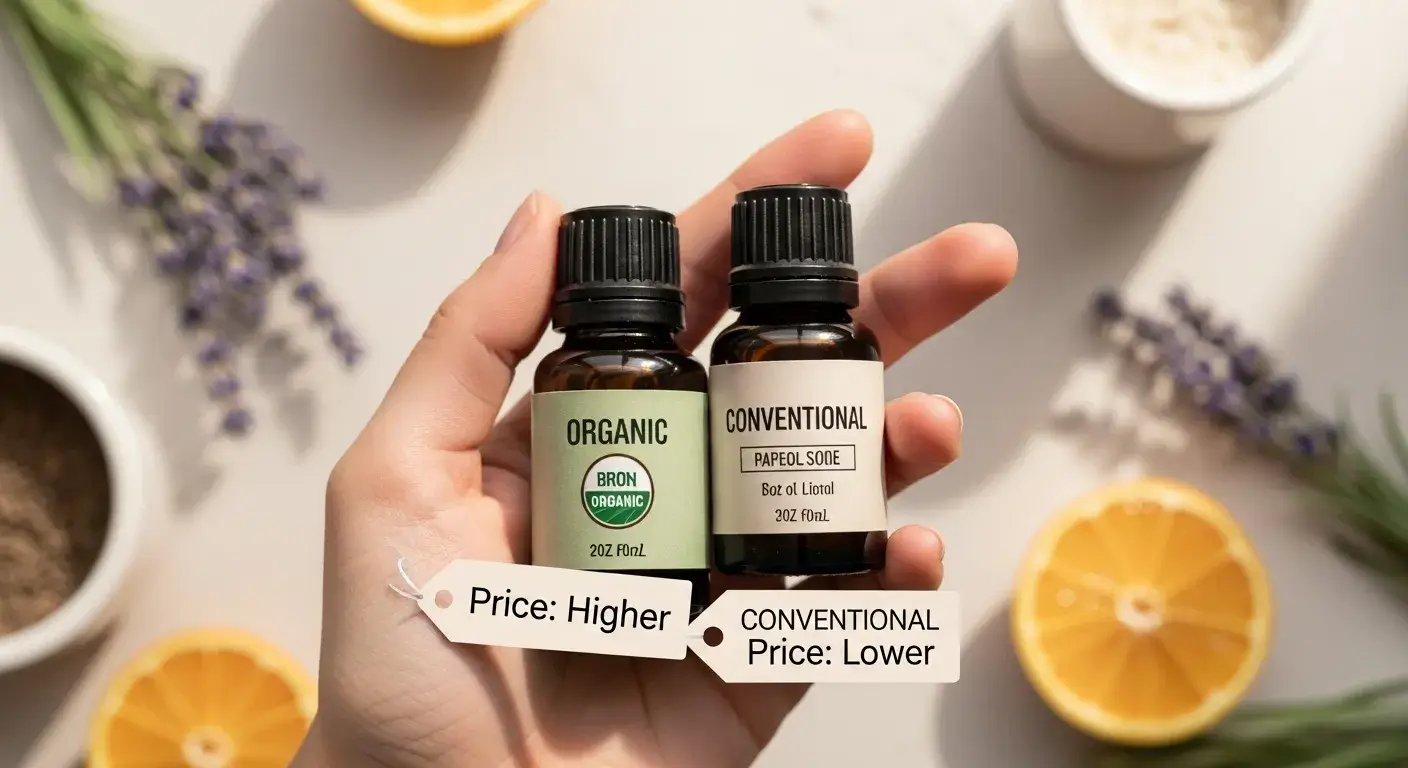
Some people swear by organic essential oils. Others say the price tag isn’t worth it.
If you’re trying to choose, it can be hard to know what really matters.
Let’s break it all down clearly so you can make a smart, confident decision.
What Makes Organic Essential Oils Different?
Everyone talks about organic being better. But what does that really mean?
Organic essential oils are made from plants grown without synthetic chemicals, GMOs, or harmful fertilizers. Certified oils follow strict organic rules, from farm to bottle.
Here you can check certified organic standards1
Why Organic Farming Matters
When farmers avoid chemicals, the soil stays healthy and the environment doesn’t suffer. Organic farms must meet strict rules.
For example, USDA organic rules require that 95% of the product be organic by weight, and the soil must be chemical-free for at least three years.
Key Certification Standards
| Certification Body | Main Requirement | Region |
|---|---|---|
| USDA Organic | 95% organic ingredients | USA |
| EU Organic | No GMOs, strict pesticide rules | Europe |
| Ecocert | Global organic standard | International |
These certifications make sure that the oil you buy is truly organic.
But just seeing the word “organic” on a bottle doesn’t guarantee purity.
Always look for logos from trusted certifiers like the USDA Organic program2.
Are Organic Essential Oils More Effective?
We want our oils to work well. But does organic mean stronger?
Organic oils often have higher amounts of active ingredients because the plants grow in healthier soil with no synthetic chemicals. This can make the oil more potent.
Here you can check benefits of organic cultivation3
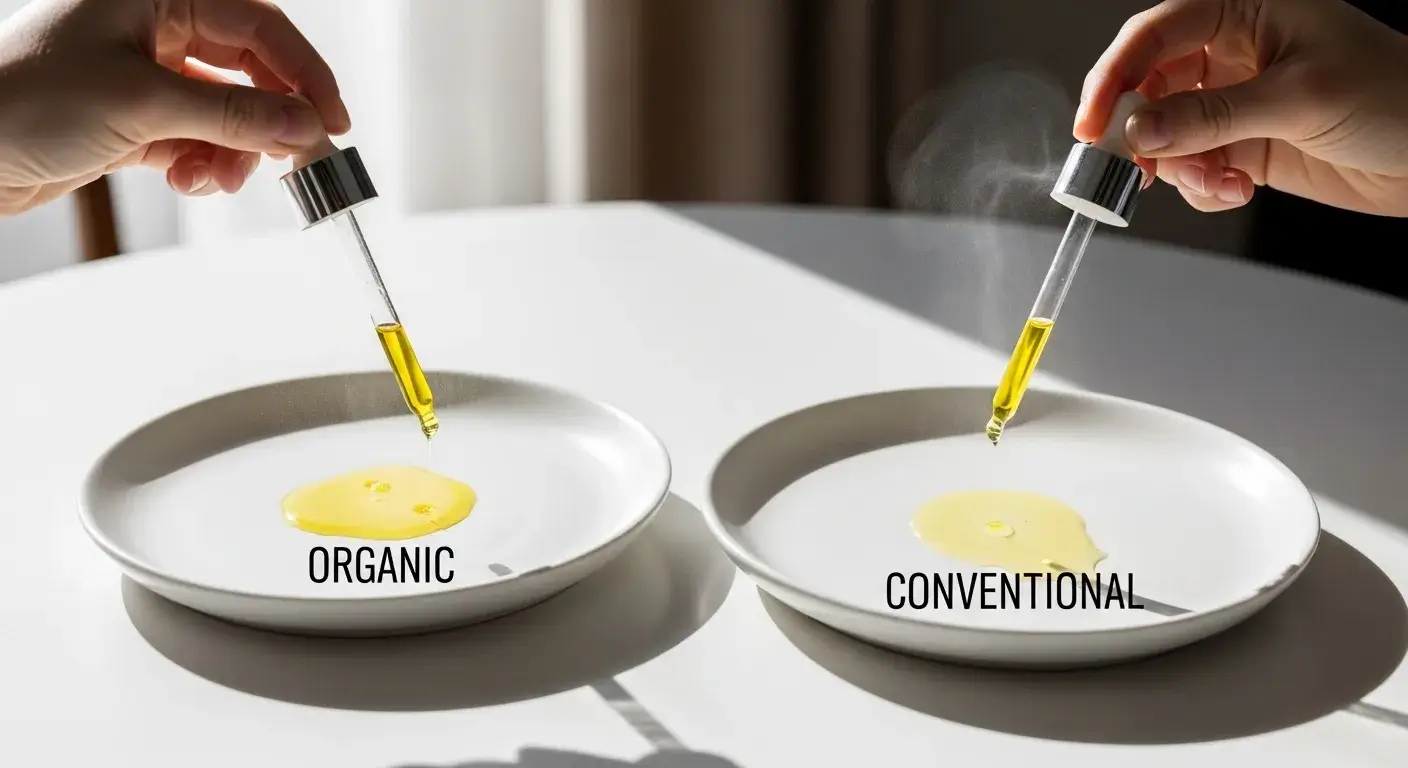
Comparing Potency and Purity
Organic farming focuses on plant health, which can lead to stronger natural compounds.
For example, one study found that organically grown lavender had more linalool, a calming chemical, than non-organic lavender.
See the lavender potency comparison study4.
Still, potency can vary by batch, climate, and harvest.
That’s why third-party testing is more important than a simple “organic” label.
Good suppliers share GC‑MS reports5 to show what’s in each bottle.
How Testing Helps
- GC‑MS Testing shows exact compounds in the oil
- COA (Certificate of Analysis) proves quality
- Allergen Statements warn of possible skin reactions
Even the best organic oils can cause reactions in sensitive people. So always patch test and dilute.
What’s the Real Cost Difference?
People say organic oils are expensive. But how much more are we talking?
Organic essential oils usually cost 20–50% more than conventional ones, due to harder farming, limited supply, and certification costs.
Here you can see price comparison analysis6
Example Price Comparison
| Oil Type | Organic Price (10 ml) | Conventional Price (10 ml) |
|---|---|---|
| Lavender | $12–$18 | $6–$10 |
| Peppermint | $10–$15 | $5–$9 |
| Tea Tree | $11–$14 | $6–$9 |
You’re paying more for stricter practices, cleaner ingredients, and detailed documentation like a Certificate of Analysis (COA)7.
Is It Worth It?
Yes, if:
- You use oils daily for wellness
- You’re sensitive to chemicals
- You care about the planet
Maybe not, if:
- You use oils once in a while
- You buy from trusted non‑organic suppliers
- Your budget is tight
Can Organic Oils Still Be Unsafe?
We often assume organic means 100% safe. But that’s not always true.
Even organic oils can cause allergic reactions, especially if they’re not diluted or used incorrectly.
Common Risks
- Skin Irritation: Even gentle oils can cause rashes if applied without a carrier oil.
- Children’s Sensitivity: Kids need much lower concentrations. Oils like eucalyptus or peppermint may be unsafe under age 6.
- Contamination: A 2025 study found phthalates in essential oils8, showing that contamination can happen even with organic labels.
How to Stay Safe
- Always dilute before applying
- Store in dark, cool places
- Use only certified and tested brands
- Avoid internal use unless guided by a health professional
Is Organic Better for the Environment?
Many people choose organic because they care about nature. Is that the right call?
Organic farming helps preserve soil, reduces water pollution, and protects bees and wildlife.
Here you can check the environmental impact of organic agriculture9

Environmental Benefits
- No harmful runoff into water systems
- Soil stays alive with natural compost and crop rotation
- Fewer emissions from avoiding chemical production
- More biodiversity as no pesticides harm beneficial bugs
If you want to reduce your carbon footprint, choosing organic oils can be one small but meaningful step.
What Certifications Should You Look For?
With so many claims on the bottle, how do you know what to trust?
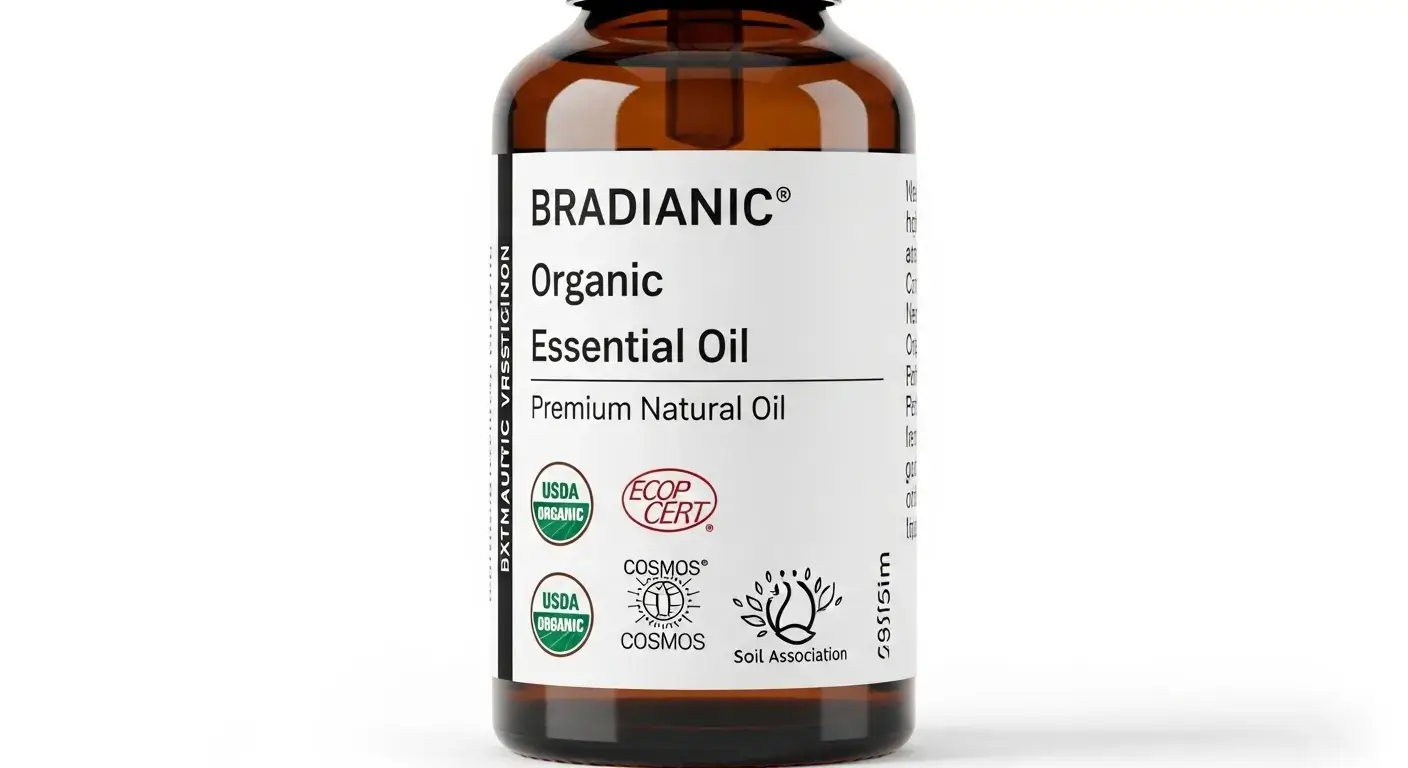
The most reliable organic certifications are USDA Organic, EU Organic, and Ecocert.
Watch out for vague claims like “therapeutic grade” oils10, which have no legal meaning.
Red Flags to Avoid
- “100% Pure” with no supporting data
- “Certified Therapeutic Grade” (not a real standard)
- No COA or lab results
Good brands will always provide proof. If they don’t, that’s a big red flag.
Final Thoughts
Organic essential oils cost more, but they give you cleaner products and better environmental support.
Whether that’s worth it depends on your needs, values, and how you use oils.
FAQ
Q: Are there organic essential oils that are totally free from all pesticides?
A: Some premium brands go beyond certification and use zero‑tolerance testing to ensure no pesticides are present.
Q: Can I make my own organic essential oils at home?
A: You can grow organic herbs and try steam distillation, but it’s hard to match the purity and testing of professional suppliers.
Q: What’s the shelf life of organic essential oils?
A: About 1.5 to 2 years for most oils; citrus oils degrade faster, while oils like sandalwood can last 5+ years.
Q: Are essential oils safe for pets?
A: Not always. Cats and dogs can be sensitive. Use pet‑safe oils only and talk to a vet.
Q: What’s the best way to check if an oil is really organic?
A: Look for USDA, EU, or Ecocert labels. Ask for GC‑MS test results and a COA from the supplier.
Footnotes:
-
Defines key certified organic standards across farming and processing ↩
-
Details USDA’s certification steps and consumer guarantees ↩
-
Summarizes evidence that organic farming boosts active compounds ↩
-
Highlights a study comparing linalool levels in lavender oils ↩
-
Explains how GC‑MS testing verifies essential oil purity ↩
-
Examines why organic oils carry higher prices due to certification ↩
-
Shows how COAs provide transparent ingredient and purity data ↩
-
Reports on phthalate contamination found in 2025 essential oil study ↩
-
Lists environmental benefits tied to organic farming practices ↩
-
Clarifies why “therapeutic grade” lacks legal or quality standards ↩